Artists' view on migration (2)
Jun 21, 2019 18:47 UTC
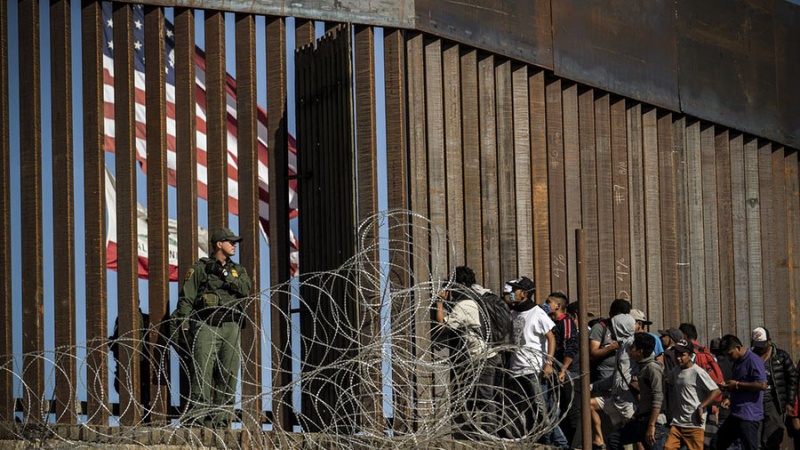
American politicians and people like to call themselves "the nation of migrants" as every person's family in one way or another seeks freedom or a better life. But the current situation in the US cannot be understood without knowing who had invaded and usurped the land and who was expelled, and that, with so much brutality.
Most likely, when you search for the word "migration" on the Internet, you encounter a lot of topics that claim to introduce to you the most comfortable countries for migration or residence, or they can help you for a better and less troublesome migration.
Have you ever thought of migration? What image of migration do you have in mind? Is this picture based on the realities of your surroundings, or a picture that you have from others, or has the media made it for you?
Although the increasing trend of communication and information provided by governments and official sources have helped to make migration easier during this period, yet official systems do not express all the facts. Many social studies emphasize that in order to better understand a social phenomenon, figures and even social and historical texts cannot be sufficient, and the artwork should be considered as an important factor. Art works in most historical periods represent the conditions of a society and can have much impact on our assessment of social phenomena.
Immigration and the image of it in the seventh art is one of the interesting topics to consider in examining the causes of migration and the fate of migrants around the world as an important research topic. From the very first decades of the invention of cinema, cinematographers have focused on this issue and have created works on migrants and migration that we mentioned in the previous program. Today we will mention a number of other cinematic works devoted to migration.
American politicians, as well as the people of this country, like to call themselves "the nation of migrants." Where the family of each person chooses in some ways to seek freedom or a better life. However, despite the fact that the legacy of American migrants is more complicated than a legend, it is considered a fundamental fact in the history of this country. But the current situation in the US cannot be understood without knowing who was being held out, who was allowed to enter and how it was treated when entering the country.
It's interesting to know that the roots of Hollywood formation also go back to the history of migration. Jews who often spent their childhood in poor families and lived in Jewish areas in Germany, Poland, Hungary, and Russia, in the late 19th century, in order to improve their livelihood and earn more money, migrated from Eastern Europe to the US.
The US initially did not welcome the Jewish migrants. They could not choose any job or live anywhere they liked. The Jewish migrants lived in the New York and Chicago ghettos, where the rule of jungle was dominated by brutality and violence. As a result, they learned how to live in difficult situations and make money in any possible way.
Each of the migrants had a job; one was servant, another worked in clothing stores, one was a decorator, one bought a piece of iron and one had a fur coat shop. At that time, these jobs did not have a social status, but they made good money in this way. Migrants constantly changed jobs until the fate or the hands behind the curtain dragged them to the nascent cinema industry and theater profession. Most of the theater halls were in the slums, abandoned and dark neighborhoods which were the perfect conditions for the thugs' evil. However, families preferred to take another amusement, and the wealthy and noble class went to theaters more.
At that time, theater hall was not a respectable job, and that's why there was a good atmosphere for the presence of Jewish migrants. Because of their previous jobs, they recognized the tastes of the people well and they were doing a lot of things for their presence in the cinema halls. From the painting of the halls to the use of appropriate lighting and decor, or the live performance of music, and the presence of the famous theater actors, all delighted the interior of the hall for the customers. As a result, the profit of theater hall increased and led to the entry of Jews into the costly film industry. After filming they also entered the distribution of the film.
Subsequently, Jewish cinemas, under judicial pressure, began another migration, and this time they went from the eastern coast to the West Bank of the US - California; the land of four seasons that was very suitable for filmmaking. They set up a large number of filmmaking studios that set up Hollywood studios.
We said that Charlie Chaplin was one of the migrants who embarked on migration in some of his works and had a critical look at the American society. Elia Kazan is another migrating filmmaker who has a special view on migration. Kazan is one of the central pillars of American culture in the middle decades of the twentieth century. He was one of the most successful and, of course, according to some the most notorious migrant of the new world in the twentieth century. He was born in 1909 in Istanbul and arrived in New York in 1913. Kazan, in the 1940s, discovered his capabilities in playing the actors by directing several plays. His initiatives were to take on stage the famous and successful plays.
Kazan made the film "America, America" in 1963 based on his uncle's life and his migration from Anatoly, Turkey to the US with the participation of unknown actors. The film, which is different from his other works, is one of the best films that have rebuilt the familiar image of migrants on the deck of the ship that reaches the island of Ellis in New York.
Elia Kazan in this work reveals another aspect of the realities of American society. His realistic style in writing "America America" book and making a film based on it is praiseworthy and helped making serious critique of American lifestyle. The main character of the film is a young man who, while gaining experience in life in the US, is also gaining a new recognition of his motherland.
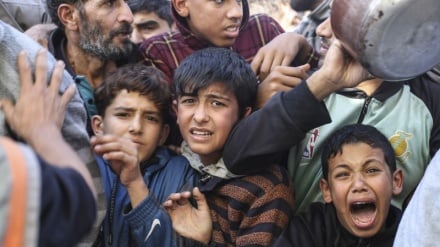
Unlike the US, Europe, after World War II, showed remarkable inclination to migrants for economic reconstruction and became one of the most migratory regions of the world; however, in the last three decades, following the onslaught of migrants from Africa and Asia and the Balkans, a tightening process has been adopted which is gradually fading in its human and economic aspects, and becoming prominent in political, economic and security goals. In this way, Europe has moved from a liberal policy to a closed system based on economic-security views. The surge in migration to Europe, mainly due to the economic growth of the continent and the crisis of insecurity and unemployment and backwardness in developing countries went beyond the needs of the union market.
The increase in migrating populations led to the creation of multicultural systems and the emergence of identity challenges in Europe, and simultaneously economic crises, declining public budgets and increasing general dissatisfaction in Europe put migration policy on the agenda. Europe, also exploiting the September 11th event, has been able to identify migrants as security-terrorist threats by linking migration to terrorism, and to limit its rules to more restrictive measures. These limitations have been in accordance with attracting the best to meet the needs of the labor market and the elimination of unwanted migrants and move towards strengthening the idea of defending the European castle against unwanted migration. The EU's inability to find a sustainable solution to the issue of migrants has captured the migration policy by the "fleeting cravings" of its member states, and has intensified the migrant crisis more and more day by day.
Over the past few decades, migration to Europe, in addition to allocating the headline news, has led to the creation of several cinematic films. For example, Jonas Karpinanio's "Mediterranean" (2015) is a tragic drama about African migrants in Italy. The film tells the story of a single father, Ayuawa, who has no way of surviving his life and his daughter. Ayuawa, with his friend Abbas, endures the dangers and hardships of crossing the great desert of Africa and the Mediterranean Sea to have a life that is quite different from what he imagined.
Kudos Sihoun is the main character of migrant from Burkina Faso. His charming presence helps the film move smoothly. The scenes of the movie, which have been taken with a manual camera, show the perturbation of the lives of characters in a foreign country that is not so receptive to.
The director does not tell the audience what is going on in the minds of the characters, but shows details of the daily life and the human aspects of their lives that are today on the margins of society. The film "Mediterranean" is a true picture of the people who are only seeking a better life and human dignity. A search that does not come to result with migration to Europe. Dear listeners, we will continue our discussion in the next program.
FK/RM/SS
Tags