Artists' view on migration (3)
Jun 21, 2019 19:03 UTC
The films on migrants deal with the lives of people who have to leave their countries to find a better life in the destination they are heading. It is a desperate and compulsory departure that can have positive or negative consequences for migrants and the country they go to.
Migration and migrants are among the most common words in Iran, either for those who leave Iran or immigrants who come to Iran. In this episode, we are going to deal with the issue of immigration and review a few works that have been made in this regard.
Art and literature are among the significant ways to recognize social phenomena and the seventh art (cinema) can enable researchers and even ordinary people to tackle with the issues and problems of society.
Different countries like Syria, Iraq, Afghanistan and Yemen have been ravaged by wars that are the work of the west, especially the US and its European, Arab and Zionist comrades-in-crime. The result of these wars is nothing but destruction, massacre of children and women, destruction of national wealth, homelessness and expulsion from motherland. So, it is normal for Iranian filmmakers to take these events into consideration and make films about immigrants of neighboring countries. First of all, Iranian filmmakers have produced works on the issue of Afghan immigrants and their lives. The people of Afghanistan have been facing war and internal skirmishes for decades; hence, in order to find a better life, they have been forced to leave their country and take refuge in neighboring countries, especially Iran.
The history of Iran-Afghanistan relations, as two independent states, dates back to 1857 when Britain imposed the Paris Treaty on Qajars and Iran's representative signed a treaty according to which Iran recognized the independence of Afghanistan. Now, more than 160 years after the event, the relations of the two countries have continued despite ample ups and downs and interventions of big powers in the region.
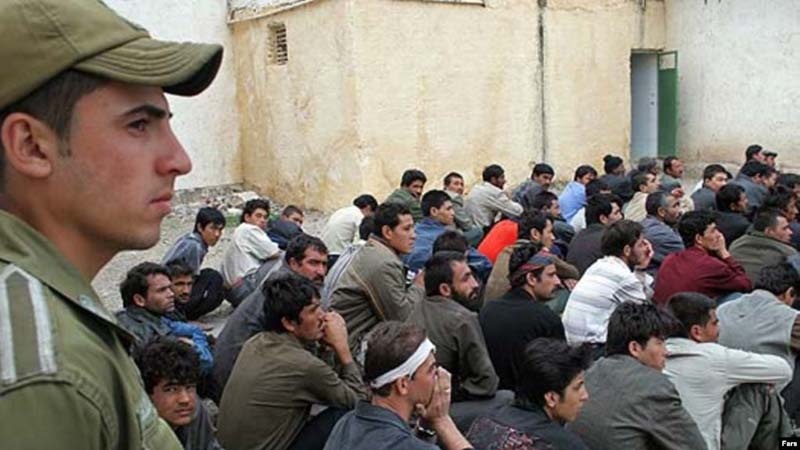
Before the outbreak of the war imposed by the US through its surrogate Saddam of Iraq, Afghanistan had been occupied by the Soviet Union. The occupation led to the migration of war-hit Afghans, and the already war-hit Iranian people hosted their Afghan brothers who were in more dire conditions. According to the report of Population and Housing Census of 2016 published by the Iranian Statistics Center, approximately 1,600,000 people (2% of the Iranian population
) are Afghan nationals, and it is estimated that the number totals to more than 3 million if we take the illegal immigrants into account.
The general picture of the Afghan people in Iran's cinema has been mainly focused on the lives of immigrants and their suffering, escape despair and homesickness.
The first Iranian movie about Afghan immigrants was produced in 1988. "Cyclist" made by Mohsen Makhmalbaf is the story of an Afghan immigrant who strives to provide money for his sick wife. The film received warm welcome and this encouraged other directors to concentrate on the issue of Afghanistan.
Afghan immigrants were forced to leave their country and migrate to Iran in childhood and adolescence. Many of these immigrants married with Iranian girls but due to their illegal residence, their marriage has not been registered officially. In those years, Majid Majidi, renowned Iranian director, was known for his two films "Children of Heaven" and "The Color of Paradise" both inside the country and abroad. He portrayed the theme of the love of a simple masonry worker in an immigrant Afghan girl with the movie "Baran", and was able to create a broad theme of love with the afflictions of migration, and create a spectacular and lasting work. Majidi in this film displayed one of the common jobs among Afghans and was succeeded to make the viewer sympathize with the actors. This was not the only romantic film on Afghan migrants.
The love between an Afghan national and an Iranian was depicted in the movie "Jom'a" by Hussein Yektapanah. This film tells the story of love of an Afghan migrant named Jom'a to an Iranian girl who faces the disagreement of the daughter's family. In the film "Heiran" (Wandering) directed by Shalizeh Arefpour, an Iranian girl named Maahi falls in love with an Afghan boy. The movie "Majnoon Leily" directed by Mohammad Hossein Latifi, also shows an Afghan woman who falls in love with her Iranian employer.
Apart from the theme of love, the US invasion, occupation and devastation of Afghanistan also urged Iranian filmmakers to produce works on this chronic suffering of the Afghan nation. Mohammad Reza Arab by directing the film "The Last Queen of the Earth" at the peak of US invasion of Afghanistan anticipated the future of this occupation. The film was produced in 2006 and gained warm welcome in the international festivals.
"Butcher Angels," directed by Soheil Salimi, also deals with the effects of the US occupation of Afghanistan and the trafficking of bodily organs by western gangs in Afghanistan.
Meanwhile some Iranian directors tried to have a look at the history of Afghanistan. In 2010 Vahid Musaiyan made the film "Golchehreh" looking at the contemporary history of Afghanistan. The story of the film is about Ashraf Khan, the old cinematographer of Kabul, who after the collapse of the communist government of Najibullah and domination of Mujahedeen on Afghanistan, wants to reconstruct his cinema called "Golchehreh."Abdul Qadir, a biased leader in Afghanistan, says he will never let him propagate "corruption" among young people by launching cinema.
Eventually with the cooperation of an Iranian expert in repairing cinema screens, the opening day of cinema was accompanied with a bomb-blast and the cinema was suddenly destroyed. Taliban rebels declared that whoever is involved in the cinema and its reconstruction will be severely punished. For this reason, many of the films are kept secretly in a safe room, and when the Afghan National Film Bureau burns down, no damage was inflicted on this cultural treasure.
Years later, leaders of rebels including Abdul Qadir, are forced to flee, and Dr. Rokhsare, Goodarz and Salar at the National Center for Afghan Films meet each other, and with a common outlook destroy the wall of the place where the films have been kept secretly.
Perhaps the most important film which has been made about Iran and Afghanistan in the recent years is the film Mazar Sharif. The film Mazar Sharif was produced by Abdul Hassan Barzideh in 2014. The film is about the Taliban's attack on Iranian consulate in Mazar Sharif and killing of Iranian diplomats at the consulate in 1998.
One of the sensitive issues of the incident is the reason why diplomats stay in that particular position in Mazar Sharif, where the film tries to narrate it with no bias. This film is not only a page of the Iranian history but it also depicts a story that continues and is not limited to any particular juncture in time. Mazar Sharif actually shows the actions of those who disturb the faithful the remnants of which can now be found in the terrorist outfits like Daesh, al-Nusra and the like. Meanwhile, Mazar Sharif is not just a historical or political film, but also a portrayal of the Afghan society. The presence of a brave Afghan woman who rescues an Iranian and is one of the strong points of the film.
In a general look, it can be said that the Iranian filmmakers' view of Afghan immigrants and their lives is very diverse, and in most cases, human emotions and situations have been important to filmmakers. As we sometimes forget, these are Afghans or immigrants. The story of immigrants, differences and similarities of their feelings and sufferings with those of the native people create attractive scenes that make the story interesting to the audience. Naturally, however, in art especially in cinema, it is not possible to define migration in one or two sentences.
FK/RM/SS
Tags