Record low US global understanding under Trump (1)
Jul 05, 2019 19:09 UTC
Washington, which once wielded worldwide power and prestige, is on a rapid nosedive, says Britain-based author, journalist, and commentator of Indian origin Dilip Hiro in his article for Tomdispatch, titled: “Record Low US Global Understanding under Trump”.
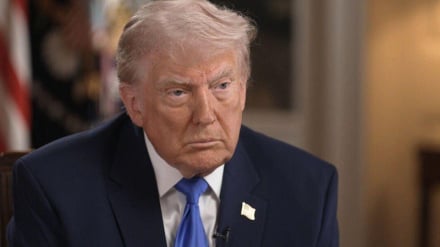
“Make America Great Again”, had said the current US president when taking charge at the White House. But don’t count on his words. Two years later, Donald Trump has failed to reverse America's decline.
Trump was partly voted into office by Americans who felt that the self-proclaimed greatest power was actually in decline -- and they weren’t wrong. Trump is capable of tweeting many things, but none of those tweets will stop that process of decline, nor will a trade war with a rising China or fierce oil sanctions on Iran.
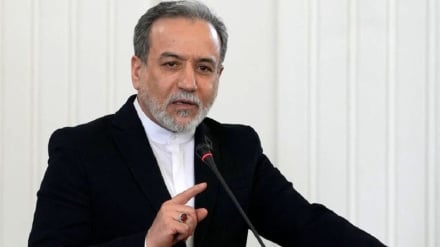
You could feel this recently, even in the case of the increasingly pressured Iranians. There, with a single pinprick, Leader of the Islamic Revolution, Ayatollah Seyyed Ali Khamenei, effectively punctured President Trump’s MAGA balloon and reminded many that, however powerful the US still was, people in other countries were beginning to look at America differently at the end of the second decade of the twenty-first century.
Following a meeting in Tehran with visiting Japanese Prime Minister Shinzo Abe, who brought a message from Trump requesting start of US-Iranian renegotiations –on the international nuclear accord which Trump had breached – Ayatollah Khamenei tweeted, “We have no doubt in [Abe’s] goodwill and seriousness; but regarding what you mentioned from [the] US president, I don’t consider Trump as a person deserving to exchange messages with, and I have no answer for him, nor will I respond to him in the future.” He then added: “We believe that our problems will not be solved by negotiating with the US, and no free nation would ever accept negotiations under pressure.”
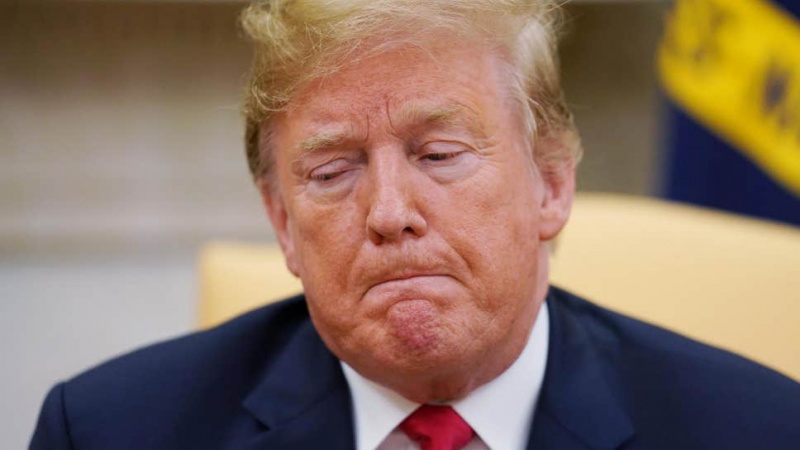
A flustered Trump was reduced to briefly tweeting: “I personally feel that it is too soon to even think about making a deal. They are not ready, and neither are we!” And soon after, the US president – if this habitually lying person is to be believed –halted at the last minute, in a distinctly humiliating retreat, US air strikes on Iranian missile sites that would undoubtedly have created yet more insoluble problems for Washington across the Greater Middle East.
Keep in mind that, globally, before Iran’s put-down, the Trump administration had already had two abject foreign policy failures: the collapse of the US president’s Hanoi summit with North Korean leader Kim Jong-un (followed by Pyongyang’s testing of several ballistic missiles over the Sea of Japan) and a bungled attempt to overthrow Venezuelan President Nicolás Maduro.
What’s great or small can be defined in absolute or relative terms. US “greatness” (or “exceptional” or “indispensable” nature) -- much lauded in Washington before the Trump era --should certainly be judged against the economic progress made by China in those same years and against Russia’s advances in the latest high-tech weaponry. Another way of assessing the nature of that “greatness” and what to make of it would be through polls of how foreigners view the United States.
Take, for instance, a survey released by the Pew Research Group in February 2019. Forty-five percent of respondents in 26 nations with large populations felt that US power and influence posed “a major threat to our country,” while 36% offered the same response on Russia, and 35% on China. To put that in perspective, in 2013, during the presidency of Barak Obama, only 25% of global respondents held such a negative view of the US, while reactions to China remained essentially the same. Or just consider the most powerful country in Europe, Germany. Between 2013 and 2018, Germans who considered American power and influence a greater threat than that of China or Russia leapt from 19% to 49%. (Figures for France were similar.)
As for President Trump, only 27% of global respondents had confidence in him to do the right thing in world affairs, while 70% feared he would not. In Mexico, you undoubtedly won’t be surprised to learn, confidence in his leadership was at a derisory 6%. In 17 of the surveyed countries, people who lacked confidence in him were also significantly more likely to consider the US the world’s top threat, a phenomenon most pronounced among traditional Washington allies like Canada, Britain, and Australia.
While 39% of Pew respondents in that poll still rated the US as the globe’s leading economic power, 34% opted for China. Meanwhile, China’s Belt and Road Initiative (BRI) launched in 2013 to link the infrastructure and trade of much of Southeast Asia, Eurasia, and the Horn of Africa to China (at an estimated cost of four trillion dollars) and to be funded by diverse sources, is going from strength to strength.
One way to measure this: the number of dignitaries attending the biennial BRI Forum in Beijing. The first of those gatherings in May 2017 attracted 28 heads of state and representatives from 100 countries. The most recent, in late April, had 37 heads of state and representatives from nearly 150 countries and international organizations, including International Monetary Fund (IMF) chief Christine Lagarde and United Nations Secretary-General Antonio Guterres.
Leaders of nine out of 10 Association of Southeast Asian Nations attended, as did four of the five Central Asian republics. Strikingly, a third of the leaders participating came from Europe. According to Peter Frankopan, author of The New Silk Roads, more than 80 countries are now involved in some aspect of the BRI project. That translates into more than 63% of the world’s population and 29% of its global economic output.
Still, Chinese President Xi Jinping is intent on expanding the BRI’s global footprint further, a signal of China’s dream of future greatness. During a February two-day state visit to Beijing by Saudi Arabia’s self-imposed Heir Apparent Mohamed bin Salman (MBS), Xi suggested that, when it came to Riyadh’s overly ambitious economic plan, “our two countries should speed up the signing of an implementation plan on connecting the Belt and Road Initiative with the Saudi Vision 2030.”
Flattered by this proposal, MBS defended China’s use of “re-education” camps for Uighur Muslims in its western province of Xinjiang, claiming it was Beijing’s “right” to carry out anti-terrorism work to safeguard national security. Under the guise of combating extremism, the Chinese authorities have placed an estimated one million Uighur Muslims in such camps to undergo re-education designed to supplant their Islamic legacy with a Chinese version of socialism. Uighur groups had appealed to Saudi Arabia to take up their cause. No such luck: one more sign of the rise of China in the twenty-first century.
In 2013, the German government launched an Industry 4.0 Plan meant to fuse cyber-physical systems, the Internet of things, cloud computing, and cognitive computing with the aim of increasing manufacturing productivity by up to 50%, while curtailing resources required by half. Two years later, emulating this project, Beijing published its own 10-year Made in China 2025 plan to update the country’s manufacturing base by rapidly developing 10 high-tech industries, including electric cars and other new-energy vehicles, next-generation information technology and telecommunications, as well as advanced robotics and artificial intelligence, aerospace engineering, high-end rail infrastructure, and high-tech maritime engineering.
As with BRI, the government and media then publicized and promoted Made in China 2025 vigorously. This alarmed Washington and US’ high-tech corporations. Over the years, American companies had complained about China’s theft of US intellectual property, the counterfeiting of famous brands, and the stealing of trade secrets, not to speak of the pressuring of American firms in joint ventures with local companies to share technology as a price for gaining access to China’s vast market. Their grievances became more vocal when Donald Trump entered the White House determined to cut Washington’s annual trade deficit of $380 billion with Beijing.
As president, Trump ordered his new trade representative, the Sinophobe Robert Lighthizer, to look into the matter. The resulting seven-month investigation pegged the loss U.S. companies experienced because of China’s unfair trade practices at $50 billion a year. That was why, in March 2018, President Trump instructed Lighthizer to levy tariffs on at least $50 billion worth of Chinese imports.
That signaled the start of a Sino-American trade war which has only gained steam since. In this context, Chinese officials started downplaying the significance of Made in China 2025, describing it as nothing more than an inspirational plan. This March, China’s National People’s Congress even passed a foreign direct-investment law meant to address some of the grievances of U.S. companies. Its implementation mechanism was, however, weak. Trump promptly claimed that China had backtracked on its commitments to incorporate into Chinese law significant changes the two countries had negotiated and put into a draft agreement to end the trade war. He then slapped further tariffs on $200 billion in Chinese imports.
The major bone of contention for the Trump administration is a Chinese law specifying that in a joint venture between a foreign corporation and a Chinese company, the former must pass on technological know-how to its Chinese partner. That’s seen as theft by Washington. According to Senior Fellow at the Carnegie Endowment for International Peace Yukon Huang, author of Cracking the China Conundrum: Why Conventional Economic Wisdom Is Wrong, however, it’s fully in accord with globally accepted guidelines. Such diffusion of technological know-how has played a significant role in driving growth globally, as the IMF’s 2018 World Economic Outlook report made clear. It’s worth noting as well that China now accounts for almost one-third of global annual economic growth.
The size of China’s market is so vast and the rise in its per capita gross domestic product -- from $312 in 1980 to $9,769 in 2018 -- so steep that major US corporations generally accepted its long-established joint-venture law and that should surprise no one. Last year, for instance, General Motors sold 3,645,044 vehicles in China and fewer than three million in the US. Little wonder then that, late last year, following GM plant closures across North America, part of a wide-ranging restructuring plan, the company’s management paid no heed to a threat from President Trump to strip GM of any government subsidies. What angered the president, as he tweeted, caught the reality of the moment: nothing was “being closed in Mexico and China.”
What Trump simply can’t accept is this: after nearly two decades of supply-chain restructuring and global economic integration, China has become the key industrial supplier for the United States and Europe. His attempt to make America great again by restoring the economic status quo ante before 2001 -- the year China was admitted to the World Trade Organization -- is doomed to fail.
In reality, trade war or peace, China is now beginning to overtake the U.S. in science and technology. A study by Qingnan Xie of Nanjing University of Science and Technology and Richard Freeman of Harvard University noted that, between 2000 and 2016, China’s global share of publications in the physical sciences, engineering, and mathematics quadrupled and, in the process, exceeded that of the US for the first time.
AS/SS
Tags