Record low US global understanding under Trump (2)
Jul 06, 2019 06:22 UTC
Washington, which once wielded worldwide power and prestige, is on a rapid nosedive, says Britain-based author, journalist, and commentator of Indian origin Dilip Hiro in his article for TomDispatch site, titled: “Record Low US Global Understanding under Trump”.
In the field of high technology, for example, China is now well ahead of the United States in mobile payment transactions. In the first 10 months of 2017, those totaled $12.8 trillion, the result of vast numbers of consumers discarding credit cards in favor of cashless systems. In stark contrast, according to eMarketer, America’s mobile payment transactions in 2017 amounted to $49.3 billion. Last year, 583 million Chinese used mobile payment systems, with nearly 68% of China’s Internet users turning to a mobile wallet for their offline payments.
In a similar fashion, in his untiring pitch for America’s supposedly “beautiful” weaponry, President Trump has failed to grasp the impressive progress Russia has made in that field.
While presenting videos and animated glimpses of new intercontinental ballistic missiles, nuclear-powered cruise missiles, and underwater drones in a March 2018 television address, Russian President Vladimir Putin traced the development of his own country’s new weapons to Washington’s decision to pull out of the 1972 Anti-Ballistic Missile (ABM) treaty with the Soviet Union.
In December 2001, encouraged by – the ever-blundering – John Bolton, then undersecretary of state for arms control and international security, President George W. Bush had indeed withdrawn from the 1972 ABM treaty on the spurious grounds that the 9/11 incidents in New York had changed the nature of defense for the US. His Russian counterpart of the time, the very same Vladimir Putin, described the withdrawal from that cornerstone of world security as a grievous mistake. The head of Russia's armed forces, General Anatoly Kvashnin, warned then that the pullout would alter the nature of the international strategic balance, freeing up countries to restart arms buildups, both conventional and nuclear.
As it happened, he couldn’t have been more on the mark. The US is now engaged in a 30-year, trillion-dollar-plus remake and update of its nuclear arsenal, while the Russians (whose present inventory of 6,500 nuclear weapons slightly exceeds America’s) have gone down a similar route. In that televised address of his on the eve of the 2018 Russian presidential election, Putin’s list of new nuclear weapons was headed by the Sarmat, a 30-ton intercontinental ballistic missile, reputedly far harder for an enemy to intercept in its most vulnerable phase just after launching. It also carries a larger number of nuclear warheads than its predecessor.
Another new weapon on his list was a nuclear-powered intercontinental underwater drone, Status-6, a submarine-launched autonomous vehicle with a range of 6,800 miles, capable of carrying a 100 megaton nuclear warhead. And then there was his country’s new nuclear-powered cruise missile with a “practically unlimited” range. In addition, because of its stealth capabilities, it will be hard to detect in flight and its high maneuverability will, theoretically at least, enable it to bypass an enemy’s defenses. Successfully tested in 2018, it does not yet have a name. Unsurprisingly, Putin won the presidency with 77% of the vote, a 13% rise from the previous poll, on record voter turnout of 67.7%.
In conventional weaponry, Russia’s S-400 missile system remains unrivalled. According to the Washington-based Arms Control Association, “The S-400 system is an advanced, mobile, surface-to-air defense system of radars and missiles of different ranges, capable of destroying a variety of targets such as attack aircraft, bombs, and tactical ballistic missiles. Each battery normally consists of eight launchers, 112 missiles, and command and support vehicles.” The S-400 missile has a range of 400 kilometers (250 miles), and its integrated system is believed to be capable of shooting down up to 80 targets simultaneously.
Consider it a sign of the times, but in defiance of pressure from the Trump administration not to buy Russian weaponry, President Rajab Tayyeb Erdoghan of Turkey, the only Muslim member of NATO, ordered the purchase of batteries of those very S-400 missiles. Turkish soldiers are currently being trained on that weapons systems in Russia. The first battery is expected to arrive in Turkey next month.
Similarly, in April 2015, Russia signed a contract to supply S-400 missiles to China. The first delivery of the system took place in January 2018 and China test fired it in August.
Consider that as another step in Russian-Chinese military coordination meant to challenge Washington’s claim to be the planet’s sole superpower. Similarly, last September, 3,500 Chinese troops participated in Russia’s largest-ever military exercises involving 300,000 soldiers, 36,000 military vehicles, 80 ships, and 1,000 aircraft, helicopters, and drones. Codenamed Vostok-2018, it took place across a vast region that included the Bering Sea, the Sea of Okhotsk, and the Sea of Japan.
Little wonder that NATO officials described Vostok-2018 as a demonstration of a growing Russian focus on future large-scale conflict: “It fits into a pattern we have seen over some time -- a more assertive Russia, significantly increasing its defense budget and its military presence.” Putin attended the exercises after hosting an economic forum in Vladivostok where Chinese President Xi was his guest. “We have trustworthy ties in political, security and defense spheres,” he declared, while Xi praised the two countries’ friendship, which, he claimed, was “getting stronger all the time.”
Thanks to climate change, Russia and China are now also working in tandem in the fast-melting Arctic. Last year Russia, which controls more than half the Arctic coastline, sent its first ship through the Northern Sea Route without an icebreaker in winter. Putin hailed that moment as a “big event in the opening up of the Arctic.”
Beijing’s Arctic policy, first laid out in January 2018, described China as a “near-Arctic” state and visualized the future shipping routes there as part of a potential new “Polar Silk Road” that would both be useful for resource exploitation and for enhancing Chinese security. Shipping goods to and from Europe by such a passage would shorten the distance to China by 30% compared to present sea routes through the Malacca Straits and the Suez Canal, saving hundreds of thousands of dollars per voyage.
According to the US Geological Survey, the Arctic holds petroleum reserves equal to 412 billion barrels of oil, or about 22% of the world’s undiscovered hydrocarbons. It also has deposits of rare earth metals. China’s second Arctic vessel, Xuelong 2 (Snow Dragon 2), is scheduled to make its maiden voyage later this year. Russia needs Chinese investment to extract the natural resources under its permafrost. In fact, China is already the biggest foreign investor in Russia’s liquefied natural gas (LNG) projects in the region -- and the first LNG shipment was dispatched to China’s eastern province last summer via the Northern Sea Route. Its giant oil corporation is now beginning to drill for gas in Russian waters alongside the Russian company Gazprom.
Washington is rattled. In April, in its latest annual report to Congress on China’s military power, the Pentagon for the first time included a section on the Arctic, warning of the risks of a growing Chinese presence in the region, including that country’s possible deployment of nuclear submarines there in the future. In May, Secretary of State Mike Pompeo used a meeting of foreign ministers in Rovaniemi, Finland, to assail China for what he alleged its “aggressive behavior” in the Arctic.
In an earlier speech, Pompeo noted that, from 2012 to 2017, China invested nearly $90 billion in the Arctic region. “We’re concerned about Russia’s claim over the international waters of the Northern Sea Route, including its newly announced plans to connect it with China’s Maritime Silk Road,” he said. He then pointed out that, along that route, “Moscow already illegally demands other nations request permission to pass, requires Russian maritime pilots to be aboard foreign ships, and threatens to use military force to sink any that fail to comply with their demands.”
Altogether, the tightening military and economic ties between Russia and China have put the US on the defensive, contrary to Donald Trump’s promise to American voters in the 2016 campaign to make America great again.
It’s true that, despite fraying diplomatic and economic ties between Washington and Moscow, Trump’s personal relations with Putin remain cordial. (The two periodically exchange friendly phone calls.) But among Russians more generally, a favorable view of the U.S. fell from 41% in 2017 to 26% in 2018, according to a Pew Research survey.
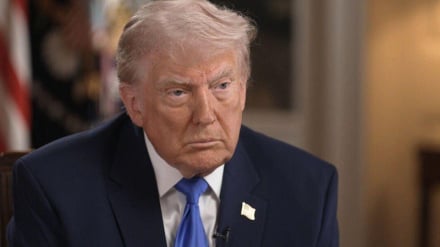
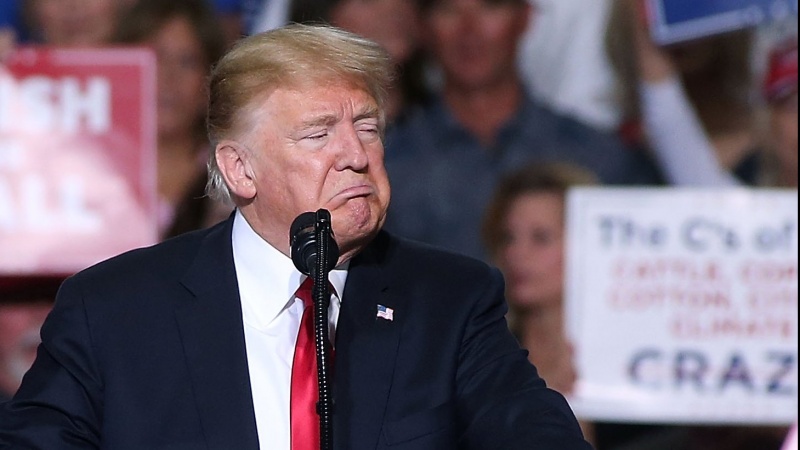
There’s nothing new about great powers, even the one that proclaimed itself the greatest in history, declining after having risen high. In our acrimonious times, that’s a reality well worth noting. While launching his bid for re-election recently, Trump proposed a bombastic new slogan: “Keep America Great” (or KAG), as if he had indeed raised America’s stature while in office.
He would have been far more on target, however, had he suggested the slogan “Depress America More” (or DAM) to reflect the reality of an unpopular president who faces rising great power rivals abroad.
AS/SS
Tags