Prolonging trade war has no plus side for Trump
Oct 11, 2019 05:23 UTC
The U.S. president’s reckless rivalry with China is sapping Washington’s energies to the detriment of American trade and the agro-industrial sector.
The following is an article in this regard for ‘Asia Times’, titled: “Prolonging trade war has no plus side for Trump”.
The author is Ken Moak who taught economic theory, public policy and globalization at university level for 33 years, and co-authored the book titled “China's Economic Rise and Its Global Impact in 2015”.
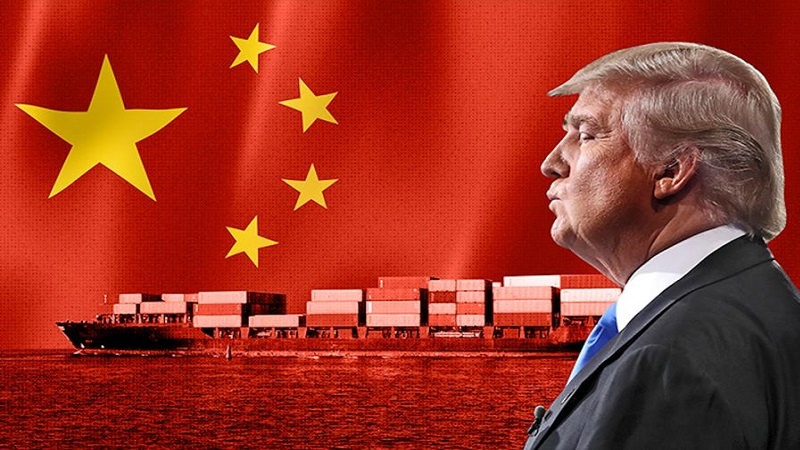
Whether the coming 13th round of negotiations on the U.S.-China trade war will end as a success or failure is anyone’s guess. But in light of a looming recession, his impeachment proceedings, growing poverty and a host of other issues, U.S. President Donald Trump should end this trade dispute that he should never have started to begin with. More important, the dispute has nothing to do with the trade issue, but is an attempt to force China to back off from challenging U.S. supremacy.
The signs of an imminent recession are becoming increasingly clear, with the U.S. Federal Reserve cutting the benchmark interest rate, Congress approving budget increases and canceling the debt ceiling for the next two years, and the Treasury Department planning to issue 50-or even 100-year bonds with an inverted yield curve.
According to the latest issue of the British-based Economist, America’s impoverished population is growing, with more than 20% of its children living below the poverty line. If not reversed, according to a 600-page report by the National Academies of Science, Engineering and Medicine, the rising poverty rate could cost the U.S. economy between US$800 billion and $1.1 trillion annually because of “losses of productivity, greater chances of criminality and poor health.”
On top of the economic problems, Trump is facing impeachment proceedings over his pressuring Ukraine to investigate Democratic presidential hopeful Joe Biden and his son Hunter. Thus both economically and politically, Trump is in deep trouble. In this regard, he should reset the US-China trade relationship, which has been proven as lucrative to the American economy.
China has been America’s cash cow since it joined the World Trade Organization (WTO) in 2001, being both “America’s factory” and its market. The Asian giant is arguably the most efficient manufacturer because of its comprehensive infrastructure and a highly profitable market thanks to its increasingly affluent 1.4-billion population.
It could indeed be argued that America’s intertwined trade relationship with China is the reason Trump’s trade war with the Asian powerhouse has failed, culminating in falling investment and stagnating consumption, since these two economic sectors account for more than 80% of U.S. gross domestic product. In this sense, decoupling is not an option without risking a recession.
Many major American firms such as Boeing and Apple could face considerable losses if the trade war drags on. For example, China buys around 25% of Boeing commercial aircraft.
Neither is decoupling necessary, in that China did not commit “unfair trade practices,” at least not to the extent that Trump has alleged. China did not manipulate its currency to gain an export advantage, as Trump claimed as the source of U.S. trade deficit. The deficit was caused by U.S. companies using China as their export platform.
More important, the trade war was stupid and should never have been mounted in the first place because it was not about trade or deficits, but about America wanting to “contain” China’s rise. However, someone should tell Trump, his advisers and Congress that it’s too late to contain China’s rise.
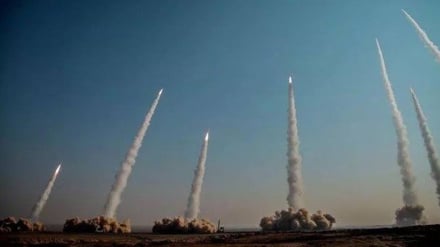
China might be less powerful and possess fewer nuclear weapons and missiles than the U.S., but judging by the military parade held recently in Beijing, it could unleash a credible and deadly response to any U.S. military adventurism. And China’s relatively healthy economy, growing at around 6% annually, could weather the trade war better than the U.S. A population of 1.4 billion coupled with billions more in the countries that have participated in its Belt and Road Initiative (BRI) could sustain China’s high economic growth rates for a long time while solidifying its economic foundation.
All of this explains why America’s friends and foes alike are turning a deaf ear to Trump, his senior officials and lawmakers badmouthing China. No country is siding with the US on Trump’s trade war against China. And only two countries, Australia and Japan, are banning Huawei from their rollout of fifth-generation (5G) technology. As well, for the good reason of being targeted by Chinese nuclear weapons, neither one of those two staunch U.S. allies is willing to host American medium-range missiles.
If a full-blown war between the U.S. and China were to break out, they would likely make an agreement not to hit each other directly, because that would cause mutual destruction. Instead, they would likely fight a proxy war on the respective allies’ territory.
Australia, Japan and South Korea would likely be the first victims of a Chinese nuclear attack because most U.S. military bases in the Asia-Pacific region are located in those three countries.
Besides, China would not fire the first shot because it has neither the ability nor desire to invade the U.S. That is, the Asian giant is not interested in replacing Uncle Sam as the world’s “daddy.”
It is therefore in Trump’s and the United States’ interest to improve or reset their bilateral relationship because they do not really have a choice without risking a recession or a nuclear war. Indeed, resetting the U.S.-China relationship and ending the trade might ensure a positive legacy, and history might judge Trump as the president that saved the U.S.
Prolonging and escalating the trade and geopolitical wars, on the other hand, will surely “make America worse.”
AS/ME
Tags