Britain cuts itself adrift from the EU
Jun 29, 2016 08:36 UTC
By signalling the end to its membership the nation has casually wandered into a new world of risk High quality global journalism requires investment. Stay with us for an analysis by London’s Financial Times on the result of recent referendum in Britain in which the majority voted for exit from the European Union.
The British electorate has rejected the advice of its own government, most economic experts, and international allies and backed the Brexit campaign to “Take Back Control.” The will of the sovereign people must be respected. Britain is now scrambling to reconstruct a government that can exit the EU in a way that best preserves the country’s stability and prosperity. But unless Leave’s leaders show a far greater sense of responsibility and honesty than they exhibited during the referendum campaign then the UK is in acute danger of losing control.
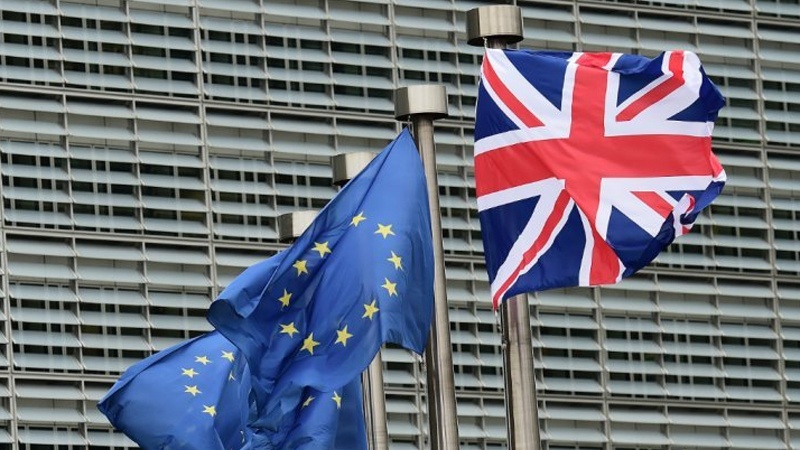
By signalling the end to Britain’s 43-year membership of the EU, Britain has casually wandered into a new world of risk. At one stroke, the vote has shocked global financial markets, shattered relations with Britain’s nearest allies, unseated the prime minister and jeopardised the continued integrity of the United Kingdom.The vote is also a bruising blow to the other 27 members of the EU, as they grapple with the most severe migration crisis since the second world war while struggling to repair the damaged eurozone.
Donald Tusk, president of the European Council, may have exaggerated when he said a Brexit could mark the “beginning of the destruction of not only the EU but also of western political civilisation”. But Britain’s decision to quit the EU is the biggest jolt to the continent’s political and economic order since the fall of the Berlin Wall. The shockwaves reverberate far beyond Europe.
Of all the immediate challenges, the financial market turmoil is perhaps the most easily addressed. Intense volatility was inevitable given how far prices had been bid up in anticipation of a Remain vote and the subsequent uncertainty concerning the economic outlook. The Bank of England’s promise to take all reasonable measures to preserve financial stability has begun to settle nerves. Nevertheless, economic risks remain. Business confidence will be battered by the Brexit vote and many investment projects are likely to be frozen until the outlines of Britain’s new trading arrangements emerge. That threatens to tip the economy back into recession.
Moreover, as Mark Carney, the Bank of England’s governor, has said, Britain depends on the “kindness of strangers” to finance its yawning current account deficit. The country’s newly estranged international partners and investors, who loudly warned of the dangers of a Leave vote, will be feeling anything but beneficent. The governmental crisis will be harder to manage. The first dilemma is understanding exactly what the electorate meant by backing Leave. As is often the way with referendums, the Remain vote was singular while the Leave vote was plural. The result was not a simple rejection of the EU but also a howl of protest against the impact of globalisation and migration that has eroded national sovereignty, identity and economic security.
Addressing such a deep divide between the governing and the governed may be the challenge of a generation. Balancing the demands of elderly Leave voters with the ambitions of young Remain voters will only complicate the task.
David Cameron, the departing prime minister whose miscalculation has triggered these multiple crises, has urged the ruling Conservative party to choose a new leader by October. For the sake of clarity, it would be wise to accelerate the process.In resetting relations with the EU, Mr Cameron is keen to play for time and will not immediately trigger the Article 50 clause that sets the clock ticking on Britain’s departure. But the 27 other leaders will understandably put the stability and integrity of the EU above all other considerations and will try to force Britain’s hand a lot quicker.
The Leave campaign never specified whether it preferred a Norwegian, Swiss, Canadian, Albanian or some alternative model of relations with Britain’s biggest trading partners in the EU. Each one of these models will involve a dilution of Leave’s loose campaign promises. Which one will prove acceptable to voters?
For all these manifest reasons, the Financial Times strongly supported Britain’s continued EU membership. But the voters have decided otherwise and their views must be respected.
Neither side doubts that Britain has weathered many storms before. Over time, the economy will readjust and Britain will find a new, if diminished, place in the world. The best hope, which this newspaper fervently shares, is that the UK remains engaged, open and, in the best spirit, pro-European. That way lies the future. Among the important points to note is that Britain’s NATO membership would not be affected, but the organisation’s secretary general, Jens Stoltenberg, made it clear last Wednesday that one of Britain’s key security roles was as a bridge between the EU and the alliance. That bridge will be gone.
Malcolm Chalmers, the deputy director general of the Royal United Services Institute, said: “I think it will diminish UK influence in NATOo as one of the things it has brought to NATO is its ability to influence and bring along other European member states.”
AS/SS
Tags