Martyrdom anniversary of Imam Zain al-Abedin (AS)
Oct 27, 2016 11:26 UTC
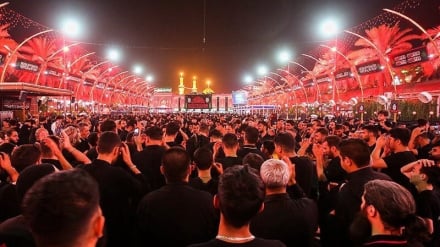
Sure, we are in the month of Muharram and in the state of mourning for the heartrending tragedy of Ashura and its equally tragic aftermath, when the noble ladies and children of the household of the Prophet of Islam, were taken as captives to Kufa, and thence marched through circuitous routes to Damascus in Syria.
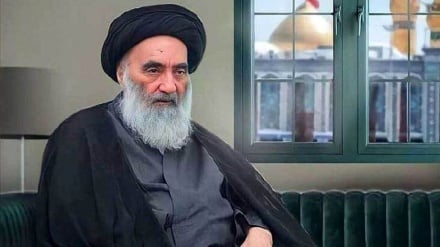
But today our tears are for a tragedy that occurred 34 years later in Medina, though it could be called continuation of the sufferings of Karbala. Yes, you have got it right. Today our lamentations are for Imam Zain al-Abedin (AS) – the son and successor of Imam Husain (AS) – who as a 23-year sick bedridden youth survived the massacre of 10 Muharram 61 AH, but waged a different kind of jihad in its aftermath, and through his patient sufferings, coupled with eloquently moving sermons, made the mission of his father triumph forever.
Imam Zain al-Abedin (AS) needs no introduction. Born in Medina in 38 AH to the younger grandson of Prophet Mohammad (blessings of God upon him and his progeny), his mother was the Persian princess, Shahrbano, the daughter of the last Sassanid Emperor, Yazdgerd III. In view of his noble lineage from both sides, he was often called by his contemporary poets “Ibn al-Khiyaratayn” (Son of the Two Excellent Ones). Yet he was the picture of modesty, piety, magnanimity, and clarity of vision, as borne out by incidents throughout his life of 57 years. He was present in Karbala on the fateful day of Ashura, and although bedridden with sickness, he witnessed the heartrending tragedy that claimed the life of his father, his uncles, his brothers, including the 6-month infant Ali Asghar, and his cousins. There are several accounts of his unending sorrow and grief for the bloodcurdling tragedy of Karbala. He would weep when food and water were placed before him, by recalling the acute 3-day thirst of his father, and all family members in Karbala, and how in the state of thirst the male members of the Prophet’s household were massacred. One day a servant said to him, "O son of Allah’s Messenger! Is it not time for your sorrow to come to an end?" He replied, "Woe upon you! Jacob the Prophet had twelve sons, and Allah made one of them disappear (though alive in this world). But I watched while my father, my brother, my uncle, and seventeen members of my family were slaughtered all around me. How should my sorrow come to an end?"
After the tragedy of Karbala, the 4th Imam breathed new life into the followers of the Prophet’s Ahl al-Bayt. It was a critical situation, in view of the tussle for power between Abdullah ibn Zubair and the Omayyads after Yazid. Both were hostile to him and the Bani Hashem Clan. Both wanted to wipe out Shi’a Muslims, especially after the two uprisings in Iraq to avenge the blood of Imam Husain (AS) – the uprising of the Tawwabin or Penitents led by Sulaiman ibn Surrad Khuzai, and the uprising of Mokhtar ibn Abu Obaidah, who managed to bring to justice the main killers of the Prophet’s grandson. Imam Zain al-Abedin (AS), through his wise policy. He thus laid the foundations for the flourishing of the genuine teachings of Islam during the imamate of his son and successor, Imam Mohammad Baqer (AS), and later his grandson, Imam Ja’far Sadeq (AS). It is evident that during his thirty-four-year period of imamate, the 4th Imam extricated the followers of the Ahl al-Bayt from the thorniest periods of their lives – Abdullah bin Zubayr’s 10-year rule in Hijaz, the Omayyad usurper Abdul-Malik’s regaining of power and his tyrannical governor Hajjaj bin Yousuf’s twenty-year rule of terror in Iraq.
Once during pilgrimage to the holy Ka’ba, the Omayyad governor, Hisham ibn Abdul-Malik couldn’t reach the sacred Black Stone because of the huge congregation of Muslims around the symbolic House of God Almighty. But to his surprise, whenever Imam Zain al-Abedin (AS) wished to go near the Sacred Black Stone, the masses of pilgrims politely gave the way. This annoyed Hisham, and although he knew Imam Zain al-Abedin (AS), he disdainfully said: Who is this person. The famous Arabic poet, Farazdaq, happened to be there, on hearing the contemptuous remark of Hisham, promptly recited a poem on the merits of the son and successor of Imam Husain (AS). Some of the verse read:
“It is the one whose footsteps are known by every place;
“It is he who is known to the Ka’ba in Mecca, the most frequented sanctuary;
“It is he who is the son of the best of all men of Allah (i.e. Prophet Mohammad); “And it is he who is the most pious and devout, the purest and most unstained,
“The most chaste and most righteous, a symbol [for Islam];
“This is Ali [son of Husain] whose parent is the Prophet;
This is the son of Fatemah, if you do not know who he is;
“Whosoever recognizes Allah knows the primacy and superiority of this man;
“Because religion has reached the nations through his House.”
In 95 AH, corresponding to 713 AD, the 4th Infallible Imam was martyred through poisoning by Waleed 1, the self-styled caliph of the usurper Omayyad regime, after an eventful life during which, despite the torment he endured at the hands of Abdullah ibn Zubayr for ten years and the various Omayyads for the next twenty years, he bequeathed to humanity two immortal works. These are indeed bezels of wisdom that continue to guide the seekers of truth. The first is his set of supplications in the Divine Court, titled “Sahifat-as Sajjadiyya” (Psalms of the Prophet’s Household), while the second is the “Risalat-al-Hoqouq” (Treatise of Rights). If the former contains almost all topics under the sun, including scientific issues and the weight of light (something unthinkable a millennium and three centuries ago), the later details even the most minute of rights, ranging from the rights of parents, children, neighbours, and the society to the rights of our own bodily organs upon us.
In addition, the lasting legacy of Imam Zain al-Abedin (AS) also includes The Fifteen Whispered Supplications, also known as “The Fifteen Munajaat”, which some researchers regard as a supplementary part of the Sahifa. These supplications enable a person to recite the supplication that is most in accordance with his present mood. These supplications start with repentance, which is the first step towards a genuine communion with God.
Another valuable means of communication with God Almighty that the 4th Imam taught is the Supplication of Abu Hamza Thumali. According to his companion, Abu Hamza, during the month of Ramadhan, Imam Zain al-Abedin (AS) would spend most of the night in prayer. At the beginning of the fast, he recited this supplication, which is recorded in the book Misbah al-Mutahijjid of Shaykh Tousi. Its recitation during the nights of Ramadhan opens for the reciter new vistas of knowledge, wisdom, and epistemology.
AS/SS
Tags