Challenges behind migration of Muslims to Europe (1)
Mar 03, 2016 03:42 UTC
According to the statistical figures released by the United Nations, currently, at least 59 million people in the world are migrating, mainly due to a number of factors such as war, climatic changes, drought, poverty, unemployment, or political suppression.
Meanwhile, these migrations are not just rooted in factors such as poverty, drought, and political crises; and a number of other parameters such as the negative aspects of globalization, the economic policies of the recent decades in the global arena, further access to media, and the military and security policies of major powers have also impacted the trend of migrations. Currently, Europe is faced with the biggest wave of migration across the world. Many of the citizens of Balkan states, such as Albania, Kosovo, Macedonia, and Greece, which are burdened with financial meltdowns and crises, and ailing economies, and have been hit the hardest by the global financial slump, consider migration to rich European countries, such as Germany,
France, and England as the best possible avenue for leading an appropriate life. Schengen Treaty has paved the way for European migrants. Hence, some of the far right groups in France, such as the French National Front insist on annulment of Schengen Treaty to contain the wave of migration from the cash-strapped European Union member states to rich European countries.
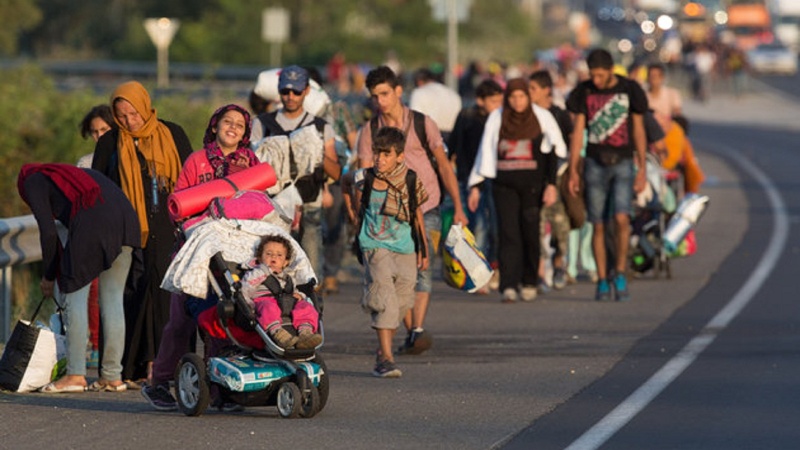
Meanwhile, Europe has currently turned into a destination for an unprecedented wave of migrants who enter Europe via the African country of Libya and the Asian country of Turkey. In accordance to latest figures, over a million refugees have landed in Europe in the year 2015, which shows a four-fold rise compared to its preceding year. Moreover, 3,700 migrants have drowned in the Mediterranean Sea, due to boarding crammed, unsafe boats, in an effort to set foot on Europe.
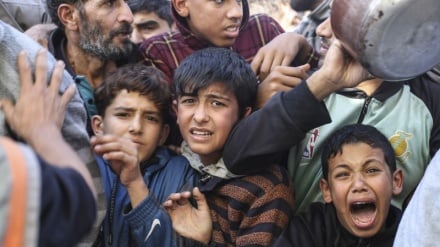
Topics of concern such as the appalling conditions of war refugees; the countless woes that refugees endure on their way to Europe; the death of a large number of refugees who drown in the Mediterranean Sea; constant violation of human rights by European governments in handling the issue of migration; in addition to terrorist operations carried out by extremists such as the operatives of the terrorist outfit, dubbed ‘Islamic State of Iraq and the Levant’ in a number of European countries, and the consequent bouts of violence against Muslims have all and all once again thrown the issue of migration to Europe under the spotlight. In many European countries, such as Germany, Britain, and Netherlands, the so-called concerns over the growing Muslim communities has led to demands for restriction of the wave of migration to these countries. The European states are grappling with many challenges, rooted in the growing wave of migration to Europe. This comes while no effective policy has been adopted to handle the wave of migration. Crises in Syria, Afghanistan, Iraq, and Libya have shaped a new wave of migration to Europe, which has been unprecedented in the post-World War II era. Some of these migrants lose their lives on their way to Europe and/or experience an inappropriate life. One of the root causes of migration to Europe is the political and economic changes in Middle East and Africa. In other words, there has always been a direct correlation between the economic and political chaos in Africa and Asia, and a rise in migration to Europe. The European states are yet to reach a common policy in dealing with this phenomenon. The influx of migrants to Europe has caused countless challenges and problems for the European states, on one hand, and migrants, on the other hand. Hence, the European states are dealing with numerous challenges in relation to the new wave of migrations to this continent. The arrival of migrants to Europe took up new dimensions since the break out of Syrian crisis, generating concerns among the European politicians. Thousands of the residents of crisis-stricken countries such as Syria, Afghanistan, Libya, Somalia, and Iraq have made every effort to reach European countries; with hundreds of migrants putting their lives at risk for this purpose.
The importance of the topic of immigration is not just restricted to heated up electoral debates, and has turned into a major dispute in the realm of contemporary security policies in Europe. The majority of political measures taken by the European countries have aimed to lower the rate of migration to this continent. Today, Europe seems as an appealing destination for those, who suffer from poverty, hunger, crises, violation of human rights, and war. For these individuals, who seek a better life, Europe wrongly appears to be the epitome of a land; free from war, poverty, and injustice. Many of migrants in Europe fail to attain their goals. Today, the issue of immigration has turned into a security issue across Europe. It seems as though there is an increasing bond between the topic of migration and the issue of social security. Hence, efforts are made to analyze the security aspect of the topic of migration in the European Union and its related consequences.
The outlook toward the phenomenon of migration changed as of the mid-1980 AD. Migration turned into a political topic, given the exponential rise of migration to Europe. Meanwhile, a direct relationship was shaped between illegal migration and demand for asylum. On this basis, upon the mounting illegal migration, European states sensed a need for establishment of joint European laws and uniformity in European policies on migration. In this period of time, European governments referred to migration as a challenge for welfare states and the cultural makeup of a nation. As of the late 1990s, especially in the aftermath of 9/11, the issue of migration became a topic of security. In this phase in time, in the view of European governments, the issue of migration was tied to phenomena of terrorism, extremism, and global violence, because the third generation of Muslim migrants refused to adopt a European identity. In fact, the host European governments maintained a poor performance in establishment of a constructive relationship with Muslim migrants. Some of these governments also tried to take away the values of Muslim migrants and to Europeanize these migrants, but to no avail. Meanwhile, the social rifts gradually widened between Muslim migrants and their host European states, setting the stage for social isolation of Muslims, while escalating waves of xenophobia and Islamophobia in host European states.
This trend has turned the nature of migration from a social issue to a political and security issue in Europe, laying the ground for emergence of social unrests and empowerment of anti-migration currents such as the rightwing parties in European countries. In the view of European states, the issue of migration is considered as a challenge against the national identity of European countries. Migration has been introduced as a main factor which undermines Western civilization and social harmony in European countries.
MR/ME
Tags