Obama’s bombing legacy
Jan 28, 2017 09:15 UTC
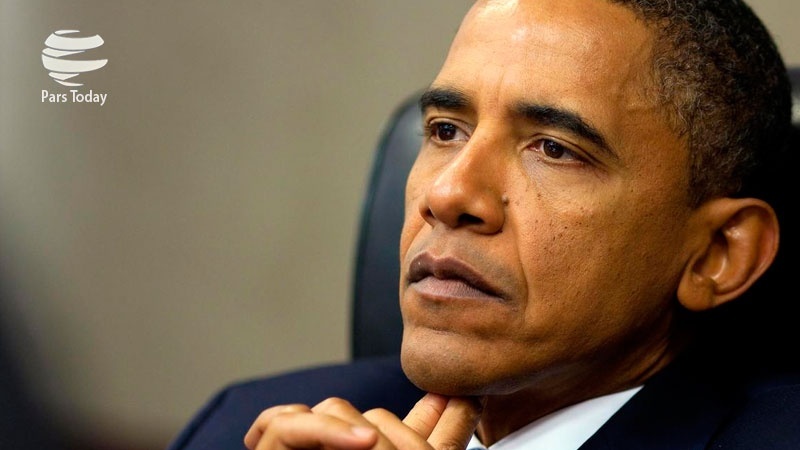
While presenting himself as the president responsible for ending America’s foreign wars, he has involved the U.S. in new ones to one degree or another since the spring of 2011. However, his decisions to initiate, escalate, or join these wars have faced remarkably little scrutiny and even less resistance. Obama is responsible for his own policies, but he could not have done so much at such low political cost if both Congress and the press weren’t so content to accept presidential war-making.
Thanks to the constant berating of hawks that he is too “passive” and the bleating of foreign policy pundits that Obama is guilty of “inaction” abroad, the president has been able to get away with being one of the most interventionist foreign policy presidents in modern U.S. history while being viewed by many in both parties as very nearly the exact opposite.
Perhaps the most horrifying and least-known part of this legacy is the disgraceful U.S. support for the Saudi-led war on Yemen. U.S. refueling, arms, and intelligence have enabled the coalition to wreck Yemen’s infrastructure and devastate its economy while committing numerous documented war crimes through indiscriminate and deliberate attacks on civilian targets. The U.S. has backed this war at the same time that the so-called Saudi-led coalition has blockaded and starved the civilian population of basic necessities, and millions of lives are at risk from starvation and preventable diseases as a result. U.S. involvement here is quite sinister because it is enabling enormous destruction while being much less visible than in other places.
Throughout this shameful war, the U.S. has pretended that it is not a party to the conflict, and for the most part the Obama administration has been able to get away with this. Except for a small number of members from both houses, Congress has either been completely indifferent to the catastrophe the Obama government has helped create or they have been openly supportive of the Saudis and their allies. Obama has occasionally come under criticism in major papers for his indefensible support for the war on Yemen, but because there was no danger that Congress might oppose him he had easily dismissed that criticism.
Obama’s legacy is continuing U.S. involvement in wars in Iraq, Syria, Afghanistan, and Yemen, and he bequeaths to his successor the ability to start, escalate, and join wars at will without Congressional authorization.
As Obama left office, much of his foreign policy record remained shrouded in the symbolism that has been the hallmark of his presidency. The persistence of Obama’s image as a reluctant war-maker and a Nobel Peace Prize winner has allowed Donald Trump and his cabinet nominees to claim that Obama has underfunded the military and been less than aggressive in his use of U.S. military power. Nothing could be further from the truth, and their claims are clearly designed only to justify even more extravagant military spending and more aggressive threats and uses of force than those perpetrated under Obama’s "disguised, quiet, media-free" war policy.
The reality is that Obama has increased US military spending beyond the post-World War II record set by President George W. Bush. Now that Obama has signed the military budget for FY2017, the final record is that Obama has spent an average of $653.6 billion per year, outstripping Bush by an average of $18.7 billion per year in 2016 dollars. In historical terms, after adjusting for inflation, Obama’s military spending has been 56 percent higher than Clinton’s, 16 percent higher than Reagan’s, and 42 percent more than the U.S. Cold War average, when it was justified by a military competition with a real peer competitor in the Soviet Union.
What all this money has paid for has been the polar opposite of what most of Obama’s supporters thought they were voting for in 2008. Behind the iconic image of a hip, sophisticated celebrity-in-chief with strong roots in modern urban culture, lies a calculated contrast between image and reality that has stretched the US's "managed democracy" farther than ever before.
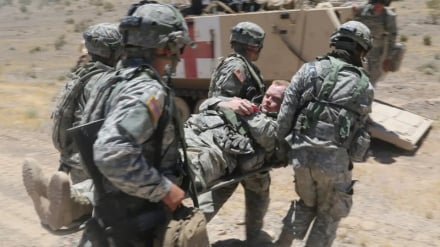
Obama’s doctrine of covert and proxy war was modeled on the Phoenix Program in Vietnam in the 1960s and 1970s and Ronald Reagan’s proxy wars in Central America in the 1980s. It involved a massive expansion of U.S. special operations forces, now deployed to 138 different countries, compared with only 60 when Obama took office. Wherever possible, U.S. forces have recruited and trained proxy forces to do the actual fighting and dying in different countries. Obama’s ten-fold expansion of drone strikes further reduced U.S. casualties relative to numbers of foreigners killed. This fostered an illusion of peace and normality for Americans in the homeland even as the death toll inflicted by America’s post-9/11 wars almost certainly passed the two million mark. The targets of these covert and proxy wars are not just guerrilla fighters or “terrorists” but also the “infrastructure” or "civilian support mechanism" that resist domination.
As Obama’s murderous proxy war Syria has spun further out of control, U.S. special operations forces and U.S.-trained death squads on the ground have increasingly been backed up by U.S. and so-called allied air forces. The U.S. and its allies dropped 20,000 bombs and missiles in his first term. In his second term, they have dropped four times that number, bringing the total for Obama’s presidency to over 100,000 bombs and missiles striking seven countries, surpassing the 70,000 unleashed on five countries by George W. Bush.
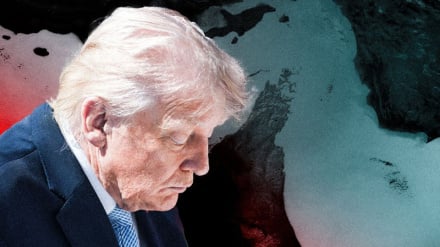
Donald Trump and his choices for secretaries of State and Defense, Rex Tillerson and Jim Mattis, respectively, are right to say that Obama’s war policy has failed. But they are wrong to insist that the answer is to spend even more on weapons and use them even more aggressively.
Obama’s failure was the result of his deference to generals, admirals, the CIA and hawkish advisers like Secretary of State Hillary Clinton and Ambassador to the United Nations Samantha Power, and of his blind faith in U.S. military power. But war was never a legitimate or effective response to what they referred to as 'terrorism'.
The misuse of military force has only spread violence and chaos across the Muslim world and spawned an explosive mix of political disintegration, a dizzying proliferation of armed, and of course terrorist, groups with different interests and loyalties and, ultimately, more blowback for the West. Saudi Arabia, Pakistan, Turkey, the usurper regime of Israel, Qatar and other “allies” have been only too eager to exploit and redirect the aggression against their own opponents including Syria and different ethnic groups.
The U.S. has become a blind giant stumbling through a thick forest of shadows and unseen dangers, striking out with its devastating war machine at the instigation of self-serving allies and the same dark forces in its own “intelligence” bureaucracy who have stirred up trouble, staged coups and unleashed war in country after country for seventy years. The only consistent beneficiary in all this death, destruction and chaos is the “military industrial complex” that President Eisenhower warned the Americans against in his farewell address in 1961.
As manufacturers of Virginia class submarines, Arleigh Burke and Zumwalt destroyers and littoral combat ships, all programs saved, revived or expanded by Obama, as well as other types of munitions, the Crown family’s patronage of Barack Obama has proven to be a profitable investment, from the violence and chaos in the Muslim world to the New Cold War with Russia to the “pivot” to the South China Sea.
Indeed, Obama’s 'bombing legacy' is continuing U.S. involvement in wars and he leaves for his successor the ability to start, escalate, and join wars at will without Congressional authorization.
What you heard was from an article written by Nicolas J S Davies, the author of "Blood On Our Hands: the American Invasion and Destruction of Iraq". He also wrote the chapters on “Obama at War” in Grading the 44th President: a Report Card on Barack Obama’s First Term in office. The article was published by the Consortium News.
EA/SS
Tags