2016, the Most Critical Year for Refugees (2)
Feb 27, 2017 06:52 UTC
In the second episode of this series, we will discuss the Islamic Republic of Iran’s services to millions of Afghan refugees and compare it with the behavior of European governments towards homeless people.
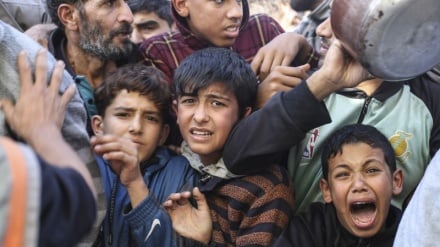
Based on the figures released in 2016, 7189 refugees lost their lives during migration. 4220 were drowned in the Mediterranean Sea. The United Nations has declared that the Mediterranean Sea has turned into the largest cemetery for the refugees. Meanwhile the office of UN High Commissioner for refugees announced that 2016 was the deadliest year for refugees in the Mediterranean Sea.
In the past decades, the European governments have adopted a selective stance toward immigrants. In other words, they have tried to absorb the talented and creative people and cheap manpower. But last decade, migration has taken a totally different shape. A wave of refugees migrated from Asia and North Africa to Europe to escape war, insecurity, natural disasters and economic woes of countries. The reaction of the European governments, which boisterously claim to be the defenders of human rights, has been very inhuman. Saying that their cultural identity and national security is at stake, European regimes have changed their laws and adopted rigid security measures for preventing the arrival of immigrants in their soil. The rich and developed European countries have indeed received the smallest number of asylum-seekers. On the contrary, the Islamic Republic of Iran has been a (if not the) pioneer in this regard. Although after the victory of the revolution, the Islamic Republic of Iran faced with various economic, political and social upheavals and was also involved in the 8-year war imposed by the US through its minion Saddam, this country received millions of Afghan and Iraqi nationals. Now we intend to compare the behavior of the Islamic Republic of Iran towards immigrants and refugees at the climax of problems with the conduct of the rich European states and claimants of human rights.
Due to different causes such as humanitarian attitude, cultural and language commonalities and sharing long borders with Afghanistan, Iran has hosted over 3 million Afghan refugees for approximately 4 decades and has offered various services to mitigate their pains and sufferings. The Afghan immigrants left their country in three major waves and went to different countries especially Iran and Pakistan. The reasons for migration were the Soviet attack, civil war, coming to power of Taliban and finally the US invasion and destruction of the country. In the first wave a large number of Afghan refugees arrived in Iran due to the Soviet invasion in 1979. The number of the Afghan immigrants in this period was estimated to be over two million. These people not only were not led to special refugee camps but with the Islamic Republic’s humane and religious attitude and the Iranian people’s hospitality they were absorbed in social fiber.
In the second wave, through the civil war 1989-1995, about 2.5 million Afghan refugees arrived in Iran. The third wave began with the coming to power of Taliban in Afghanistan between the years 1996-2001 and consequently the US invasion of this country. Now nearly 3million Afghans live in Iran and this has created specific problems for Iran. Due to religious and human issues, Iran cannot expel them and in the meantime, their presence in the country should be managed. But the international aid to Afghan immigrants is very insignificant and the major part of Afghan refugees’ expenditure is assumed by the Iranian government and people.
The role Iranian aid to Afghan refugees becomes more valuable when we realize that most of the world countries do not permit influx of refugees in millions or do not permit the residence of immigrants among their people but they keep them in camps. This comes as concurrent with the victory of the Islamic revolution in 1979, while Iran was involved with many internal problems; it received millions of Afghans who have lived among the Iranian people ever since. These immigrants have benefited from subsidies and other facilities like Iranians.
Iran’s aid to Afghan immigrants and refugees continued even during the 8-year war imposed by the Great Satan (the US) through its puppet the Iraqi Baathist regime despite several economic and financial problems. After that, although Iran faced several problems as a result of widespread western sanctions, it continued its support for the Afghan refugees.
Moreover, Iran extended great assistance to the struggles of Afghan nation against the Soviet Union and the reactionary regime of Taliban. During the fighting between Afghan Mujahedeen and the Soviet army, the latter was harmed several times due to the weapons sent from Iran and the Soviet government called on Iran to end dispatch of arms to Afghan Mujahedeen so that in return, the Soviet would stop supporting Saddam and the Iraqi Baathist regime. But this concession was not accepted due to the religious duty of the Islamic Iran and Imam Khomeini (God’s mercy on him). Over the past three decades, despite the numerous financial, political, security and social problems, Iran has attempted to extend assistance to Afghan nationals. This includes legal, economic, housing and education help which shows the role of the Iranian government and nation for alleviating the pains of the Afghan people.
Iran’s aid to Afghan government and nation has domestic and foreign aspects. In other words, inside its borders, Iran is engaged in serving the Afghan refugees and inside Afghanistan it has implemented several infrastructural, educational and health projects and handed them over to the Afghan government and nation. The residence of Afghan immigrants in Iranian cities and their access to various facilities and services have been appreciated by the UN. The UN high commissioner for refugees described Iran’s measure generous. The value of Iran’s aid is better realized when we know that about 5 million Afghan refugees took refuge in Pakistan borders but Islamabad kept them in camps on the borders with poor conditions. The camps became the main base for recruitment of Al-Qaeda and other terrorist groups.
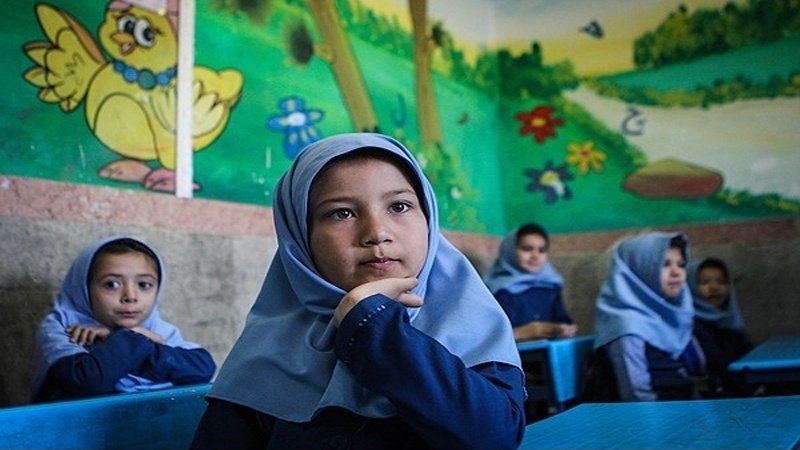
Although Shia is the official denomination in Iran, the main point in Iran’s relief aid to the Afghans residing in Iran is that the Iranian government and nation admits the Afghan Sunnis as their brothers. According to the Islamic policies, Iran which concurrently supports the Lebanese Shias and the Palestinian Sunnis, has never adopted discriminatory policy towards the Afghan and Iraqi refugees and accepted all of them. The leader of the Islamic revolution Ayatollah Seyyed Ali Khamenei in 2016 stressed the necessity of studying of Afghan refugee children at Iranian schools. In his order, the leader wrote: “No Afghan child even the illegal immigrants should not be deterred from studying and all should be enrolled at Iranian schools. The number of students studying at schools in the 2015-2016 academic year reached 400 thousand. The access of Afghan children to schools indicates the Islamic Republic of Iran’s attention to education of Afghan brothers and sisters. The representative of the UN high commissioner for refugees in Iran Bernard Doyle has explicitly underlined that one of the best and most important aid of Iran to Afghan refugees is educational aid in different sectors.
FK/RM/MG
Tags