2016, the Most Critical Year for Refugees (3)
Feb 28, 2017 05:42 UTC
In this program we will talk about the Islamic Republic of Iran’s services to Afghan immigrants in high education, health and housing sectors.
In spite of the highest rate of per capita growth, the US and European governments receive the smallest number of refugees and immigrants in comparison to other countries. Based on the latest UN figures, Turkey with over 2.5 million refugees, Pakistan with over 1.5 million, Lebanon with over 1 million and Iran with about 1 million refugees rank 1st - to 4th respectively in receiving immigrants. Meanwhile the US with about 250,000 refugees ranks 17th on the list. Comparing the scale of receiving refugees with the population of a country, the US is lower than many countries. The European countries have also been placed among the lowest receivers of immigrants and refugees.
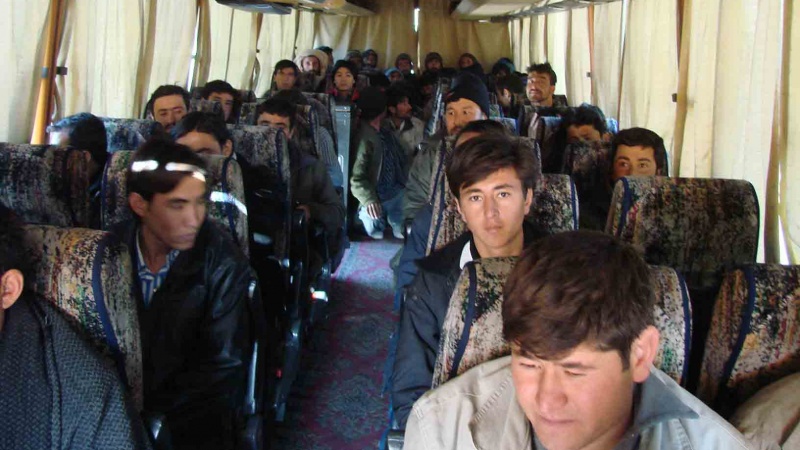
In the previous program, we compared the Islamic Republic of Iran’s behavior towards refugees with that of the European regimes who are claimants of human rights. Due to different causes such as humane vision, cultural and language commonalities and the long common borders, Iran has hosted over 3 million Afghan refugees and hundreds of thousands of Iraqis for almost 4 decades and has offered various services to alleviate the sufferings of Afghan and Iraqi refugees. Iran’s assistance to Afghan and Iraqi refugees becomes more valuable once we realize that most of the countries do not permit influx of refugees in millions or their residence among people but they keep them in camps. The Islamic Republic of Iran’s assistance has various aspects and few countries in the world are ready for such sacrifices. Education is one of the services offered to the Afghan immigrants. All Afghan children enjoy educational services in Iran.
There are about 25,000 schools in Iran in which foreign nationals study alongside Iranian students. Iran’s ministry of education has allotted certain subsidies for Afghan nationals. There is also broad cooperation between the education ministries of the Islamic Republic of Iran and Afghanistan regarding construction schools in Afghanistan, compilation of textbooks, developing educational standards for the ministry of education in Afghanistan, transferring educational experiences and meeting other needs of Afghan education ministry. As for training of Afghan nationals for their entrance in labor market in Iran and Afghanistan, technical and professional classes have been held for them since 2011. The classes have been held in various fields including welding, electricity, water supply, car repair, computer, accounting, cartography, sewing and hairdressing and till 2015 nearly 80,000 have taken part in these classes and received diplomas.
As European officials have acknowledged, the Iranian government has provided all legal Afghan immigrants with insurance coverage. The Islamic Republic of Iran has provided them with Salamat (Health) insurance coverage with the cooperation of UN high commissioner for refugees and through ministry of health and ministry of labor. The Iranian government and nation have put no restriction for residence of Afghan nationals. Due to the importance of presence of over 3 million Afghan refugees, the Iranian government has called on Afghan nationals to refer to authorized organizations for issuing permission of renting or buying houses. In other words, for renting a house, the Afghan nationals should present a certificate from the general administration of foreign nationals or police to real state bureaus. This is carried out simply for collecting information and completing the Iranian government data bank.
In view of the role of university and high education in training experts for developing and reconstructing Afghanistan, the Iranian universities with the cooperation of Iran’s ministry of science, research and technology have always hosted foreign students especially the nationals of Muslim countries.
The Afghan students have always enjoyed priority for acceptance by Iran. The Afghan students study in Iranian universities both in Iran and Afghanistan. Four Iranian universities under the titles of Azad Islamic University, Payam Noor, Kharazmi and Al-Mustafa al-Alamiya have active presence in Afghanistan in the field of education and research. Students with or without scholarship are studying in Iran's universities. In general, the number of Afghan students since 1999 to 2015 has been approximately 42,000 at BA, MA and PhD levels. In the recent four decades, the Islamic Republic of Iran has extended an all-out support for Afghan refugees. Throughout these years, Iran has been involved with the imposed war, internal problems and illegal sanctions but has not created any problem for the Afghan refugees. For sure, the ultimate solution to the problem of Afghan refugees should be sought in their mother land. All countries and international organizations should pave the ground for the return of refugees to their homeland for good but the countries which claim to support human rights have taken no step in this regard.
The countries which claim to bring freedom, democracy, security and stability to the region and the international bodies including the UN should help the Afghan government in providing life conditions and security for refugees. They should thoroughly fulfill their duties towards reconstruction of Afghanistan and, while not supporting terrorism and cultivation of narcotics, they have to pave the ground for economic and social conditions for return of Afghan refugees. In view of the high number of Afghan refugees across the world, different countries host the Afghan nationals. These countries have had bilateral relationship with the Afghan government and through the global relief-aid organizations and UN special agencies they must direct their assistance toward the Afghan government and nation. In the next program we will discuss the behavior of some countries like Turkey, Pakistan, the US, Russia and the EU with the Afghan asylum-seekers.
FK/RM/MG
Tags