2016, the most critical year for refugees (4)
Mar 01, 2017 06:46 UTC
In the last part of this series, the humanitarian services of the Islamic Republic of Iran to Afghan refugees have been compared with those of other countries that Afghan refugees have chosen as their destination.
In view of continuous influx of immigrants and refugees to Europe, a number of them are drowned in the Mediterranean Sea before reaching their destination. In the first month of 2017, some 221were drowned in central Mediterranean and 25 were killed in Spain. Referring to the figure released by international organization for migration IOM, the United Nations High Commissioner for Refugees (UNHCR) spokesman described the death of 5000 refugees as a sad record and said in order to prevent such heavy casualties, measures should be taken as soon as possible for providing the legal entrance of immigrants to Europe.
In view of the fact that the European governments are seeking to adopt more strict policies to prevent entrance of refugees and immigrants, they choose more dangerous routes for traveling to Europe and we should expect shocking news of drowning of hundreds of refugees in the Mediterranean Sea. The US and the European governments, despite the highest rate of per capita growth, receive the smallest number of refugees and immigrants as compared with other countries. The Islamic Republic of Iran is one of the countries which for nearly four decades have hosted millions of refugees and immigrants from the war-hit countries of Afghanistan and Iraq. Iran’s assistance has several dimensions and few countries have rendered such level of services to immigrants.
The global support includes a vast range of measures taken by international organizations for helping governments and other players of international system. Every country presents different supports in proportion to its intentions, goals and capabilities. In view of the high number of Afghan refugees across the world, various countries have received these nationals. These countries have had bilateral relationship with the Afghan government and through the international relief-aid organizations and UN specialized agencies offer their aid at the disposal of Afghan government and nation both inside their own country and abroad.
There is no information about the exact number of Afghan nationals in Turkey. It seems that there are about 75,000 to 80,000 Afghans in this country. The majority of Afghan nationals have chosen Turkey not as a final destination but as the gate for entering Europe and the US. Now over 60,000 Afghan refugees live in Turkey without access to suitable job, sufficient education, health and medical care, and any specific legal situation. After Syrians, Afghan refugees are the second populous refugees in Turkey. The Afghans residing in Turkey are kept in special camps and are not permitted to leave the camps. This comes as in Iran, the Afghan nationals are free to move and travel and they can legally and without any restriction refer to offices of foreign nationals to receive travel permit. The Afghans residing in Turkey cannot choose their residence whereas in Iran they are free to choose their place of living.
Financial and food aid to Afghan refugees in Turkey are sporadic and can be accessed only through the UN and the non-concentrated system of local charity organizations. The aid of the local charity organizations is usually one hot meal per day.
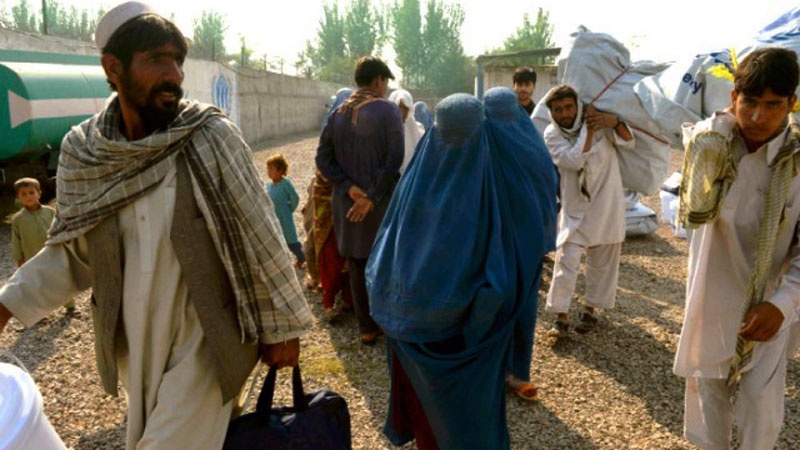
In terms of the number of Afghan refugees, Pakistan is the second country. Over 1.5 million Afghans live in Pakistan. 20% of the Afghan refugees living in Pakistan are at the age of 15 to 24. By the end of 2015 over 3 million Afghans were living in Pakistan. 160 camps or special settlements have been erected for Afghan refugees. 62% of Afghan refugees live in Khyber Pashtun and 21% in Peshawar. About half of the Afghans residing in Pakistan cannot choose their residence. The important point about Pakistani government’s services to Afghan refugees is that most of these services are rendered by the UN specialized agencies, foreign governments and popular organizations. In Pakistan, 80% of Afghan refugees who are in school age and are in need of official education cannot attend classrooms. Some 33% of Afghan refugees in Pakistan can just read and write. This figure stands at beneath 7.5% among girls and women. This worrisome figure is the result of Pakistan’s national restrictions.
After Iran and Pakistan, Russia and European states are the destination of some 10,000 Afghan refugees. Most Afghan nationals in Europe select the three countries of Britain, Germany and the Netherlands for living and working. After Syrian refugees, the Afghan refugees have the highest number in Europe. Most of them have come to Europe via Turkey and Russia. The Afghan nationals who have legal situation in Europe have appropriate access to public services. But a large number, who according to the EU officials are considered homeless and arrived in European countries illegally, are kept in camps with squalid conditions. The Afghan immigrants who decide to live in the EU, after arrival in their target country, enter a camp and depending on the conditions of the host country and asylum application they have to stay 1 month to 10 years at a special camp. After 10 years, the asylum application of Afghan immigrants may be rejected and they are forced to return to their country.
The main point is that if a person after living in camp can take permit for staying this does not mean that he can freely enter all regions of that country. He or she is only allowed to stay and travel in towns suburbs around large cities. The figures released by the international organization for migration IOM shows that Britain, Norway, Germany, Denmark, Sweden, the Netherlands and a number of other countries in the past few years have forcibly deported most of the Afghan refugees to Afghanistan. The EU aid to Afghan government in humanitarian and health affairs in 2016 stood at 30 million Euros. The EU states have declared if Afghanistan does not accept its nationals they will sever their humanitarian aid to the country. Seyyed Hussein Alemi Balkhi Afghanistan’s minister of migration has acknowledged that the Afghan immigrants in Europe face many problems including their forcible expulsion and lack of access to initial services.
Among the countries of destination for Afghan refugees, Turkey has had the worst behavior with them as acknowledged by immigrants and international organizations. Pakistan faced numerous internal problems and other countries have limited their main services to legal Afghan immigrants. But the Islamic Republic of Iran has accepted Afghan refugees with a maximum tolerance. Iran hosts several million Afghan refugees whereas Europe, the US and even Russia are not involved in such an issue. Finally according to Afghanistan’s minister of migration, the situation of Afghan refugees in Europe and Pakistan is very grave but the immigrants who live legally in Iran have access to all services and are engaged in living and working. This has been acknowledged several times by the UN officials in their trips to Iran.
FK/RM//ME
Tags