Trouble brewing in the House of Saud
Oct 14, 2017 12:49 UTC
The recent decision by Saudi Arabia to allow women to drive cars is intended to be a distraction by Riyadh to the real troubles facing the Aal-e Saudi Wahhabi minority regime that rules the British-created entity since 1932.
Here's an analysis in this regard by Pepe Escobar.
Saudi women being allowed to drive is a smokescreen – Salafi-jihadism is alive and well inside the Kingdom – created by the British as a reward for their agent, Abdul-Aziz, the desert brigand of Najd, whose Salafi/Wahhabi hordes unleashed torrents of Muslim blood in 1925 to occupy Mecca, Medina, Jeddah and Ta’ef and desecrate the sanctities of Islam.
What's more, another coup may be along shortly.
Suddenly, the ideological matrix of all strands of Salafi-jihadism is being hailed by the West as a model of progress – because Saudi women will finally be allowed to drive, but only next year, only some women, and still subject to many restrictions.
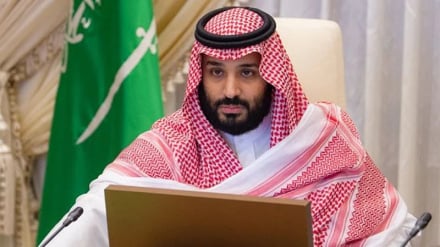
What’s certain is that the timing of the announcement was calculated with precision, arriving only a few days before House of Saud capo King Salman drops in for a chat at Donald Trump’s White House. The move was coordinated by the 32-year-old Heir Apparent, Mohammad bin Salman, aslo known as MBS, the Destroyer of Yemen; the king merely added his signature.
The diversionary tactic masks serious trouble in the court. A business source in the Persian Gulf with intimate knowledge of the House of Saud, having held a number of personal meetings with members, told Asia Times that “the Fahd, Nayef, and Abdullah families, the descendants of King Abdul-Aziz Aal-e Saud and his wife Hassa bin Ahmed as-Sudairi, are forming an alliance against the ascendancy to the Kingship of the Heir Apparent.”
No wonder, considering that the ousted Heir Apparent Mohammed bin Nayef is under house arrest, his massive web of agents at the Interior Ministry has largely been “relieved of their authority”. The new Interior Minister is 34-year old Abdul-Aziz bin Saud bin Nayef, the eldest son of the governor of the predominantly Shi’a Muslim Eastern Province, where all the oil is. Curiously, the father is now reporting to his son. MBS is surrounded by inexperienced thirty-something princes, and alienating just about everyone else.
Former King Abdulaziz set up his Saudi succession based on the seniority of his sons; in theory, if each one lived to the same age all would have a shot at the throne, thus avoiding the bloodletting historically common in Arabian clans over lines of succession.
Now, says the source, “a bloodbath is predicted to be imminent.” Especially because “the CIA is outraged that the compromise worked out in April, 2014 has been abrogated wherein their best bet in the Middle East, Mohammed bin Nayef, was arrested.” That may prompt “vigorous action taken against MBS possibly in this current month of October.” And it might even coincide with the Salman-Trump get together.
Asia Times’ Persian Gulf business source stresses how “the Saudi economy is under extreme strain based on their oil price war against Russia, and they are behind their bills in paying just about all their contractors. That could lead to the bankruptcy of some of the major enterprises in Saudi Arabia. The Saudi Arabia of MBS features the Heir Apparent buying a US$600 million yacht and his father spending US$100 million on his summer vacation, highlighted on the front pages of the New York Times while the Kingdom strangles under their leadership.”
MBS’s pet project, the spun-to-death Vision 2030, in theory aims to diversify from mere oil profits and dependency on the US to a more modern economy (and a more independent foreign policy).
That’s completely misguided, according to the source, because “the problem in Saudi Arabia is that their companies cannot function with their local population and [are] reliant on expatriates for about 70% or more of their staff. Aramco cannot run without expatriates. Therefore, selling 5% of Aramco to diversify does not solve the problem. If he wants a more productive society, and less handouts and meaningless government jobs, he has to first train and employ his own people.”
The similarly lauded Aramco IPO, arguably the largest share sale in history and originally scheduled for next year, has once again been postponed – “possibly” to the second half of 2019, according to officials in Riyadh. And still no one knows where shares will be sold; the NYSE is far from a done deal.
In parallel, MBS’s war on Yemen, and the Saudi drive for regime change in Syria and to reshape the Greater Middle East, have turned out to be spectacular disasters. Egypt and Pakistan have refused to send troops to Yemen, where relentless Saudi air bombing – with US and UK weapons – has accelerated malnutrition, famine and cholera, and configured a massive humanitarian crisis.
The so-called Islamic State project was conceived as the ideal tool to force Iraq to implode. It’s now public domain that the funding came mostly from Saudi Arabia. Even the former imam of Mecca has publicly admitted Daesh leadership “draws its ideas from what is written in our own books, our own principles.”
Which brings us to the ultimate Saudi contradiction: Salafi-jihadism is more than alive inside Saudi Arabia even as MBS tries to spin a (fake) liberal trend (the “baby you can drive my car” stunt). The problem is Riyadh congenitally cannot deliver on any promise.
In Syria, besides the fact that an absolute majority of the country’s population does not wish to live in a Takfiristan, Saudi Arabia supported Daesh while Qatar supported al-Qaeda’s Jabhat an-Nusra branch. That ended up in a crossfire bloodbath, with all those non-existent US-supported so-called “moderate rebels” reduced to road kill.
And then there’s the economic blockade against Qatar – another MBS plot that has only served to improve Doha’s relations with both Ankara and Tehran. Qatari Emir Tamim bin Hamad Aal-e Thani was not regime-changed, whether or not Trump really dissuaded Riyadh and Abu Dhabi from taking “military action.” There was no economic strangulation: France’s Total, for instance, is about to invest US$2 billion to expand production of Qatari natural gas. And Qatar, via its sovereign fund, counterpunched with the ultimate soft power move – it bought global footballing brand Neymar for PSG, and the “blockade” sank without a trace.
In Enemy of the State, the latest Mitch Rapp thriller written by Kyle Mills, President Alexander, sitting at the White House, blurts, “the Middle East is imploding because those Saudis have been pumping up religious fundamentalism to hide the fact that they’re robbing their people blind.” That’s a fair assessment.
No dissent whatsoever is allowed in Saudi Arabia. Even the economic analyst Isam az-Zamil, very close to the top, has been arrested during the current repression campaign. So opposition to MBS does not come only from the ruling family or some top clerics.
In terms of what Washington wants, the CIA is not fond of MBS, to say the least. They want “their” man Nayef back. As for the Trump administration, rumors swirl it is “desperate for Saudi money, especially infrastructure investments in the Rust Belt.”
It will be immensely enlightening to compare what Trump gets from Salman with what Putin gets from Salman: the ailing King just now concluded his visit to Moscow. Rosneft is interested in buying shares of Aramco when the IPO takes place. Riyadh and Moscow are considering an OPEC-non-OPEC cooperation platform incorporating the Gas Exporting Countries Forum (GECF).
Riyadh has read the writing on the new wall: Moscow’s rising political/strategic capital all across the board, from Iran, Syria and Qatar to Turkey and Yemen. That does not sit well with the US deep state. Even if Trump gets some Rust Belt deals, the burning question is whether the CIA and its friends can live with MBS on the House of Saud throne.
AS/EA
Tags