Questions on Ashura (8)
Sep 18, 2018 05:48 UTC
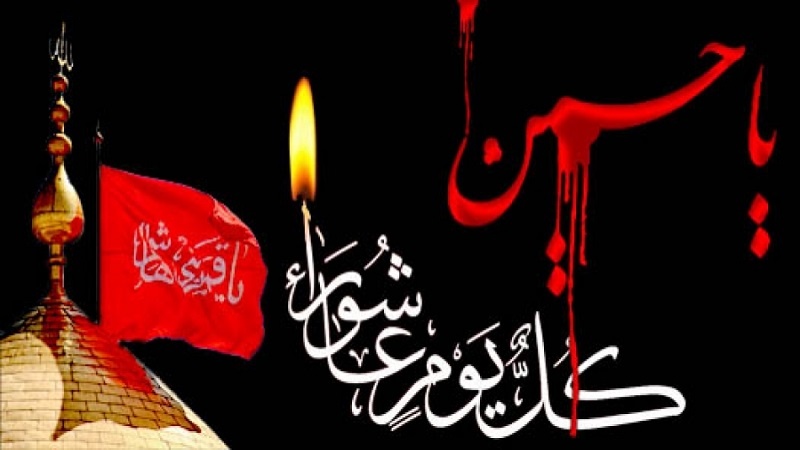
We are in the days of mourning for Imam Hussein (AS); the days in which the hearts of the faithful are saddened at the martyrdom of Imam Hussein, his relatives and companions.
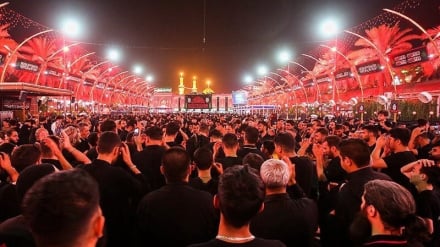
Mourning ceremonies are held everywhere, cities and villages are bedecked in black and tears roll down on the cheeks of the faithful and lovers of the Ahl al-Bayt. Voices of elegies are heard from mosques and Husseiniyehs. Lovers of Imam Hussein and the martyrs of Karbala have continued to shed tears for 14 centuries. Thus, they have kept the name and memory of Imam Hussein alive across the world and are going to lead the Imam's uprising to its lofty goal, namely, returning the history to its real course. But some ignorant people and, for sure, enemies have attacked the constructive tradition of shedding tears for Imam Hussein to raise doubts about his fateful uprising and show it as opposite to the Islamic teachings. We will touch upon this issue.
The best source for cognizance of religion is the noble Qur'an. God says in ayah 32 of surah Hajj, "And whoever venerates the sacraments of Allah – indeed that arises from the Godwariness of hearts."
Exegetes of Qur'an maintain that sacraments of Allah in this ayah are not limited to specific acts like Safa and Marwa; but anything which reminds us of God is considered as sacrament of Allah. Allameh Tabatabai believed that sacrament of Allah means the signs of the divine grandeur and Godwariness.
For sure, mourning and weeping for the chosen servants of God (friends of God), who have sacrificed their soul to revive the religion of God, is one of the most obvious ways to venerate the sacraments of Allah. This is due to the fact that in these ceremonies the religious issues are discussed and the preachers always speak of the lofty merits of martyrs; hence these gatherings and ceremonies are the places to remind us of friendship with the friends of God and enmity with the enemies of God. Ayah 148 of surah Nisa' stresses that Allah does not like the loud disclosure of the evil conduct of others except by someone who has been wronged. Thus, God has permitted every oppressed to divulge the evils of oppressors in loud voice. Has there been any oppression graver than killing the Prophet's grandson and depriving the Ummah from the third infallible Imam? Imam Khomeini says, "Weeping for the oppressed is a shout against the oppressor."
The noble Qur'an has mentioned numerous instances of weeping in calamities. For example, the weeping of Prophet Jacob for Joseph which God hasn't reprimanded. Therefore, weeping for the loss of the friends of God not only is not blameworthy but it is a very good deed that had been done by divine messengers, too. The Prophet of Islam and his progeny, too, have insisted on this. Imam Sajjad (AS) would weep for the tragedy of Ashura to the extent that he was given the epithet, "Bakka'" meaning the one who weeps very much. Once he was asked of the reason for this much weeping. He answered, "Do not reprimand me. Jacob lost Joseph for a while, knowing that he would return one day. He wept so much so that he lost his eyesight. But I saw with my eyes that 14 members of my relatives were beheaded within half a day. Do you expect their grief leave my heart?"
Weeping and mourning for the dead and martyrs had been practiced during the time of the Prophet, too. The Prophet wept intensely at the loss of his infant son, Ibrahim, saying, "The eye cries, the heart becomes sad, but we don’t utter anything except what pleases God. O Ibrahim! We are grieved at your loss."
In addition, when the Prophet's uncle, Hamza, was martyred at the battle of Uhud, the Prophet ordered the women of Medina to hold mourning ceremony for him and weep for Hamza. Hazrat Fatima (Peace upon her) would go to the grave of Hamza every week and weep for him. She also wept very sadly after her father, the Prophet of Islam, had passed away.
When Imam Hussein was a child, Gabriel informed the Prophet of his martyrdom in future. Prophet Mohammad (SAWA) was very restless and wept a lot. Imam Ali (AS), too, while passing through Karbala during the battle of Seffin, remembered the martyrdom of his son in future and wept so much so that the ground was wet with his tears. There are ample documents and accounts in both Sunni and Shia books that all divine messengers and Imams had wept for Imam Hussein and the tragedy of Ashura. The Prophet of Islam would tell Hazrat Fatima, "Every eye will be tearful on the Day of Judgment except the eye that has wept for Hussein. That eye will be happy and given the good tidings of paradise."
Imam Sadeq, upon hearing that some people were mourning and elegizing beside the tomb of Imam Hussein on the day of 15th of Sha'ban, said, "Thank God that He has designed some enthusiastic people to eulogize us and mourn for us, reproach the enemies, protest them and reveal their evil deeds."
Islam is the religion of logic and moderation. The leaders of this religion have never invited their followers to isolation from the society. They have said that we have to divide our day into three parts: one part for healthy entertainment, one part for worship and the third part for working.
It is not true that Shiism is the religion of mourning and sorrow. Shiism is the religion of building humans. It pays attention to every aspect of human being. It fosters reasoning alongside emotion. These two build the human spirit together. That's why the day of Ashura is the day of grief for anyone who has an emotional and rational bond with the Ahl al- Bayt of the Prophet.
RM/ME
Tags