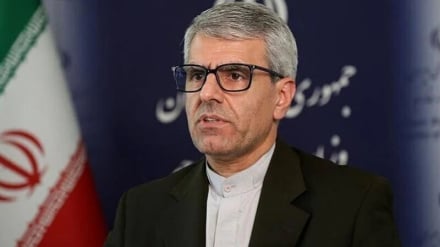
Iran's security chief in Baghdad for talks with Iraqi officials

Iran's top security official has traveled to Baghdad to hold talks with Iraqi officials and political leaders on security and political issues as well as boosting relations between the two neighbors.
According to Press TV, Secretary of Iran's Supreme National Security Council (SNSC) Ali Shamkhani arrived in Baghdad on Saturday night at the head of a high-ranking politico-security delegation.
Speaking upon his arrival, Shamkhani said that he will exchange views with Iraqi President Barham Salih, caretaker Prime Minister Adil Abdul-Mahdi, Parliament Speaker Mohamed al-Halbousi and leaders from different political factions.
Iran, he said, has maintained good brotherly relations with neighboring Iraq since the ouster of former dictator Saddam Hussein in 2003.
In 2014, when Daesh unleashed its campaign of terror in Iraq, Iranian military advisers rushed to the aid of Iraqi armed forces on Baghdad’s request, helping them gradually reverse the Takfiri terrorist group’s gains and ultimately liberate their entire homeland some three years later.
Shamkhani's trip comes in the wake of the US assassination of West Asia's most prominent anti-terror Commander Lt. General Qassemi Soleimani and Iraq’s PMU Deputy Commander Abu Mahdi al-Muhandis in Baghdad in January.
General Soleimani was in Baghdad at the invitation of the Iraqi government when he was targeted.
The terrorist act led to a crisis in diplomatic relations between the US and Iraq which demanded that the American terrorist troops leave the country.
The Trump administration has been defiant and instead threatened to seize Iraq's oil money being held in a bank account in New York as compensation for its military presence in the Arab country.
Elsewhere in his remarks, Shamkhani referred to the outbreak of a new coronavirus in the region, saying that both facts and rumors were spreading about the epidemic.
The fact is that the Islamic Republic is in possession of abundant resources and will score a victory over the epidemic, he noted.
ME