Iran rejects shelving nuclear talks until new government takes office
Tehran has dismissed reports that it may postpone the Vienna talks to restore the nuclear agreement known as the Joint Comprehensive Plan of Action (JCPOA) until President-elect Ebrahim Raeisi assumes office.
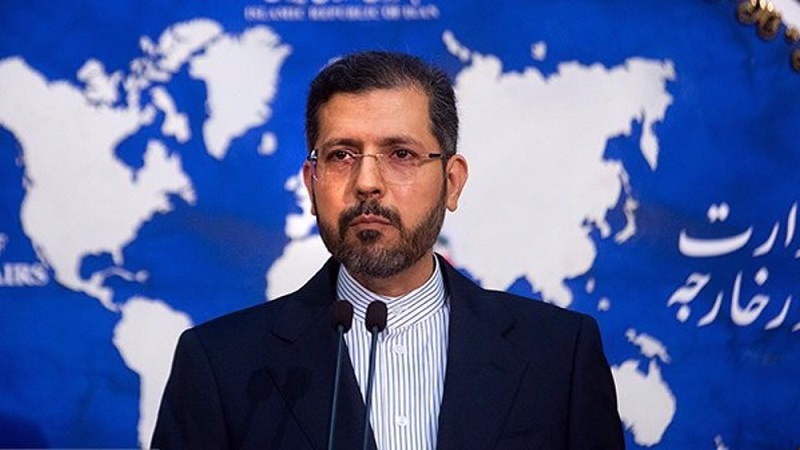
“There have been a lot of speculations about the postponement of an agreement to revive the JCPOA until the next Iranian administration. These reports are not confirmed and are not close to reality,” Foreign Ministry Spokesman Saeed Khatibzadeh said Monday.
According to Press TV quoting Khatibzadeh, Iran’s policy opposes the notion of putting off the possibility of removing the sanctions. “This is the policy of the Leader (Ayatollah Seyyed Ali Khamenei) which the negotiating delegation has followed,” he said.
The spokesman also said the next round of talks in Vienna could be the final round between Iran and the other parties to the JCPOA which was inked in 2015 and ditched by the US in 2018.
“Diplomats are optimistic people, but it is too early to judge, and we have to see if all parties will make their political decisions,” he explained. “What remains is more of a political decision than a negotiation, and if decisions are made, we can hope to enter the final round of talks.”
Khatibzadeh noted the progress made during the talks, saying the sides have reached a clear, unambiguous text on how to bring all parties – first and foremost the US – back into full compliance with the deal.
Since the beginning of the Vienna negotiations, Tehran has insisted that all US sanctions should first be removed in a verifiable manner before the Islamic Republic reverses its “remedial measures” which include nuclear activities beyond JCPOA limits.
Iran’s lead negotiator in the Vienna talks, Abbas Araqchi, said on Sunday that the sides have reached a “good understanding” on what a deal to restore the JCPOA would look like, asserting that “we are closer to a deal than any time in the past.”
Speaking at the end of the sixth round of the talks, Araqchi said the negotiators decided to pause the talks and go back to their respective capitals “not only for consultations, but this time for decision-making.”
ME