Iran discovers new oil reserves in hydrocarbon-rich southwest
-
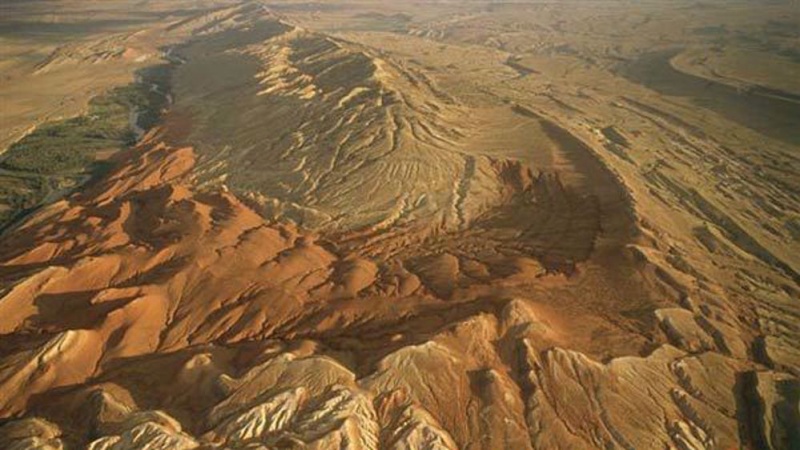
An aerial view of an anticline in the Zagros Mountains. About a third of these anticlines contain hydrocarbons.
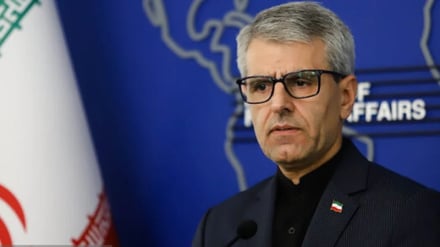
Iran has discovered new oil reserves in the country’s southwest, the details of which will be announced by Minister of Petroleum Javad Owji in the near future, the National Iranian Oil Company (NIOC) says.
According to Press TV, Director of Exploration at NIOC, Mehdi Fakour announced on Tuesday Iranian experts have also carried out well-logging on an offshore exploratory block in the Persian Gulf with gas reserves estimated at 30 trillion cubic feet.
“For the first time, we have achieved the method of aerial magnetometry which is used up to a depth of 7,000 meters below the surface of the earth to identify reservoirs and hydrocarbon fields,” the official said.
The technique involves using unmanned aircraft and magnetometers equipped with georeferencing systems and other navigation instruments to perform magnetic scans.
Fakour said the design of the aircraft was carried out by Iranian scientists, and the plane is currently being used to collect data. “One tenth of the area of the country is to be surveyed by this plane,” he said.
“Few people in the world have the ability to fly such an aircraft, which must be flown at a low altitude - 600 meters above ground - under special conditions. A 30-year-old Iranian, trained domestically, will do this grave task in the Zagros mountains,” Fakour added.
Most of Iran’s oil and gas fields lie in a belt running along its maritime boundary in the Persian Gulf and the foothills of the Zagros Mountains – an extensive folded zone which is geologically the result of the Arabian Plate's collision with the Central Iranian Plateau.
The collision has trapped thick layers of ancient limestone and sandstone and turned them into some of the world’s biggest oil and gas accumulations.
The Zagros basin covers more than 550,000 square kilometers, stretching from Turkey and Syria through the Iraqi Kurdistan into Iran where its sediments are ideally up to 12,000 meters thick.
Some 23 Iranian hydrocarbon fields lie in border areas and are shared between Iran and adjacent countries, including Kuwait, Iraq, Qatar, Bahrain, the UAE, Saudi Arabia and Turkmenistan.
ME