Why Iran’s geopolitical position is important
-
Why Iran’s geopolitical position is important
Pars Today – Due to its unique geographical location, Iran lies at the heart of international strategic maps.
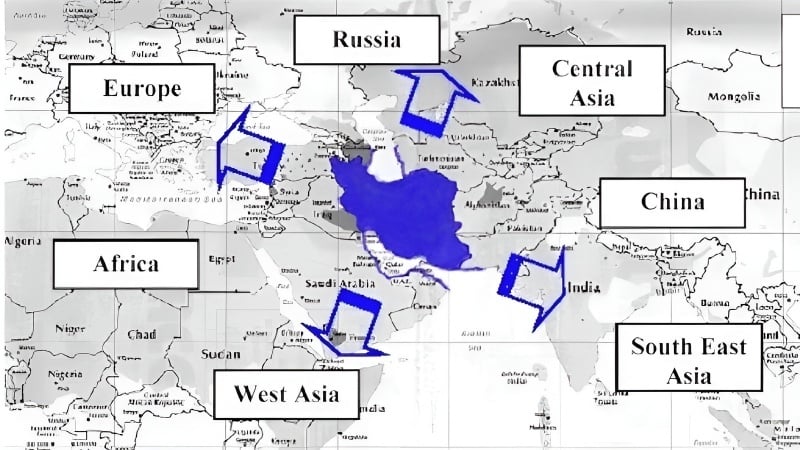
Situated in Southwest Asia and with access to the Caspian Sea, the Persian Gulf, and the Sea of Oman, Iran serves as a vital bridge for trade and energy interactions between East and West. According to Pars Today, this position—referred to as a strategic geopolitical location—has turned Iran into one of the key players in the region and the world.
Iran’s geographical position and natural resources play a decisive role in shaping its political, economic, and military trajectory. With the world’s fourth-largest oil reserves and second-largest natural gas reserves, the country has become one of the major global energy hubs.
The Persian Gulf and the Sea of Oman, as key routes for global oil exports, play a crucial role in the world economy, and Iran— as one of the countries overseeing these routes—exerts significant influence on the global energy market.
Iran’s strategic borders are also of great importance. The country shares boundaries with key neighbors such as Iraq, Turkey, Afghanistan, and Pakistan. This proximity strengthens Iran’s strategic position in the region, making it a key player in regional political and economic interactions. These borders also play a crucial role in regional security and in managing trade and human flows.
Furthermore, Iran’s strategic location at the crossroads of West Asia, Central Asia, the Caucasus, and the Persian Gulf positions it as a bridge between East and West. The Strait of Hormuz, part of the Persian Gulf, is recognized as one of the most important global oil export routes, and Iran plays a significant role in controlling this passage.
Overall, Iran’s geographical and strategic position, combined with its abundant natural resources, has made it one of the key players in international politics.