ICC under shadow of US double standards
-
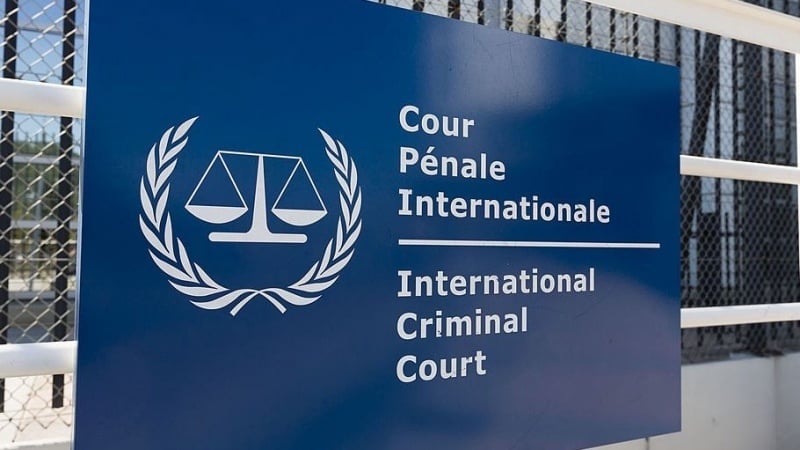
International Criminal Court
Pars Today –The U.S. Deputy Representative to the United Nations threatened the International Criminal Court (ICC) with further measures if the court continues its investigations.
According to Pars Today, Jeffrey Bartos, the Deputy U.S. Representative to the UN, threatened the International Criminal Court with additional actions if the institution proceeds with its investigations. This threat was made during a recent UN Security Council session, where Jeffrey Bartos critically expressed regret that Nazhat Shameem Khan, the ICC Deputy Prosecutor, was allowed to present a report on the situation in Darfur.
This initial reaction revealed that Washington's objection is not to a routine report, but to the overall investigative process of the Court—a process that has now reached cases of particular sensitivity for the United States and its allies.
Bartos, in his remarks, emphasized that the United States will not allow the International Criminal Court to exercise jurisdiction over it or its allies and warned that if ongoing investigations do not cease, Washington will take further measures. He called on the Court and its member states to immediately change their approach and address U.S. concerns.
This sharp and unprecedented rhetoric, which resembles political pressure more than legal discourse, demonstrates that Washington pursues a power-based and selective approach when dealing with international justice mechanisms.
The U.S. protest comes at a time when the International Criminal Court has, in recent years, opened cases directly related to the conduct of U.S. forces in Afghanistan and Israel's actions in the Gaza war.
Investigations into detentions, military operations, and the conduct of U.S. forces in Afghanistan on one hand, and the issuance of arrest warrants for Benjamin Netanyahu and Yoav Gallant in November 2024 on the other, have placed additional pressure on Washington. The United States, which has consistently provided political and military support to Israel, now faces an institution determined to pursue cases related to the Gaza war without regard to political considerations.
This situation once again exposes the longstanding duality in U.S. foreign policy. Washington presents itself internationally as a defender of human rights and global justice, but when independent international institutions examine the conduct of U.S. forces or its allies, it deems those same institutions incompetent or accuses them of politicization.
This move not only further calls into question the credibility of U.S. claims but also sends a clear message to the global community: that international justice is acceptable only as long as it does not harm Washington's interests.
Moreover, the direct U.S. threat against the International Criminal Court has broad implications for the global legal order. The Court is an institution whose raison d'être is to establish an impartial mechanism for addressing war crimes and human rights violations.
However, when a major power employs the language of threat instead of legal cooperation, the independence of this institution comes under pressure, and other countries may also refuse to cooperate. Such a trend could lead to a serious weakening of international justice mechanisms and push victims of wars and conflicts further away from accessing justice.
Alongside these consequences, the U.S. threat against the Court highlights the profound conflict between Washington's professed support for human rights and its practical behavior toward international institutions. The U.S. emphasizes the need for accountability and respect for human rights in many global cases, yet adopts a completely different approach when these same principles are applied to the conduct of its own forces or allies.
This double standard not only exposes the insincerity of the U.S. human rights discourse but also provides an opportunity for other countries to acknowledge that Washington uses human rights as a political tool.
Under these circumstances, the recent threat from Washington can be seen as part of a broader effort by the country to constrain international institutions—institutions that have increasingly scrutinized the actions of major powers in recent years.
By opening cases related to the United States and its allies, the International Criminal Court has shown its intent to genuinely adhere to the principles of international justice. However, the U.S. response indicates that this path faces serious resistance.
In such conditions, the importance of international institutions standing firm against U.S. threats and demands becomes clearer than ever. The International Criminal Court, though under pressure from major powers, is founded on the principles of independence, impartiality, and the pursuit of justice for victims.
Continuing its investigations, especially in politically sensitive and costly cases, is a serious test for this institution and for the global community's commitment to the principles of international justice. Only by resisting pressure and maintaining an impartial investigative process can there be hope for justice for the victims of wars and human rights violations, and for preserving global trust in international mechanisms.