Araghchi: Martyr Soleimani was Axis of Resistance architect in region
-
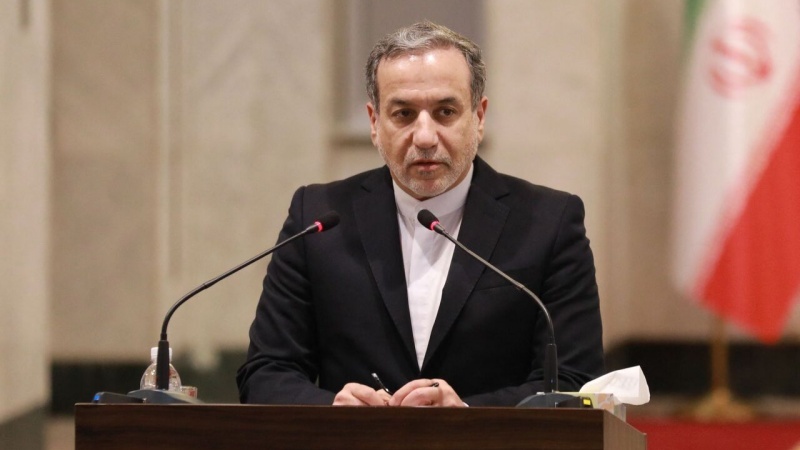
Iran’s Foreign Minister Seyed Abbas Araghchi
Pars Today — Iran’s foreign minister described Martyr Qassem Soleimani, commander of the IRGC Quds Force, as the architect of the “Axis of Resistance” in the region.
The international conference titled “Diplomacy and Resistance in the School of Haj Qassem” was held in Tehran on Monday, marking the sixth anniversary of the martyrdom of Lieutenant General Martyr Haj Qassem Soleimani, with the participation of Iran’s foreign minister and a number of senior political officials, think-tank figures, and academics from Iran and around the world.
According to Pars Today, Iran’s Foreign Minister Seyed Abbas Araghchi said at the conference that Haj Qassem was the architect of the “Axis of Resistance” in the region, adding that the impacts of this architecture extend far beyond day-to-day policies and executive approaches in foreign policy.
Araghchi stressed that the thinking of Haj Qassem—himself an embodiment of the ideals of the Islamic Revolution and the principles enshrined in the Constitution of the Islamic Republic—derives from the theoretical foundations and core framework of Iran’s foreign policy, which he said should be termed “resistance-oriented diplomacy.”
Iran’s foreign minister stated that effective and successful diplomacy is a proper combination of courage and prudence in engaging with others. Without employing the tools of diplomacy, relations neither take shape nor does the balance of power bear fruit in its various dimensions.
He said negotiation is the art of diplomacy, and strengthening diplomacy means reducing costs, institutionalizing achievements, and securing victory in both peace and war. However, he emphasized that diplomacy alone leads nowhere, stressing that what ultimately determines outcomes in diplomacy are the “components of national power.”
Araghchi noted that the diplomacy of the Islamic Republic of Iran, as a resistance-oriented diplomacy, has always sought to convey the message of justice-seeking, opposition to arrogance, and defense of the rights of the underprivileged and oppressed nations—which form the foundation and essence of the resistance discourse—to the international community in a precise, well-reasoned, and persuasive language, within the framework of the principles of international law.
Iran’s foreign minister said that the beating heart, central core, and moral axis of the entire resistance movement is, without doubt, resistance to the Israeli regime’s historical, expansionist, and racist occupation. He said this resistance is a legitimate, legal, and humane response to decades of land occupation, the displacement of a nation, systematic and flagrant violations of human rights, the killing of children, the destruction of homes, and the implementation of overt apartheid policies.
Araghchi stressed that Iran will continue its moral, political, and legal support for the resistance discourse. Contrary to many perceptions that portray the future of the region as being shaped by the unquestioned dominance of the Israeli regime, he said realities on the ground in the region and the world show that the resistance has become an undeniable geopolitical reality and one of the main and influential actors in shaping the future order of West Asia.
He added that this future order must be based on the free will of the peoples of the region, respect for national sovereignty, justice, and bilateral and multilateral cooperation—rather than coercion, bullying, and designs imposed by extra-regional powers.
He added that along this long and honorable path, the path of Martyr Soleimani—a path of rationality, self-sacrifice, prudence, and active, intelligent resistance—serves as their guiding light and roadmap. He said they will continue on this course by following these role models, trusting in God, and relying on the power of the people.