Tehran’s firm message: Missiles and enrichment are non-negotiable red lines
-
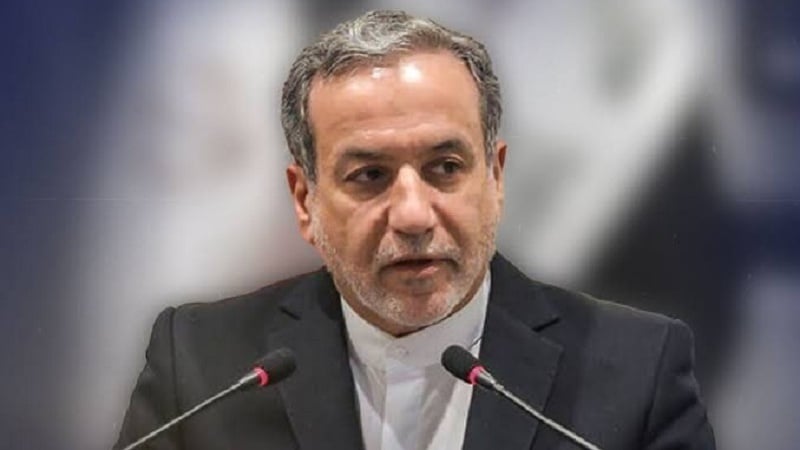
Seyyed Abbas Araghchi, Iran’s Foreign Minister
Pars Today — Iran’s Foreign Minister emphasized that the Islamic Republic will not negotiate over its missiles, as this is purely a defensive matter.
In an interview with Al Jazeera, Seyyed Abbas Araghchi, Iran’s Foreign Minister, stated that no negotiations regarding Iran’s missiles are underway, and that neither now nor in the future can missile-related issues be negotiated, because they are strictly defensive and non-negotiable.
The head of Iran’s foreign policy apparatus added that missile issues are an internal matter tied to the Iranian people, and no foreign party can interfere in Iran’s domestic affairs. He also stressed that regional issues belong to the region itself and have no connection to countries outside it.
Regarding talks with the United States in Muscat, Oman, the Iranian Foreign Minister said that the nuclear negotiations with Washington were a good starting point and could continue along the same approach, though there is still a long road ahead for building trust.
Araghchi emphasized that the Muscat talks were indirect, conducted through Oman, and focused solely on the nuclear issue; the Americans did not raise other topics, and it had been agreed that discussions would remain limited to the nuclear matter, which was respected throughout the negotiations.
Uranium enrichment is Iran’s right and must continue
Iran’s Foreign Minister stated that the issue of banning enrichment is non-negotiable and outside the framework of talks. He emphasized that uranium enrichment is Iran’s right and must continue, with the level of enrichment determined by Iran’s needs. Iran’s official position opposes the transfer of uranium abroad, although the country is ready to reduce enrichment levels if necessary.
The Foreign Minister added that Tehran is prepared to reach an agreement on enrichment to assure Western parties that Iran’s nuclear program is for peaceful purposes. Araghchi underscored that Iran’s nuclear file can only be resolved through negotiations.
Tehran and Washington agree on holding a second round of talks
Iran’s Foreign Minister commented on a second round of talks with the United States, saying that no specific date has been set yet, but Tehran and Washington agree that it should take place soon.
Araghchi emphasized that the negotiation process must be free of any threats or pressure, adding that Iran is ready for a fair and comprehensive agreement. He noted that if there is genuine will to reach a result, the talks will be productive.
If the United States attacks, we will target its bases
Iran’s Foreign Minister addressed the possibility of war and Iran’s response to any potential U.S. attacks, saying that the risk of war always exists, and that Iran is prepared to prevent its outbreak.
The head of Iran’s diplomatic apparatus stressed that the Islamic Republic does not seek a regional war, and that countries in the region do not want such a conflict either. However, he warned that any U.S. attack could change the situation. He made clear that if Iran is attacked by the United States, Iran will not target neighboring countries, but will instead strike U.S. bases, emphasizing that there is a clear distinction between attacking American bases and attacking neighboring states.
A new round of Iran-U.S. nuclear talks was held on Friday, 6 February, in Muscat, facilitated by the Sultanate of Oman. During this round, the Iranian and U.S. negotiating teams exchanged their views, considerations, and approaches through Oman’s Foreign Minister.