Sunni Clerics in Iran: We are ready to fully support IRGC Navy and Army
-
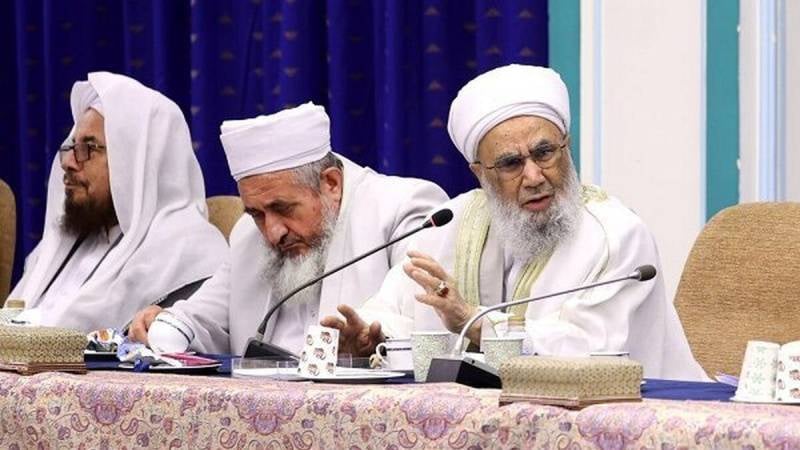
Sunni clerics of Sistan and Baluchestan
Pars Today – Sunni clerics from Sistan and Baluchestan in southeastern Iran announced that, alongside Sunni tribes in the Makran coastal region, they are ready to provide any form of support to the Islamic Revolutionary Guard Corps Navy and the Army of the Islamic Republic of Iran.
According to Pars Today, citing IRNA, the Sunni clerics of Sistan and Baluchestan issued a statement on Friday in support of the continued smart management and control of the Strait of Hormuz, describing the potential closure of the strait to hostile actors as a form of preemptive defense and a factor in enhancing national security.
The statement added that the Strait of Hormuz is not an international waterway that any aggressive state has unconditional rights to use. Rather, it lies within Iran’s territorial waters and the three Iranian islands of Abu Musa, Greater Tunb, and Lesser Tunb. It further stated that tradition and law dictate that the owner of a house holds the key.
The statement adds that, according to the religious and customary views of Sunni scholars, in a situation where the enemy is attacking Iran from land, sea, and air through neighboring territories, and based on the principle of “legitimate defense,” the Islamic Republic of Iran has the rightful authority to manage traffic in the Strait of Hormuz for the purpose of enhancing its security and to prevent the entry of any military or commercial vessels affiliated with aggressor countries into the Persian Gulf.
The Sunni clerics of Sistan and Baluchestan also described the rulers of some Persian Gulf states as betrayers of regional collective security, stating that these rulers have long benefited from Iran’s security umbrella, yet have allowed their territory and facilities to be used by the United States and the Israeli regime to carry out aggression against Iran. They said this constitutes a clear violation of “good neighborliness” and a betrayal of regional collective security.