Gharibabadi: Grossi is completely under control of U.S and West
-
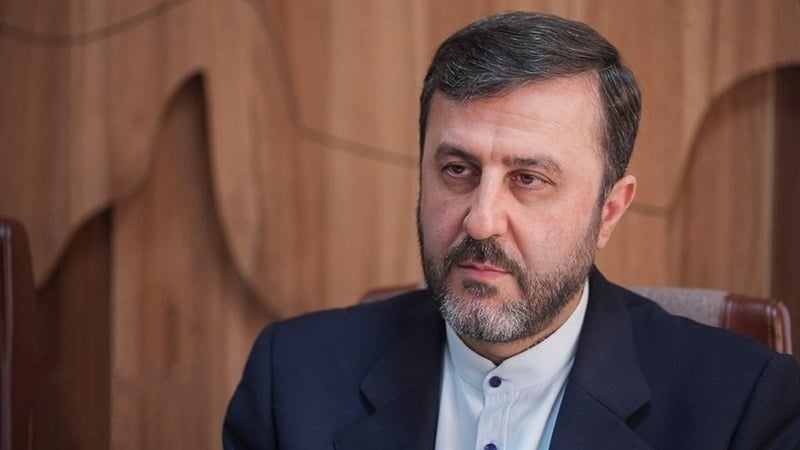
Kazem Gharibabadi, the Deputy Foreign Minister for Legal and International Affairs of the Islamic Republic of Iran
Pars Today – In response to a new report by the International Atomic Energy Agency (IAEA) against Iran’s peaceful nuclear program, the Deputy Foreign Minister for Legal and International Affairs of the Islamic Republic of Iran said that if the Agency wants to be part of a diplomatic solution, it must avoid turning technical reports into a tool for political pressure.
According to Pars Today, citing IRNA, Kazem Gharibabadi said on Saturday, following the publication of the IAEA’s recent report and media statements by its Director General regarding lack of access to certain damaged facilities, the status of uranium stockpiles, and the so-called issue of “loss of continuity of knowledge” in Iran’s nuclear program, on the social media platform X:
“Mr. Rafael Grossi speaks of ‘ambiguity,’ ‘lack of access,’ and ‘loss of continuity of knowledge’; however, this situation did not arise in a vacuum. Safeguarded nuclear facilities were targeted in military attacks by the United States and the Israeli regime. The Director General, who has shown that he is completely under the control of the United States and the West, unfortunately never condemned these attacks.”
He added that one cannot ignore the source of disruption and then use the consequences of that same disruption against Iran.
Gharibabadi added that if the issue is verification and non-proliferation, the first expectation from the Director General of the Agency is a clear and legal stance against attacks on safeguarded facilities. Such an attack is not only a violation of Iran’s sovereignty; it is a direct blow to nuclear safety, the safeguards system, and the credibility of the non-proliferation regime. He asked whether the Director General has the courage to finally take a position against this act, which is contrary to international law and the UN Charter. He further questioned how, with such a political approach and dependency—while also being a candidate for UN Secretary-General—the individual could manage such an important organization in an independent and professional manner.
He added that the repeated mention of the “60 percent” figure and the presentation of hypothetical scenarios regarding weapons, without a precise legal framework, is more political than technical. Under the NPT, no numerical ceiling has been set for enrichment levels; the legal criterion is the non-diversion of nuclear materials and activities toward military purposes. Iran’s nuclear program is peaceful, and Iran has acted within the framework of its legal obligations.
Gharibabadi stressed that if the Agency wants to be part of a diplomatic solution, it must avoid turning technical reports into a tool of political pressure. He said that the safeguards system is not strengthened through military action, threats, or the drafting of resolutions; rather, it is strengthened through impartiality, respect for international law, respect for the sovereignty of states, and the clear condemnation of attacks on facilities under Agency safeguards.
He added that safeguarded facilities cannot be bombed, access and safety conditions necessary for inspections cannot be destroyed, and then the consequences of those same attacks cannot be used as a pretext to create ambiguity against Iran.