Maj. General Rezaei: Iranian nation's rights and Resistance Front must be consolidated
-
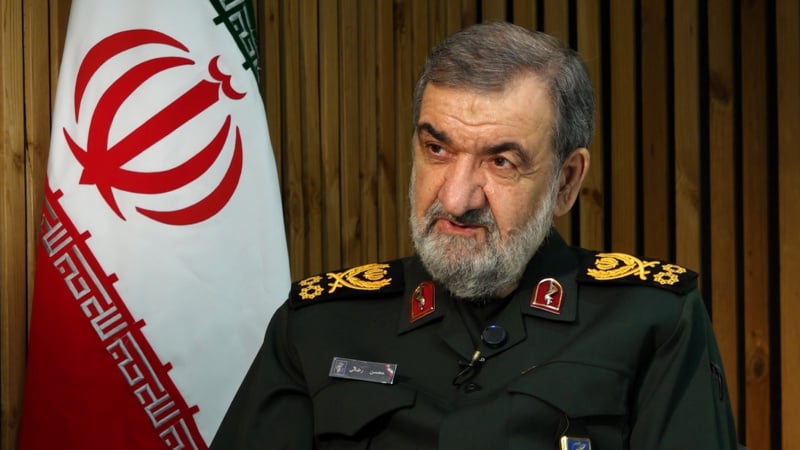
Major General Mohsen Rezaei, the commander of the Islamic Revolutionary Guard Corps (IRGC) during Iran’s eight-year Sacred Defense
Pars Today – The commander of the Islamic Revolutionary Guard Corps (IRGC) during Iran’s eight-year Sacred Defense stated that Iran’s international standing and prestige were enhanced during the third imposed war, adding that the rights of the Iranian nation and the Resistance Front must be firmly secured.
According to Pars Today, citing Mehr News Agency, Major General Mohsen Rezaei, speaking on an Iranian television special news program, referred to the recent message of the Leader of the Islamic Revolution regarding Iran–U.S. negotiations and said:
“In the Leader’s message, in addition to recognizing the roles and responsibilities of the various pillars of the system, important principles were observed. This means that although he may have held a different view, he is pursuing his objectives within the framework of the commitments undertaken by the Supreme National Security Council and the government. Likewise, the Lebanese resistance was fully taken into consideration.
From another perspective, the emphasis on supporting allies and the Resistance Front is, in effect, support for all Islamic countries in the region. Had the Resistance Front not existed, Syria, Lebanon, Jordan, and even Saudi Arabia would have been subjected to aggression by the Israeli regime.”
Rezaei, referring to the Leader of the Islamic Revolution’s warning that Iran must stand against U.S. excessive demands, added:
“The Leader’s second warning was not to be influenced by the enemy and that we should not be pleased by their smiles. Another point is that the enemy has come to negotiations out of desperation, not from a position of strength. Therefore, the Leader’s message must serve as the framework for the negotiations.”
Rezaei stated that the enemy has always shown that it breaks its commitments and betrays diplomacy, saying:
“We must properly understand the nature and methods of the other side. They gained a two-month breathing period from the start of the ceasefire, and now they have also secured at least a sixty-day opportunity for negotiations. They may be seeking to get through the World Cup matches or even elections, and ultimately the negotiations may lead nowhere. Therefore, we have the right to be suspicious of them. Of course, we will also use these opportunities to strengthen ourselves.”
The member of Iran’s Expediency Council, outlining the defeats and pressures faced by the United States during the Ramadan War, noted:
“The global economic crisis that emerged as a result of the closure of the Strait of Hormuz placed heavy pressure on Trump, both from inside the United States and from around the world. Another issue was the exhaustion of American soldiers who had come for what was supposed to be a war lasting no more than two weeks.
During the war, the Americans carried out combat reconnaissance operations in the Strait of Hormuz through the deployment of their naval vessels. When their ships were struck, they realized that they were absolutely unable to reopen the Strait of Hormuz. Their allies also did not come to their aid, and Congress applied pressure for a withdrawal from the war.”
Major General Mohsen Rezaei continued:
“We won the war, while they exited as defeated aggressors and criminals, failing to achieve their objectives. Iran, however, achieved its goals. Among them was that, as the martyred Leader had promised, the regional war was contained and the people became the main actors.
Another objective was that, after years of Iran’s warnings, the countries of the region would realize that their security cannot be guaranteed through the presence of outsiders. They understood this during this war. They also realized that security can be achieved through cooperation among the countries of the region.”