Second anniversary of Hezbollah Secretary General's martyrdom: Nasrallah's jihad path continues
-
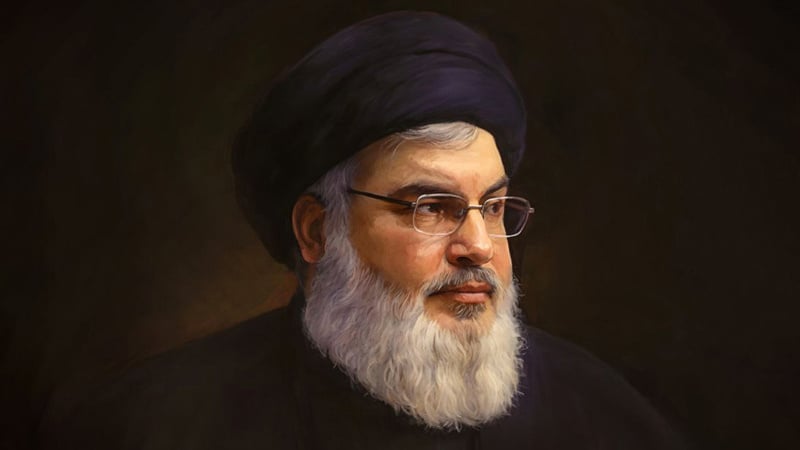
Second anniversary of Hezbollah Secretary General's martyrdom
Pars Today – On the second anniversary of the martyrdom of Sayyed Hassan Nasrallah, the late secretary general of Lebanon’s Hezbollah, many of his supporters gathered at the site of his martyrdom in southern Beirut’s Dahiyeh, stressing that his memory remains more alive than ever in their hearts and minds and that his path of jihad continues with strength.
According to Pars Today, citing IRNA, Sayyed Hassan Nasrallah, the late secretary general of Lebanon’s Hezbollah, was martyred on September 27, 2024, in Israeli attacks on southern Beirut’s Dahiyeh. Israel believed that assassinating Hezbollah’s secretary general would significantly weaken the Lebanese resistance, but what has been witnessed from the resistance’s struggle and steadfastness in the days since Sayyed Hassan Nasrallah’s martyrdom to the present is clear evidence that the martyred resistance secretary general’s path of jihad continues with even greater determination.
Following Sayyed Hassan Nasrallah’s martyrdom, Hezbollah immediately began the process of selecting a new leader, and Hashem Safieddine, a figure very close to martyr Nasrallah, emerged as the leading candidate and principal choice to succeed him. However, he too was martyred on October 26, 2024, in an Israeli attack on southern Lebanon. Sheikh Naim Qassem, Sayyed Hassan Nasrallah’s deputy, was subsequently elected secretary general.
The Fruitful Life of Martyr Nasrallah
Sayyed Hassan Nasrallah was born in 1960 in al-Bazourieh, a town in the Tyre district of southern Lebanon. He completed his primary education in his hometown and attended middle school in an area called Sin al-Fil in eastern Beirut. He completed high school in the village of al-Bazourieh in southern Lebanon. In 1976, at the age of 16, he traveled to Najaf, Iraq, to pursue religious studies. After two years of living and studying there, he returned to Lebanon and began studying religious sciences at Imam al-Muntazar Seminary in Baalbek. His main encouragement to travel to Najaf and study Islamic sciences came from Sayyed Mohammad Gharavi, the Friday prayer leader of Tyre.
In 1989, Sayyed Hassan Nasrallah went to Qom to continue his religious studies. However, a year later, amid escalating tensions in Lebanon, he returned to Beirut at the request of Hezbollah’s leadership council.
After completing high school, and as the Lebanese Civil War began, martyr Nasrallah joined the Amal Movement and served as the movement’s organizational official in the Shia village of al-Bazourieh. While studying at Imam al-Muntazar Seminary, he was also active in the organizational affairs of the Amal Movement and was elected to its political bureau during that period.
During a meeting with Imam Khomeini in Tehran in 1981, Sayyed Hassan Nasrallah was appointed by Imam Khomeini as his representative in Lebanon for matters of religious affairs and the collection of religious dues. Nasrallah was 21 years old when he received the appointment and was the first Hezbollah leader to receive such a mandate from Imam Khomeini.
Sayyed Hassan Nasrallah was involved in Hezbollah from the very beginning of its formation. After moving to Beirut in 1985, he assumed greater responsibilities. His first major responsibility was preparing resistance forces and establishing military cells. At the same time, he served as the deputy to Ibrahim Amin, one of Hezbollah’s representatives in the Lebanese parliament. In 1987, when Hezbollah’s Executive Committee was established, Nasrallah was elected to head the committee. He also joined Hezbollah’s decision-making council and served as its executive official.
Hezbollah Secretary General and Continued Resistance Activities Against Israel
Following the assassination of Sayyed Abbas Mousavi by Israeli helicopters on February 16, 1992, Hassan Nasrallah was elected secretary general of Hezbollah by consensus of the group’s decision-making council.
From the very beginning of his leadership of Lebanese Hezbollah, Sayyed Hassan Nasrallah adopted a firm position against Israel. A year after he became secretary general, in 1993, Hezbollah killed 26 Israeli soldiers in clashes between the two sides. Hezbollah’s war against Israel continued with the aim of forcing Israel out of southern Lebanon. The number of Israeli soldiers killed reached 40 in 1997. As conditions became increasingly difficult, Israel was forced to withdraw from Lebanese territory in 2000.
Hezbollah’s victory in expelling Israel from southern Lebanon, along with the martyrdom of Sayyed Hassan Nasrallah’s son in the war in 1997, contributed to Nasrallah’s popularity in southern Lebanon.
Throughout the years he served as Hezbollah’s secretary general, martyr Nasrallah stood firmly against Israel, adopting clear and decisive positions and stressing his opposition to foreign domination of the region. He ultimately attained martyrdom while continuing the path of jihad he had begun, in an Israeli attack on southern Beirut’s Dahiyeh.
"Ready to Sacrifice Our Lives for Nasrallah"
In a report on the second anniversary of the martyrdom of Sayyed Hassan Nasrallah, Al-Manar TV said that supporters of martyr Nasrallah had gathered at the site of his martyrdom to say, “If we could give our lives to you, we would all give you our lives.”
One of those attending the ceremony told an Al-Manar reporter: “We have come to the site where Sayyed Nasrallah was martyred to declare that the resistance remains steadfast and that the path Nasrallah began did not end with his martyrdom and continues through steadfastness.”
In this regard, Yahya Ghaddar, secretary general of the International Forum for Supporting the Resistance, said on the second anniversary of the martyrdom of Sayyed Hassan Nasrallah and Hashem Safieddine: “Martyr Nasrallah completed his path of jihad through martyrdom as an inspiring and exceptional leader. Following the example of Imam Ali, Imam Hussein, the Prophet and the Ahl al-Bayt, he lived as a steadfast mujahid.”
Al-Ahed news website also reported that former Lebanese President Emile Lahoud, speaking on the anniversary of Sayyed Hassan Nasrallah’s martyrdom and referring to his life and political activities, said: “On the anniversary of the martyrdom of our dear brother, Sayyed Hassan Nasrallah, we have no choice but to remember his fruitful life and its historic and fateful stages. He has always been and remains a source of dignity and pride. Although Nasrallah had opportunities to remain alive and stay away from his homeland, he chose martyrdom alongside the resistance forces.”
He added that two years after Nasrallah’s martyrdom, the steadfastness of the resistance forces and the solidarity of his supporters continue: “The people have not for a moment lost faith in the cause for which Nasrallah and many others were martyred; a cause that was targeted by Zionist criminals amid global silence and the complicity of some domestic forces.”