Madness of U.S. militarism; $1.5 trillion military budget for 2027
-
American militarism
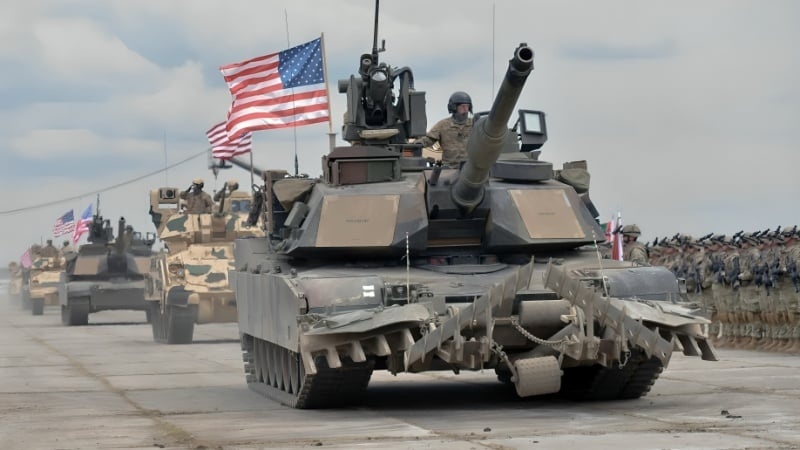
Pars Today — Donald Trump has announced plans to increase the U.S. military budget for 2027 to $1.5 trillion.
According to Pars Today, Trump stated that the proposed 2027 defense budget represents a 50% increase over the 2026 budget of $901 billion, which itself was 13% higher than the 2025 budget.
On Wednesday, January 7, Trump said: “After long and difficult negotiations with senators, members of Congress, cabinet officials, and other political leaders, I have concluded that for the interests of our country—especially in these very challenging and dangerous times—our military budget for 2027 should not be $1 trillion but $1.5 trillion.” He added that such a budget would allow the U.S. to build the “ideal army” he has always envisioned and ensure national security against any enemy.
Trump also claimed that his administration’s tariff policies have increased government revenues, making the $1.5 trillion target achievable. He said that without the massive revenue generated from tariffs on other countries—which he claims previously exploited the U.S.—he would have maintained the $1 trillion budget. “But thanks to the tariffs and the enormous revenues they produce, revenues previously unimaginable, we can easily reach $1.5 trillion,” Trump stated.
The announcement comes as the White House has confirmed that Trump is “exploring a wide range of options” for taking control of Greenland, with the use of the U.S. military not ruled out.
Trump’s decision to raise the U.S. military budget to $1.5 trillion in 2027 comes amid broad geopolitical challenges worldwide. He frames this move as necessary to build the “ideal army” and ensure national security.
A primary reason for the increase is alleged U.S. security concerns against rival powers such as China and Russia. In recent years, the arms race between these countries has intensified, with emerging technologies such as artificial intelligence, directed-energy weapons, and anti-drone systems creating new battlefields. Trump emphasizes the need for advancement in these areas to maintain U.S. military superiority.
Additionally, U.S. military presence and operations in strategic regions such as the Caribbean and West Asia require substantial funding. Notable examples include U.S. involvement in strikes against Iran’s nuclear facilities during the 12-day Israeli-Iran conflict and Trump’s directives for operations against Nicolás Maduro in Venezuela, reflecting his foreign policy’s reliance on military power.
From an economic perspective, Trump argues that tariff-generated revenues make such a budget feasible. He frames these measures as a response to countries he claims have historically exploited the U.S. economy. Thus, the military budget is not only a tool to strengthen the armed forces but also a component of Trump’s broader economic and political strategy.
The implications of this decision are multifaceted. Domestically, allocating such a massive budget could strain other economic and social sectors. Increased military spending typically reduces funding for education, healthcare, and public infrastructure, potentially heightening social dissatisfaction and widening internal divides.
Internationally, the U.S. military budget increase could intensify the arms race. Rival powers, particularly China and Russia, may boost their military spending to maintain a balance of power, increasing the risk of regional and global conflicts. While some U.S. allies—especially Israel—may welcome the decision as a sign of Washington’s commitment to collective defense, there will also be serious concerns about global instability and rising tensions due to the international arms competition.
From a technological standpoint, the increased budget offers unprecedented opportunities to develop advanced military systems. Investments in military robotics, artificial intelligence, and cyber warfare could elevate U.S. capabilities beyond the reach of competitors. However, these advancements also carry ethical and human risks, as the extensive use of advanced technologies on the battlefield could have unpredictable consequences.
Ultimately, Trump’s decision to raise the military budget to $1.5 trillion reflects his view of hard power—military strength—as the cornerstone of U.S. foreign policy and national security under the principle of “Peace through Strength.” While this approach may enhance U.S. military capabilities, it also carries significant domestic economic and social costs, as well as wide-reaching international security, military, and geopolitical consequences that could impact not only America’s future but the global order as a whole.