Is Trump the peace president he claims to be?
-
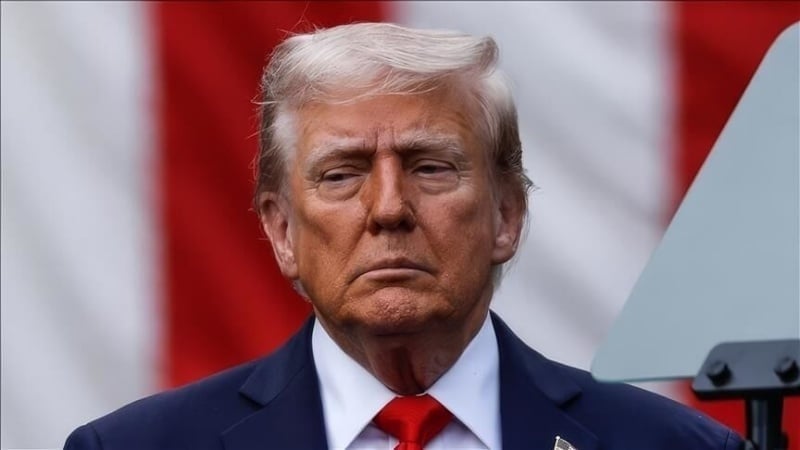
US President, Donald Trump
Pars Today – Donald Trump, who portrays himself as a “peace president,” has once again repeated his claims against the nuclear capabilities of the Islamic Republic of Iran to justify attacks on Iran’s nuclear facilities, asserting that without such actions, peace in West Asia would not have been possible.
According to Pars Today, U.S. President Donald Trump reiterated his allegations against Iran’s nuclear program on Wednesday, February 4, repeating contradictory claims and saying, “As you know, they (Iran) are negotiating with us.” He claimed: “If we hadn’t destroyed Iran’s nuclear capability, we would never have been able to achieve peace in West Asia.”
Continuing his remarks and repeating his threats, Trump said: “I’ve heard that Iran wants to restart a new program. If that’s the case, we will send forces to do the job again [attack the nuclear facilities]. They tried to return to the facilities but couldn’t gain access. We realized they wanted to set up a nuclear facility in another part of the country. I said, ‘If you do that, we will do very bad things to you.’” These new threatening statements come despite Trump’s repeated claims that he favors diplomacy and a diplomatic approach toward Iran.
In recent months, the question of whether Donald Trump is truly, as he claims—especially regarding Iran—a “peace president” has become a hot political topic. The answer becomes clearer by examining his foreign policy positions and behavior toward Iran, rather than his slogans and media claims.
Trump has repeatedly presented himself as a president who “wants peace” and has criticized protracted wars that entail high human and financial costs. However, his conduct toward Iran—particularly during his second presidential term—paints a different picture.
In his second term, Trump revived the maximum pressure policy against Iran, combining sweeping and severe economic sanctions with military threats. The goal of this policy is not merely to halt Iran’s peaceful nuclear program, especially uranium enrichment, but also to exert political pressure on Tehran to meet other U.S. demands, including severe restrictions on Iran’s missile capabilities and changes in its regional policy, such as ending support for resistance groups.
In June 2025, the United States, in support of Israel’s war against Iran, carried out airstrikes on three key Iranian nuclear sites. Trump has repeatedly claimed that these sites were destroyed—an action that marked one of the largest U.S. military interventions against Iran since 1979. This move, contrary to claims of peace-seeking, is a clear example of the use of force against Iran.
Following that, Trump repeatedly threatened Iran, saying that if Tehran failed to comply with Washington’s demands—such as halting uranium enrichment—he would put an attack on Iran back on the table. He even stated that he would not rule out a rapid strike with “speed and violence” if necessary. These threats were accompanied by the deployment of U.S. military forces and equipment around Iran, particularly the dispatch of the USS Abraham Lincoln aircraft carrier strike group. Such threats have not only heightened tensions but have also prompted firmer responses from Iran.
In this context, political analysts describe Trump’s policy toward Iran as an example of “carrot-and-stick diplomacy.” Alongside the Trump administration’s claimed efforts to negotiate with Iran, extensive military presence and the threat of force have been used as pressure tools. This approach is also evident in the use of economic sanctions during Trump’s presidency, employing economic and military pressure to push for fundamental changes in Iran’s domestic and foreign policies.
Therefore, while Trump may promote slogans of peace, his practical actions and tactics toward Iran reflect less a commitment to peace than a readiness—or at least a close threat—to resort to military options, especially when hard power is used as leverage in negotiations. As such, the claim that Trump is merely a “peace president” is difficult to reconcile with the realities of his foreign policy toward Iran, particularly when repeated threats of force and a strong military presence are placed alongside his diplomatic rhetoric.
On the other hand, senior Iranian political and security officials, while rejecting military threats, have stated that negotiations are the solution to disputes. Tehran has said it is ready for talks under equal and fair conditions. On February 3, 2026, Iranian President Masoud Pezeshkian wrote on the social media platform X that, in response to requests from friendly regional governments regarding the U.S. president’s proposal for negotiations, he had instructed the foreign minister that—if an appropriate, threat-free environment exists and negotiations are free from unreasonable expectations—the groundwork should be laid for fair and just talks based on the principles of dignity, wisdom, and expediency, within the framework of national interests.