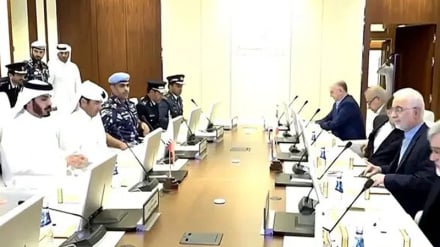
Analysis – Why Islamabad negotiations ended without results?
-
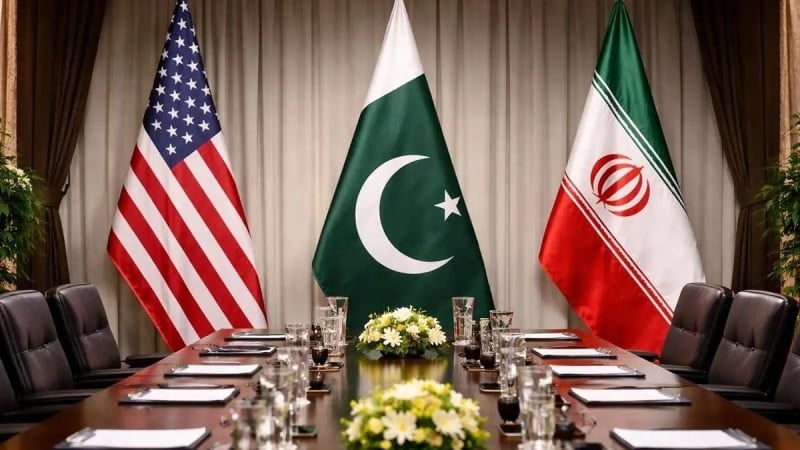
Islamabad negotiations
Pars Today – The negotiations between high‑level diplomatic delegations from Iran and the United States in Islamabad, the capital of Pakistan, concluded without an agreement.
The Islamic Republic of Iran participated in the Islamabad talks with a high‑ranking delegation composed of senior political, security, economic, financial, and trade officials, led by Mohammad‑Baqer Qalibaf, Speaker of Iran’s Parliament. Upon arriving in Islamabad, Qalibaf emphasized that Iran had come to the talks with goodwill, but did not trust the United States. The U.S. delegation was led by J.D. Vance, the Vice President of the United States.
The dispatch of a senior Iranian delegation to Islamabad was seen as a sign of Iran’s determination to pursue a principled and fundamental agreement. This meeting represented the highest‑level encounter between American and Iranian officials to date. However, both delegations ended the talks and left Islamabad without reaching any agreement.
After the conclusion of the 21 hours of negotiations with the U.S. delegation, Mohammad‑Baqer Qalibaf wrote: “My colleagues on the Iranian delegation presented 168 forward‑looking initiatives, but in the end, the other side was unable to gain the trust of the Iranian delegation during this round of talks.”
The Speaker of Parliament added: “Before the negotiations, I emphasized that we have the necessary goodwill and determination, but due to the experiences of the two previous wars, we do not trust the other side.”
The collection of statements made after the negotiations, as well as reactions to those statements, indicates that the United States made far‑reaching demands from Iran. The American delegation presented requests that Washington had not been able to achieve during the 40‑day war, including zero‑percent enrichment, the removal of Iran’s 60‑percent enriched uranium from the country, and the reopening of the Strait of Hormuz.
The Strait had been open before the U.S. and Israeli military attacks, and after the start of the conflict, Iran placed transit through the Strait under its control based on international conventions in order to ensure its own security.
It is evident that, given its past experiences, Iran believes it must address the United States and Israel from a position of strength. This move by the Islamic Republic created a significant shock in global energy markets and world economies.
According to the text, the U.S. President Donald Trump and Israeli prime minister Benjamin Netanyahu were unable—despite various threats and attacks on Iran’s military, industrial, scientific, educational, and urban infrastructure, and the deaths of civilians—to force open the Strait of Hormuz. The argument continues that the U.S. government is now attempting to achieve these goals at the negotiating table.
This comes while the United States had accepted Iran’s ten‑point plan as the basis for negotiations in order to encourage the Islamic Republic of Iran to agree to a ceasefire. However, during the talks, the American delegation continued to make far‑reaching demands.
At the same time, political, security, economic, and geopolitical dynamics of the region and the world have changed significantly after the 40‑day war and Iran’s display of defensive capabilities, developments that observers in political, media, and think‑tank circles—especially in the United States and Europe—acknowledge.
The text argues that former U.S. President Donald Trump must recognize that threats can no longer compel Iran to accept his demands.
U.S. Democratic Senator Andy Kim posted a critical tweet, writing: “Does (J.D.) Vance think he is going to resolve decades‑long differences with Iran in just one day? In February, he spent five days sightseeing at the Winter Olympics. Iran has achieved the highest‑level negotiations it has ever had with the United States and still maintains control over the Strait of Hormuz, while Vance appears to be giving in.”
John Mearsheimer, a professor at the University of Chicago and a well‑known political theorist, said in an interview with Al‑Araby Al‑Jadeed that Iran has clearly emerged victorious in the conflict. He emphasized that this war represents a major failure in U.S. foreign policy and will have significant negative economic and political consequences for the United States.
Sitrenovich, a researcher on Iranian affairs at Israel’s Institute for National Security Studies (INSS), attributed responsibility for the failure of the three rounds of Iran–U.S. negotiations to the White House. She stated that U.S. government threats aimed at pressuring Iran to retreat are ineffective and that Washington cannot overpower Tehran at the negotiating table.
The New York Times, noting that former President Donald Trump’s policies have weakened America’s global influence, added that his lack of accountability has placed the United States on the brink of a humiliating strategic setback.
Aaron David Miller, a former U.S. State Department negotiator on Middle Eastern affairs, stated after the conclusion of the 21 hours of negotiations between the U.S. and Iran that the Iranians “have more cards than the Americans.”