Analysis | War against Iran and crisis in U.S. strategic oil reserves
-
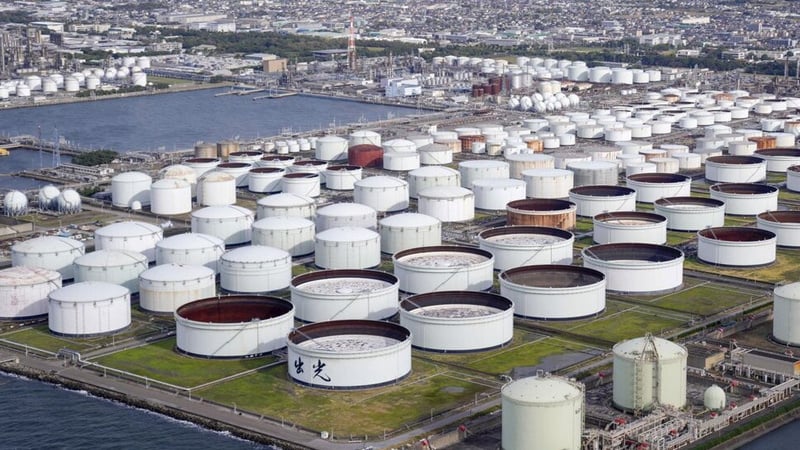
U.S. strategic oil reserves
Pars Today – The war against Iran has pushed U.S. strategic oil reserves to their lowest level in four decades.
According to Pars Today, the U.S. Strategic Petroleum Reserve (SPR), once designed as the country’s most important energy security shield against global crises, has itself become the center of a serious crisis. According to data released by the U.S. Department of Energy, the reserve’s volume has fallen below 300 million barrels for the first time since the facilities were completed in the early 1980s.
This unprecedented decline, which has brought the reserves to their lowest level in four decades, is the direct result of the release of 172 million barrels of oil in response to supply disruptions caused by the war with Iran.
Experts have warned that the rapid drawdown of the U.S. strategic oil reserves following the war against Iran, and the depletion of the stockpile to its lowest level in four decades, could potentially damage the salt caverns where the oil is stored and reduce Washington’s ability to respond to future energy crises.
The oil is stored in 60 salt caverns located several thousand feet underground at four major facilities along the Gulf Coast in Louisiana and Texas. These caverns, created by dissolving underground salt formations with water, are considered ideal for oil storage because of salt’s self-healing properties and their relatively low cost. However, the mechanism used to extract oil from these caverns is precisely what now poses a serious threat to them.
The 300-million-barrel threshold is the point at which concerns shift from a theoretical warning to an operational threat. Siddharth Misra, a petroleum engineering professor at Texas A&M University, has stated explicitly that while 70 million barrels is the physical minimum required to keep the extraction pipes submerged beneath the oil, “the actual operational floor for crude oil inventories is between 250 million and 300 million barrels.”
Meanwhile, there is significant disagreement over the precise “safe floor” for the reserve. The U.S. Department of Energy has said that at least 70 million barrels of oil must remain in the reserves to safely manage the salt caverns.
However, Amos Hochstein, former U.S. President Joe Biden’s senior energy adviser, has strongly rejected this claim, calling it “nonsense.” Hochstein has warned that allowing the reserves to reach such a level would amount to a depletion that “could never be restored.” He had previously warned in June about the reserves falling below 300 million barrels, emphasizing that many experts believe even approaching that threshold could be practically impossible because of physical damage to the caverns.
On the other side of the debate, Ben Dietrich, a spokesperson for the U.S. Department of Energy, has rejected claims that the caverns are at risk of collapsing. He said that “the caverns are always full,” and that what changes is the ratio of oil to water filling them. He stressed that the current administration is responsibly managing the reserves as a “critical national security asset.”
Importantly, these concerns are bipartisan in nature and are not limited to political disagreements between different administrations. Republican lawmakers also raised similar concerns about the safety of the salt caverns when the Biden administration released 180 million barrels from the reserve in 2022 in response to Russia’s invasion of Ukraine. At the time, the reserves fell below 350 million barrels before being rebuilt to around 415 million barrels prior to the outbreak of the war with Iran.
A report released in May by the U.S. Government Accountability Office (GAO) warned that “repeated partial withdrawals followed by replenishment could repeatedly dissolve a specific section of a cavern, resulting in undesirable cavern shapes.” The report also noted that each withdrawal-and-refill cycle increases the volume of the cavern and reduces the distance between caverns within the salt dome, potentially undermining their long-term integrity.
Overall, what is happening goes far beyond a simple statistical decline in oil inventories. It highlights a clear conflict between short-term geopolitical imperatives and long-term infrastructure requirements. While the rapid release of oil to address the war with Iran and offset supply disruptions may have been viewed by the Trump administration as necessary under emergency conditions, its consequences could cast a shadow over U.S. energy security for decades.
Potential damage to the salt caverns that form the backbone of the strategic reserve would not only weaken the United States’ ability to respond to future crises, but could also impose enormous costs on future U.S. administrations to restore the facilities or find alternatives.
In this way, the Trump administration’s efforts to manage the energy crisis by drawing down U.S. oil reserves to potentially dangerous levels could ultimately create new challenges for the country’s strategic petroleum reserves in the years ahead.