Analysis | Expensive weapons: Heavy price of fake security in Persian Gulf
-
Expensive weapons: Heavy price of fake security in Persian Gulf
Pars Today – Amid the tense situation in West Asia, the United States has found a new opportunity to plunder the wealth of the Arab countries along the southern shores of the Persian Gulf.
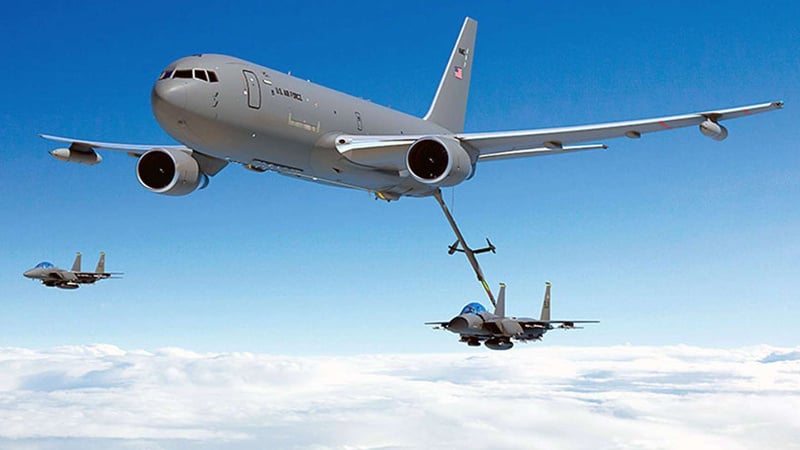
According to Pars Today, in the latest example of lucrative U.S. arms deals with the Arab countries of the Persian Gulf, the U.S. State Department has approved the possible sale of four KC-46A Pegasus aerial refueling aircraft to Qatar for a staggering $4.5 billion.
The deal includes eight PW4062 turbofan engines, ten AN/ALR-69A radar warning receivers, as well as a range of support equipment and training services. At first glance, the deal may appear to be a routine military transaction. However, a closer examination of its details, along with a comparison with European competitors, reveals a new dimension to what appears to be an organized economic plunder—one that, under the guise of Iranophobia and the creation of a fabricated security environment, channels billions of dollars in the financial resources of regional countries into the coffers of U.S. arms manufacturers.
The astonishing point about this deal is the price-to-aircraft ratio. Including additional equipment, each KC-46A will cost Qatar more than $1 billion. This is while the U.S. Air Force itself acquires the aircraft at a price of roughly $200 million to $322 million per unit. The stark difference between the price charged to foreign allies and the cost paid by the U.S. Air Force itself points to a calculated pattern of extracting the highest possible price from countries in the region.
A comparison between the KC-46A and its European rival, the Airbus A330 MRTT, makes the scale of this alleged profiteering even clearer. The air forces of Saudi Arabia and the United Arab Emirates have paid around $300 million per A330 MRTT, while the aircraft not only offers superior capabilities but can also be converted for use as an airborne hospital. In other words, Qatar is paying more than three times the price of its European rival for each KC-46A, despite the claim that the product is significantly inferior in terms of quality and performance.
The bitter reality is that the KC-46A is not only the most expensive option available, but is also considered one of the most troubled military aircraft in history. According to a recent report by the U.S. Government Accountability Office (GAO), the aircraft has failed to meet the required availability and mission capability standards since 2019. Persistent quality issues, component failures, equipment shortages, and numerous technical deficiencies have forced the U.S. Air Force to continue relying on its aging KC-135 fleet.
Among the aircraft’s critical deficiencies are three major problems involving its fueling system and Remote Vision System (RVS), which have caused difficulties when refueling certain combat aircraft, including the A-10. In addition, fuselage cracks, fuel leaks, the detachment of the refueling boom during flight in two separate incidents, and electrical system failures add to the long list of problems plaguing this expensive aircraft. Boeing has so far incurred more than $8 billion in additional costs to address these deficiencies.
The fundamental question is: Why should Qatar spend such an exorbitant amount of money on a defective, low-quality product? The answer lies in the climate of Iranophobia that the United States has fostered, placing Arab countries in the region in a “buy or die” situation. The U.S. State Department’s official justification for the sale is to “help Qatar address current and future threats” and “support the security of a strategic regional partner.” This familiar rhetoric is exactly the same narrative that has been used over the past decades to sell thousands of billions of dollars’ worth of weapons to Arab countries in the region.
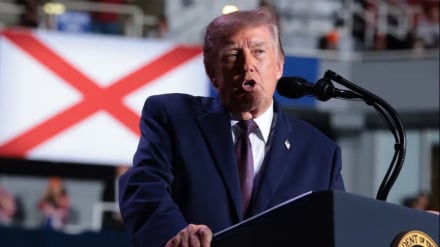
In May 2025, Donald Trump, during his visit to Riyadh, announced a $42 billion deal for the sale of U.S. weapons to Qatar, with the KC-46A also included as part of the package. These massive deals are taking place at a time when Arab countries in the region are grappling with falling oil prices and budget deficits on the one hand, while on the other, they are being compelled to pay exorbitant prices for weapons that often not only fail to deliver the required capabilities but also become a source of greater insecurity and dependence.
The $4.5 billion KC-46 tanker aircraft deal with Qatar is not a military transaction, but rather a clear example of economic plunder carried out under the guise of providing security. By exploiting the climate of Iranophobia, the United States sells its low-quality, overpriced products to Arab countries in the region at prices several times higher than those of their European competitors. The stark difference between the aircraft’s cost to the U.S. Air Force and the price charged to Qatar exposes a form of military profiteering in which the interests of arms manufacturers are prioritized over the region’s genuine security.