Leader: Aristocracy against ideals of Revolution
Feb 20, 2018 06:04 UTC
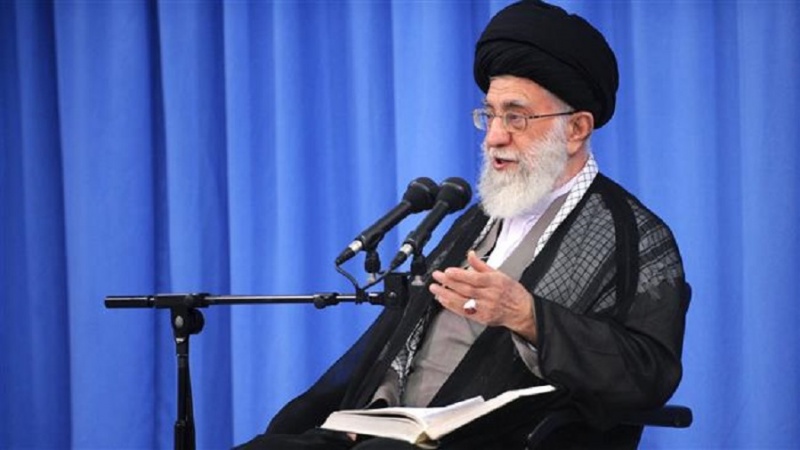
Leader of the Islamic Revolution, Ayatollah Seyyed Ali Khamenei, on Sunday February 18 granted audience to thousands of revolutionary people from Tabriz and East Azarbaijan Province, on the 40th anniversary of the historical uprising of the people of Tabriz against the British-installed and American-backed Pahlavi regime, on the 40th day of the martyrdom of people of Qom by the Shah’s forces.
He described the nation’s deep and revolutionary understanding in drawing a distinction between revolution and the performance of various institutions and organizations as one of the main reasons for the admirable presence of the people this year in the nationwide February 11 rallies marking the 39th anniversary of the victory of the Islamic Revolution.
He made important remarks on the four aspects of “Revolution and its main function,” “the pathology of the Revolution,” “the priorities of the current era” and “the future of the Revolution.”
Ayatollah Khamenei pointed to the coincidence of these days with the tragic martyrdom anniversary of Hazrat Fatima az-Zahra, the Immaculate Daughter of Prophet Mohammad (blessings of God upon him and his progeny). He noted that the lofty status of the Noblest-ever Lady is agreed upon by Muslims of all denominations, whether Shi’a or Sunni. He said: “The lesson that we learn from the brief but bright life of Hazrat Zahra is proper cognizance of God and His commandment, courage, and sacrifice in defence of the fundamentals of faith.”
The Leader of the Islamic Revolution then described the uprising of the people of Tabriz on February 18, 1978 as fateful, saying: Had it not been for this massive uprising, the incident of December 22, 1977 (that is, the massacre of the people of Qom by the Pahlavi regime) would have been consigned to oblivion. Thus, with their timely uprising, the people of Tabriz, as part of their devotion to the Father of the Islamic Revolution, Imam Khomeini (God bless him), succeeded in generating the tidal wave of the grassroots movement that movement culminated on the victory of the Islamic Revolution on 11 February 1979.
He then pointed to this year’s massive rallies throughout the country on February 11, saying: “Such a popular presence in defense of the Revolution at the start of the 40th year of the Revolution is a miracle and there is no precedent for it in any of the revolutions of the world.”
He said: “Indeed, the people are critical of some of the current issues of the country and we are fully aware of their criticism, complaints and grievances and but when there is talk of the Revolution and the establishment, the people will come to the scene in the defense of the Revolution like such.”
The Leader of the Islamic Revolution said the huge presence of the people was due to the “revolutionary awareness” and “political maturity” and their ability in distinguishing between “the revolutionary establishment and the bureaucratic organizations of the country.”
He said: “An individual may be critical not only of the administration and the judicial branch of the government and Majlis, but also of this humble one; however, criticism is by no means at odds with standing up for the Islamic and revolutionary establishment emanating from the perseverance of the nation and the sacrifice of hundreds of thousands of martyrs and, therefore, the people will defend this Revolution with all their might.”
Ayatollah Khamenei pointed to the outstanding and revolutionary features of the people of Tabriz and described the meeting as the best opportunity to state some basic issues regarding the “functions of the Revolution,” “the pathology of the Revolution,” “priorities,” and ultimately “the future of the Islamic Revolution.”
Referring to the greatness and the unfathomable dimensions of the Islamic Revolution amidst the feverish efforts of the enemies to undermine it, he described the most important mission of the Islamic Revolution as “transforming a tyrannical system into a popular religious establishment, since the people mean everything.”
The Leader of the Islamic Revolution said elections and the people’s vote in directly or indirectly determining the Leader, the president and other officials are part of the popular religious system of governance in Iran, since popular rule means granting the people [the right] to express opinion, have initiatives and make decisions in all of the affairs of life’ and this is precisely the opposite of the people being nobodies and the absolute brutality of monarchs and tyrants in successive years prior to the Revolution.”
He said that during the pre-revolution era, the Americans became in charge of everything, and this changed with the establishment of the popular religious rule, which means end of foreign dominance and tyranny, coupled with fundamental changes in the political management of the country. This is fully manifest in urban and rural services and the spirit to carry out great deeds such as the formation of the Islamic Revolution Guards Corps, Construction Jihad and Basij [volunteer forces].”
Ayatollah Khamenei pointed out that in the Pahlavi era the country was so inept in terms human resources that Indian and Filipino physicians came to the country to provide medical treatment; “however, today, Iran is the attractive health hub in the region and is among the top few countries in some rare and newly-emerging sciences and this is the result of democracy and confidence in the people and the revival of the national sense of self-confidence.”
He cited the grandeur, honor and greatness of the Iranian nation as another function of the Islamic Revolution, saying that this has increased the enemies’ animosity toward to the Iranian people.
He described the progress of the country as an outcome of popular religious rule and pointed to the designation the third decade of the Revolution as “the decade of progress and justice,” reiterating, “Progress has been made in various sectors in the real sense of the word; however, we admit that in the area of ‘justice’ we are lagging behind.”
The Leader of the Islamic Revolution added, “Progress means that a nation advances to the front ranks through reliance on its decision, resolve and capacity and this reality is palpable in Iran.”
He said the Islamic Republic has an influence and say in the issues of the region and recalled Iran’s advances in the medical, nuclear, nanotechnology, defense, biotechnology, and transportation routes, saying: “If we attach greater importance to our youth, they are ready to take off and ascend due to the intensity of their talents and initiatives; however, we, officials, have some shortcomings in this area and more effort and struggle is needed.”
He added: “The Revolution delivered the country from misery and the people from a state of abjection and servitude and the nation today is proudly and honorably busy influencing all affairs and this is the biggest achievement of the Revolution.”
Ayatollah Khamenei analyzed the “the pathology of the Revolution,” saying: The biggest blight of all revolutions is “reactionary tendency,” namely growing feeble, stopping and returning to a prior state. He said: “Nearly all of the known revolutions of the world have suffered from this predicament in their early years.”
He described “moving toward aristocracy,” “counting on the affluent classes instead of attending to the underprivileged and the fragile strata” and “reliance upon and confiding in foreigners instead of the people” as examples of reactionary attitudes. He stressed, “The elite of the society must pay attention, the country’s managers must be very careful and the people must sensitively monitor the conduct of we, officials and managers, so that such reactionary moves do not occur in the country.”
The Leader said: Revolution means transformation and movement toward lofty goals and if these objectives are forgotten, revolutions are meaningless.”
He described the Islamic Revolution as the beginning of change and reformative movement in the society and added, “The Revolution did not conclude but commenced in 1979 and this movement must continue more deeply, widely and wisely.”
Ayatollah Khamenei criticized those who have a negative perception of the term “revolutionary,” adding, “The country’s management system and the principles of the Constitution must be respected and no one should assume that revolutions are possible without an establishment.”
He stressed, “It is wrong that some assume that in the name of the Revolution there should be a critical and remonstrative rhetoric against everything and every development and part of the Islamic establishment, because Revolution means that the Islamic establishment, religious democracy and the Ummah and Imamate establishment must have revolutionary goals and alignment.”
The Leader of the Islamic Revolution cautioned that any negligence or air of superiority by the Iranian officials as “disregard for the poor classes”, and called on the government to sincerely serve the people.
In his speech, the Leader describing ding the current priorities of the country, focused on the issue of “economy” as very important.
He cited reliance upon the internal capacities and the people as the fundamental solution to economic woes, adding, “As we have repeatedly said and the officials have also approved its policies, Resistance Economy does not mean confinement to inside [the country], but is endogenous and extroverted; therefore, they should not say that we want to have ties with the world, because global links are existent in Resistance Economy, but trust and reliance must be put on the people not foreigners.”
He said the employment of domestic talents, capacities and assets requires prudence and added, “The prosperity of domestic economy requires good exports, no-more-than-required imports, attraction of foreign investment, but the reins and initiative must be in the hands of local mangers and not handed over to foreigners.”
He described the economic earthquake and the extraordinarily severe blow over the past decade to some advanced countries in East Asia as a great lesson and added: “This blow that plunged these countries into poverty and misery overnight was the result of dependence on foreign investment.”
The Leader of the Islamic Revolution pointed to the country’s lack of profit from dependence on and confidence in foreign countries on the issue of the nuclear deal, named the Joint Comprehensive Plan of Action (JCPOA), and the nuclear negotiations, adding, “We saw the result of reliance on foreigners on the issue of the JCPOA and in the case of nuclear talks we trusted them but reaped no benefits; indeed, the officials have faced this issue very well and the foreign minister [Mohammad Javad Zarif] , which must be thanked, has a very good and strong approach toward the malignancy of the Americans and the Europeans’ running with the hare and hunting with the hounds and this path must continue.”
He likened forty years of struggle by the nation during sanctions and pressure to moving on a rugged course and added, “Nevertheless, we have progressed and this reality shows the capability of the nation and country.”
Outlining the other priorities of the current era, Ayatollah Khamenei underscored “the preference of Jihadi (diligent and prudent) management over bureaucracy” and added, “The executive and judicial branches of the government and all of the sectors must follow through their mission with Jihadi management, meaning hard work along with prudence, and proverbially work night and day to advance the affairs.”
“Giving preference to the grassroots over partisan and factional interests and goals” and “giving priority to providing services to the poor strata and deprived areas” were two other recommendations by the Leader to the officials.
On defense issues, Ayatollah Khamenei said the continuation of the development and renovation of all of the approaches, means and equipment that the country requires today and tomorrow take full priority and added, “Without a moment’s doubt, the country must move toward anything that it needs for defense, even if the entire world is against it.”
He strongly criticized the enemies who threaten humanity with their weaponry but oppose Iran’s missile might, saying, “What concern of you is this issue? You want the Iranian nation not to have missiles and other self-defense facilities in order to bully it.”
He added, “Of course, we consider issues such as nuclear weapons and weapons of mass destruction to be Haram (forbidden by Islam), but will mightily pursue anything else that we may need.”
Leader of the Islamic Revolution pointed to the preference for cooperation with neighbors, eastern countries and those who have common interests with Iran and underscored “job creation and production” in particular while outlining economic priorities. He pointed to having named this year as “Resistance Economy; Production and Job Creation,” saying, “Some things have been done in this area and some statistics released, but for the realization of what is in mind more effort and endeavor is required.”
He called on the youths and teenagers of the country to be prepared in areas of faith, science and revolution, saying: “The youth are the engines for the progress of the present and future of the country and the present generation of youths, which has greater resolve, diligence and insight than the first generation of the Revolution must prepare itself to speed up the progress of the country.”
In the final segment of his remarks, the Leader of the Revolution said the endurance and sturdiness of the Islamic Revolution despite 40 years of plots and measures by tyrannical and malevolent governments is the best indicator of the might of the Islamic Republic, stressing, “We know the overt and covert threats, remarks and ploys of the enemies, but we stress, without a moment’s hesitation, that the Islamic establishment relying on the people will grow stronger by the day and as [the late founder of the Islamic Republic] Imam Khomeini said, ‘The US cannot do a damn thing.’”
AS/ME
Tags