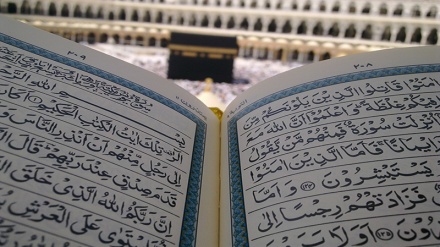
Path Towards Enlightenment (838)
Mar 29, 2019 03:48 UTC
Welcome to our weekly program "Path towards Enlightenment" in which we present you a fluent and easy-to-understand explanation of the ayahs of the holy Qur’an.
We begin explanation of Surah Zumar the thirty-ninth Surah of the holy Qur’an, from today onwards, after having completed the explanation of Surah Saad last Friday.
Surah Zumar was revealed in Mecca to Prophet Mohammad (SAWA). It has 75 ayahs, which mainly deal with the fundamental Islamic beliefs of Monotheism and Resurrection.
The word “Zumar” means “groups” and the title of this Surah, as mentioned in ayahs 71 and 73, alludes to the ingress of the denizens of Hell and the people of Paradise into their assigned dwellings. It further emphasizes the judgement of mankind on the Day of Resurrection on the basis of the records of their deeds and the testimony of the witnesses.
On the merits of recitation of the Surah, a statement from the Prophet says: “Whoever recites Surah Zumar shall not lose hope of Divine Mercy and shall be recompensed the rewards of the pious.”
The Prophet’s 6th Infallible Heir, Imam Ja’far as-Sadeq says: “The one who recites Surah Zumar (with faith) shall be accorded honour and dignity in this world and in afterlife even if he lacks in worldly possessions and family support, in such manner that others shall stand in awe upon meeting him and his body shall not be burned in Hell.”
A comparison of the aforementioned merits with the contents of the Surah concerning fear of God, setting one’s hope on His Mercy, sincerity in worshipping Him, and absolute submission to the Pure Essence of Truth, clearly indicates that such rewards shall be reaped by those who on the basis of faith and good deeds, recite the Revealed Words of God and ponder upon them. In other words, the contents of the Surah find their way into the hearts of the reciters and permanently influence the disposition of their minds, with noticeable results in their life. Such people deserve to reap great rewards and Divine bounties.
Let us listen to or read ayahs 1and 2 of Surah Zumar:
"The [gradual] sending down of the Book is from Allah, the All-Mighty, the All-Wise."
"Indeed We have sent down the Book to you with the truth; so worship Allah, putting exclusive faith in Him."
These ayahs refer to God Almighty’s revelation of the holy Qur’an to Prophet Mohammad (SAWA). In the first ayah the word “tanzil” means gradual sending down in portions at certain times, while in the second ayah the root word “inzal” indicates sending down in whole at one time. Both the ayahs allude to the Pure Divine Essence as the Origin of Revelation and the Contents, as well as the final goal of the Holy Qur’an for the guidance of mankind.
Any book is known by its author or revealer. Being apprised of the Divine Origin of Revelation of this Glorious Book and the fact that the Omniscience of God Almighty, the Omnipotent and the All-Wise, is the Origin of the Revelation of the Qur’an Book, makes us understand Boundless Divine Knowledge and the Timeless Wisdom of the Book’s contents. It is worth noting that such expressions in the opening ayahs of the Qur’anic Surahs are indicative of the fact that the contents of this Glorious Book are wholly revealed by God Almighty. In other words, the contents of the Holy Qur’an constitute Divine Words rather than those of the Prophet of Islam, even though his word is also exalted and full of wisdom.
The second ayah deals with the contents and the goal of the Revelation of the Holy Qur’an saying: “Indeed We have sent down the Book to you with the truth.”
The significant point is that there is nothing but Truth in the Divinely Revealed Book; that is why seekers of Truth proceed toward it and those thirsty of finding their way to the valley of Truth reflect on its contents. The goal behind the Revelation of the Holy Qur’an is to provide humanity with the pure essence of the genuine religion to indicate which the ayah ends with the phrase: “so worship Allah, putting exclusive faith in Him."
The word “religion” encompasses the corporeal and spiritual dimensions of man. In this vein, sincere servants of God Almighty are supposed to refine all the aspects of life from impurities, reject other entities besides God Almighty from their hearts, souls, words, and deeds, reflect upon Him, love for His sake, speak and act for Him, and take steps for His satisfaction – this is “religious sincere devotion.”
The holy Qur’an therefore is free of any imperfection, and no falsehood can approach it from any direction or distort its Divine Contents.
From these ayahs we learn that:
- Although God Almighty is too glorious to be encompassed by the eyes of creatures, by reading the ayahs of the holy Qur’an, we hear His words and by pondering on their flawless eloquence and timeless wisdom we are able to understand its truth and rightfulness.
- True dignity comes in the light of knowledge and wisdom, and these two are related to each other.
- Servitude to God must be sincere from the depths of the heart and based on faith and the truthfulness of religion, without tendencies of polytheism, disbelief, and superstition.
Now we listen to or read ayah 3 of Surah Zumar:
"Look! [only] exclusive faith is worthy of Allah, and those who take guardians besides Him [claiming,] ‘We only worship them so that they may bring us near to Allah,’ Allah will indeed judge between them concerning that about which they differ. Indeed Allah does not guide someone who is a liar and an ingrate."
This ayah emphasizes that the value of religion lies in its purity lest it is metamorphosed by vain desires and superstitious beliefs. God Almighty solely accepts the pure religion, and total submission to His commandments, which means any polytheism, dissimulation, and confusion of Divine Laws, are unacceptable. Religion in its purest form is solely bestowed upon man by God Almighty through Prophets, since human thought is imperfect and erroneous.
The ayah also makes a reference to the falsity of the baseless claims of the polytheists since they turned away from the path of sincere devotion and went astray in error by worshipping gods besides Allah on the presumption that these deities, which are only creation of their minds, will earn them the proximity of Allah.
This is a false and irrational claim, which will surely earn the wrath of Allah, Who, as the ayah says will on the Day of Resurrection judge between them regarding that wherein they had differed. The falsity and corruption of their thoughts and deeds will be known to everyone on that Day since Allah, the One and Only, is too Glorious to have partners and associates.
From this ayah we learn that:
- Manmade schools, though claiming to be gnostic are devoid of genuine spirituality and are mixed with all sorts of superstitions and intellectual deviations, in contrast to pure religion as revealed only by Almighty Allah.
- The claims of idolaters are devoid of facts, since idols and imaginary deities cannot be intermediaries between them and God.
Now we listen to or read ayah 4 of Surah Zumar:
"Had Allah intended to take a son, He could have chosen from those He has created whatever He wished. Immaculate is He! He is Allah, the One, the All-Paramount."
In continuation of the previous ayah that denounced polytheist tendencies, this ayah means to say that some idol worshipers considered angels as the children of God and worshiped them. Here such false beliefs are categorically refuted, including the Christian claim that Prophet Jesus is the son of God. He, the Almighty is too Glorious and Paramount to possess such frail tendencies of the created beings, as begetting or adopting children.
God is the Eternal All-Subjugator of all things; needless of the assistance of any entity. He is neither perturbed by anything hence He is needless of intimacy with anyone or anything, nor is he in need of progeny. In short, none can be compared to God Almighty, Who is Unique and Immaculate.
From this ayah we learn that:
- God the Almighty Creator is too Great and Glorious to have the need to beget children or adopt children. He is absolutely needless of anything.
- God is Unique and Incomparable, and none is like Him; therefore, every thought and belief that assumes likeness to God is categorically refuted.
AS/ME
Tags