This Day in History (17-02-1398)
Jul 04, 2019 07:20 UTC
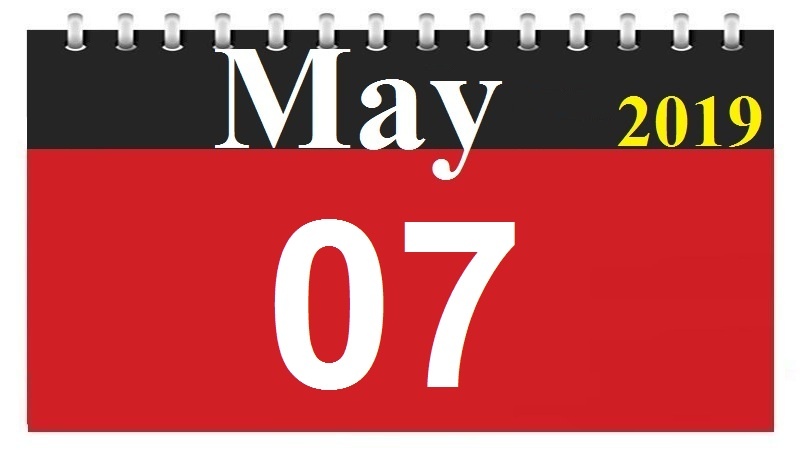
Today is Tuesday; 17th of the Iranian month of Ordibehesht 1398 solar hijri; corresponding to 1st of the Islamic month of Ramadhan 1440 lunar hijri; and May 7, 2019, of the Christian Gregorian Calendar.
Today marks the First Day of the blessed fasting month of Ramadhan – the month of revelation of the Holy Qur'an and the season of divine blessings. In description of the grandeur of this month, Prophet Mohammad (blessings of God upon him and his progeny) has hailed its days and nights as the best days and nights of year, while calling on Muslims to benefit from the blessings of Ramadhan. The Night of Qadr marks the night that the Holy Qur'an was revealed. The martyrdom anniversary of the Prophet's 1st Infallible Successor, Imam Ali (AS) and the birth anniversary of his elder son, Imam Hasan Mojtaba (AS), the 2nd Infallible Imam, are the other important events of Ramadhan. We call on God Almighty to assist us to make use of the spiritual blessings of the fasting month of Ramadhan in the best possible manner.
2418 solar years ago, on this day in 399 BC, Greek philosopher Socrates was killed during imprisonment by being forced to drink poison because of rejecting the Athenian democratic regime’s tyranny and rejection of its demand to acknowledge its pantheon of gods. His preaching of moral virtue brought accusations of corrupting the youth.
1334 solar years ago, on this day in 685 AD, Marwan ibn al-Hakam, the fourth self-styled caliph of the usurper Omayyad regime died in Damascus at the age of 62, after nine months in power, which was limited mostly to Syria. He was killed by his most recent wife, a widow of the tyrant Yazid ibn Mu'awiyyah, who put a pillow on his face and sat over it till his breath was snuffed out. One of the most criminal characters in Islamic history, Marwan was the son of the hypocrite Hakam bin Aas, who because of ridiculing Islam was expelled from Medina by Prophet Mohammad (blessings of God upon him and his progeny). He was the first cousin of Osman bin Affan, who on becoming caliph recalled him to Medina in violation of the Prophet’s Sunnah, gave his daughter in marriage to him, and entrusted him all affairs of the state. The resulting mismanagement and plunder of the public treasury ended some twelve years later in the killing of Osman by Muslim revolutionaries from Egypt. In the "Battle of Jamal" or Camel that the pledge-breakers led by Ayesha – a wife of the Prophet – imposed on the Commander of the Faithful, Imam Ali (AS), near Basra in Iraq, Marwan treacherously killed his own leader, Talhah Ibn Obaidollah, with an arrow shot at the unprotected thigh. When the Omayyads seized the caliphate he served as governor of Medina for intermittent periods, and stayed there after retirement until Abdullah ibn Zubayr rebelled against Yazid and made the mistake of allowing him and his son Abdul-Malik to leave for Damascus. In Syria, following Yazid’s death and abdication by his son Mu’awiyya II, in protest to his father’s crimes against Islam and humanity, including the tragic martyrdom of Imam Husain (AS) in Karbala, Marwan found himself propelled to the caliphate. His ascension pointed to a shift in the lineage of the Omayyad dynasty from descendants of Abu Sufyan to those of Hakam, both of whom were grandsons of Omayya. Some 67 years later, the Marwanids were thrown into the dustbin of history with the rise of the new dynasty of usurper caliphs, the Abbasids.
1232 lunar years ago, on this day in 208 AH, the virtuous lady Seyyedah Nafisa passed away at the age of 63 in Fustat in what later became Cairo in Egypt, while engrossed in the recitation of the holy Qur’an. Daughter of Hassan al-Anwar and granddaughter of Zayd al-Ablaj, a son of Imam Hasan Mojtaba (AS) – the Prophet’s elder grandson and 2nd Infallible Heir – she was born in Medina and was the wife of Seyyed Ishaq al-Mo’tamen, a son of Imam Ja’far as-Sadeq (AS), the Prophet’s 6th Infallible Heir. In 193 AH, she had visited Damascus, Syria, for pilgrimage to the shrine of the Heroine of Karbala, the Prophet’s granddaughter Harzat Zainab (peace upon her). Seyyedah Nafisa, like her husband, was considered an authority on Hadith, and people would flock to the classes that she held in Egypt for acquainting the people with the religious sciences of the Ahl al-Bayt. She performed the annual Hajj pilgrimage some thirty times and was known for her piety and miraculous powers that included curing the ill and saving Egyptians and the Nile River from drought. She was mother of Seyyed Qasim and Seyyedah Omm Kolthoum, while her equally pious niece, Seyyedah Zainab (daughter of her brother Seyyed Yahya), also has a much-visited shrine in Cairo, which some people wrongly think to be the resting place of the Heroine of Karbala, Hazrat Zainab (peace upon her). The shrine of Seyyedah Nafisa is among the most visited pilgrimage centres in Egypt. Today, especially on Sundays and Thursdays, thousands of people visit her shrine. It is also a custom to hold wedding ceremonies near there. Each year on the birth anniversary of Hazrat Nafisa on the 11th of Rabi al-Awwal, ceremonies are held in Egypt.
1186 solar years ago, on this day in 833 AD, the historian Abdul-Malik bin Hisham ibn Ayyub al-Himyari, died in Fustat (Cairo). His family was from Basra in southern Iraq and migrated to Egypt, where he became known as a grammarian and said to have mastered philology in a way which only the famous Iranian scholar of Arabic, Sibawayh had. Ibn Hisham compiled the “Sirah” or biography of Prophet Mohammad (blessings of God upon him and his progeny). It is actually an edited version of the earlier “Sirah” compiled by Mohammad ibn Ishaq – grandson of Christian convert from Kufa. Ibn Hisham abbreviated, annotated, and altered the original text by adding what appealed to his inclination and removing several passages, however authentic. For instance, he deleted the hadith confirming Imam Ali ibn Abi Taleb (AS) as “wasi” (or testamentary legatee), including the famous event in Mecca on revelation of ayah 214 of Surah Shu’ara when Prophet Mohammad (blessings of God upon him and his progeny) soon after his formal entrustment with prophethood, invited his kinsmen for meals and announced to them the message of Islam, declaring at the end of the function his young, pre-teen cousin, Imam Ali (AS) as brother, legatee and caliph. The historian Tabari has preserved such hadith, citing Ibn Ishaq's work as his source.
1012 lunar years ago, on this day in 428 AH, Abu Ali Hussain Ibn Abdullah Ibn Sina, the prominent Iranian Islamic genius, who was a physician, mathematician, philosopher, and astronomer, passed away at the age of 58 in Hamedan. He had memorized the Holy Qur'an at a young age and then mastered logic, astronomy, and geometry, to such an extent that at the age of 18, he was considered an authority in most sciences of his day. Due to successful medical treatment of the Samanid King, Nouh ibn Mansour, he was allowed to use the royal library at Bukhara. He was a genius, who because of his political views and religious tendencies in favour of the Ahl al-Bayt of Prophet Mohammad (SAWA), found himself persecuted by Sultan Mahmoud of Ghazna. Known as Avicenna to medieval Europe, his works were translated into Latin and for several centuries were taught at most western universities. Among his valuable books, mention can be made of the book: “Shafa” on philosophy; and “al-Qanoun fi't-Tibb” on medicine.
708 lunar years ago, on this day in 732 AH, the Muslim historian and historiographer, Abdur-Rahman ibn Mohammad Ibn Khaldun, was born in Tunis into an affluent Spanish Arab family that had settled in North Africa because of Christian onslaughts. He is regarded as one of the forerunners of modern historiography, sociology, and economics. He travelled widely around Egypt, North Africa and Spain, where the Sultan of Granada, Mohammad VI, sent him on a mission to the Christian King of Castile, Pedro the Cruel. He returned to Egypt, whose Mamluk ruler sent him to negotiate with the fearsome Turkic conqueror, Amir Timur, during the siege of Damascus. In his autobiography, Ibn Khaldun has written on his discussions with Timur, who asked him in detail about North Africa and Spain. Among his many works is a voluminous universal history, but his fame rests on the "Muqaddemah", which is considered a unique work. He died in Cairo in 808 AH at the age of 76 years.
532 solar years ago, on this day in 1487 AD, siege of the Spanish Muslim city of Malaqa was started by a huge Christian army of 20,000 cavalry, 50,000 infantry, and 8,000 support troops including thousands of mercenaries from other parts of Europe, as part of the attempts of Ferdinand of Aragon and his wife Isabel of Castile to occupy the prosperous Nasrid Kingdom of Granada. The siege lasted about four months. Malaqa was the second important city after Granada, a major trading port on the Mediterranean. The city was prosperous, with elegant architecture, gardens and fountains. It was surrounded by fortifications. Above it was the citadel, connected via a covered way with the impregnable fortress of Gibralfaro. A landside suburb was also ringed by a strong wall. Towards the sea were orchards of olives, oranges, pomegranates, and vineyards. The city was well-supplied with artillery and ammunition. After the city surrendered, Ferdinand broke all terms and ordered that the survivors, numbering around 15,000 should be killed or enslaved. It is also worth noting that the Mamluks of Egypt, who had assembled a special force for assisting the Spanish Muslims, could not march to their aid, because of the divisive diplomacy of Christian powers, who fearful of the Ottoman advance into Italy and subsequently Spain, tempted the Turkish Sultan of Istanbul to get embroiled in an unwanted fratricidal war in Syria.
207 solar years ago, on this day in 1812 AD, English poet, Robert Browning, was born in London. His works include "The Piper of Hamelin" and "The Ring and the Book."
158 solar years ago, on this day in 1861 AD, India’s Bengali language poet and thinker, Rabindranath Tagore, was born. He travelled widely and wrote several books. He visited Iran and paid tributes to the famous Persian poet, Hafez Shirazi. Tagore travelled to Shiraz, Isfahan, Tehran and Kermanshah in Iran, from where he went by road to Baghdad in Iraq. Tagore's personal diary and public interviews capture fascinating details of his political and social observations. At the mausoleum of Hafez, he wrote in his travelogue, “Sitting near the tomb, a signal flashed through my mind, a signal from the bright and smiling eyes of the poet on a long past spring day – akin to the springtime sunshine of today.” He celebrated his 71st birthday in Tehran and wrote a beautiful poem titled: “IRAN”, on the occasion. Part of his poem reads:
“Iran, thy brave sons have brought
Their priceless gifts of friendship
On this birthday of the poet of a far-away shore,
For they have known him in their hearts as their own,
And in return I bind this wreath of my verse
On thy forehead, and I cry: Victory of Iran!”
131 solar years ago, on this day in 1888 AD, on the pretext of trade, the crafty British established their foothold in what is now Zimbabwe, through the designs of the imperialist agent, Cecil Rhodes, who soon deceived the local African chiefs to declare the land as Britain’s colony. The British troops massacred thousands of black people and in 1898 named the land Southern Rhodesia – the land of Zambesi across the river of the same name was called Northern Rhodesia. In 1965 with the intensification of the freedom struggle by the black people, British agent, Ian Smith, seized power, brutally suppressed the people and involved them in civil war, as his white racist policy of divide and rule. In 1980, the country became independent as Rhodesia, and the colonial capital, Salisbury was renamed Harare. Today, independence leader, Robert Mugabe, is the president. Because of his independent policies, the US, Britain, and Western Europe, have imposed sanctions on Zimbabwe’s economy, and indulge in feverish propaganda against him. Zimbabwe is rich in diamonds and minerals.
65 solar years ago, on this day in 1954 AD, the Battle of Dien Bien Phu ended in a French defeat and a Vietnamese victory after almost two months of fighting. The Viet Minh forces besieged Dien Bien Phu Castle, forcing Colonel Christian de Castries to surrender, thus ending French colonial rule over Vietnam. The meddlesome Americans, however, started interfering in Vietnam and on the pretext of spread of communism, landed troops, divided the country into two parts and imposed an unwanted war that dragged on till 1975, resulting in the death of tens of thousands of Vietnamese, but ultimately ending in a humiliating defeat for the US.
28 solar years ago, on this day in 1991 AD, Iranian poet, author, and researcher, Mehrdad Avesta, passed away at the age of 62. He was an authority on the classical Persian poet Shaikh Sadi’s famous works “Bostan” and “Golestan”, in addition to Arabic grammar. He lectured on Iranian and global arts and literature at several colleges in Tehran. He started political activities against the repressive rule of the Pahlavi regime through his poems. He has written beautiful poems on the Islamic Revolution and in admiration of the Founder of the Islamic Republic of Iran, Imam Khomeini (RA). He researched and published the works of prominent classical Persian poets, such as Hafez, Sa’di, Mowlavi, Khaqani, Sanaei, and Salman Saavoji.
AS/SS
Tags


