Path towards Enlightenment (725)
Jul 16, 2016 02:10 UTC
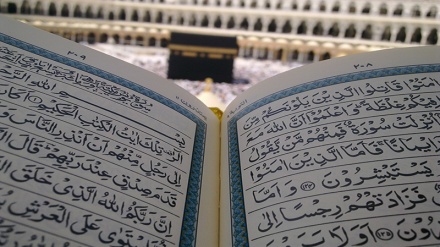
Welcome to our weekly program “Path towards Enlightenment” in which we present you a fluent and easy-to-understand explanation of the ayahs of the holy Qur’an.
We start from where we left you last Friday. In this episode, we become familiar with the exegesis of the 35th to 38th ayahs of Surah ar-Roum of the Holy Qur’an.
أَمْ أَنزَلْنَا عَلَيْهِمْ سُلْطَانًا فَهُوَ يَتَكَلَّمُ بِمَا كَانُوا بِهِ يُشْرِكُونَ
“Have We sent down to them any authority which might speak of what they associate with Him?”
This ayah, in continuation of previous discussions, negates polytheism and the beliefs of those who associate partners with God Almighty, while asking them to provide any logical reasoning for worshipping deities. The ayah means to say: Have you found any signs in the world of nature that indicates God has a partner or there is any need for an associate in governing the universe? Has God sent a scripture to you saying that he has partners to assist Him? When we ponder on these and similar questions that may arise, it becomes perfectly clear that this is not the case. This means the idolaters and all other polytheists have no rational answers and only follow superstitious beliefs because of ignorance and blind insistence on continuation of the path of their misled ancestors.
From this ayah we learn:
- Islam is a religion based on logic and reasoning and asks its opponents to present reasons.
- In contrast to monotheism, which is based on innate human nature and is firmly rooted in reason, polytheism is without roots and logic.
Now, let’s listen to the 36th ayah of Surah Roum:
وَإِذَا أَذَقْنَا النَّاسَ رَحْمَةً فَرِحُوا بِهَا ۖ وَإِن تُصِبْهُمْ سَيِّئَةٌ بِمَا قَدَّمَتْ أَيْدِيهِمْ إِذَا هُمْ يَقْنَطُونَ
“And when We let people taste Our mercy, they exult in it; but should an ill visit them because of what their hands have sent ahead, behold, they become despondent!”
This ayah states one of the characteristic traits of those whose faith is weak as well as the polytheists, noting that their feelings fluctuate between pride and despair. Whenever a blessing is bestowed upon them they become proud, and upon the emergence of problems, they lose hope. This is while the true believers are patient and grateful. They are grateful toward the divine blessings bestowed upon them and they are patient in the face of hardships and difficulties, fully resigned to the Will of the All-Wise One and Only God.
This and other ayahs of the holy Qur’an point out that the Blessings of the All-Merciful God are all-comprehensive, because the Almighty only wants the good of His creature. In contrast, the woes in which human beings find themselves trapped in, are the consequences of their own evil deeds and the result of their own sins or imposition of injustices upon others.
From this ayah, we learn:
- Faithless individuals are not grateful for the divine blessings bestowed upon them; and are mired in despair with the slightest hardship.
- The worldly blessings do not last and man should not set his hope on the material blessings. Otherwise, we would fall in despair upon losing them.
Now, let’s listen to 37th and 38th ayahs of Surah Roum:
أَوَلَمْ يَرَوْا أَنَّ اللَّـهَ يَبْسُطُ الرِّزْقَ لِمَن يَشَاءُ وَيَقْدِرُ ۚ إِنَّ فِي ذَٰلِكَ لَآيَاتٍ لِّقَوْمٍ يُؤْمِنُونَ
فَآتِ ذَا الْقُرْبَىٰ حَقَّهُ وَالْمِسْكِينَ وَابْنَ السَّبِيلِ ۚ ذَٰلِكَ خَيْرٌ لِّلَّذِينَ يُرِيدُونَ وَجْهَ اللَّـهِ ۖ وَأُولَـٰئِكَ هُمُ الْمُفْلِحُونَ
“Do they not see that Allah expands the provision for whomever He wishes, and tightens it? There are indeed signs in that for a people who have faith.
"Give the relative his right, and the needy and the traveler as well. That is better for those who seek Allah’s pleasure, and it is they who are the felicitous.”
This ayah states that faithful persons firmly believe that whatever they have, has been provided by Allah, and it is Allah Alone Who expands or tightens provision for whomever He wishes; based on Divine Prudence. There might be those who make every effort to accumulate wealth; but fail to do so. And there may be those who have made an ordinary effort and have achieved a lot.
The important point is that our efforts should be conventional. However, to what extent these efforts bear fruit is tied to several factors; some of which are out of our control. If we try to accumulate wealth but fail, we fall into despair. But, if we consider our duty to make efforts, and leave the result to God, we will always be pleased with what we have. The continuation of ayahs has referred to the responsibility of mankind toward others, and notes those, who are further provided, shoulder more responsibility, and in addition to considering his own family, he should also think of the needy.
These ayahs also refer to aiming for charitable donations, while noting that the donator should do good deeds solely for the sake of pleasing God.
From these ayahs we learn:
- If we believe that whatever we have, has been provided by God, we will not hesitate to make charitable donations to the needy and disadvantaged members of the community.
- If charitable donations would not be based on pure intentions and for the sake of pleasing God, the receiver of donations would benefit. However, the related donator will not benefit from his deed in Hereafter.
- Relatives and the needy have certain rights, which should be appropriately fulfilled.
- The wealthy, in addition to payment of Khoms and Zakat, should donate their belongings to uproot poverty in the community.
- The divine religion of Islam focuses on the uprooting of poverty; hence it strongly supports the needy and vulnerable strata.
AS/MG/SS
Tags