Path Towards Enlightenment (789)
Jan 26, 2018 04:51 UTC
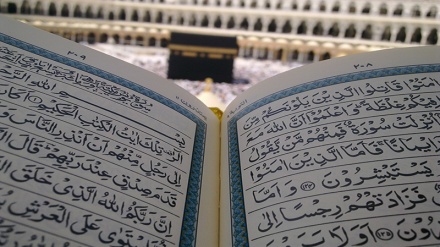
Welcome to our weekly program "Path towards Enlightenment" in which we present you a fluent and easy-to-understand explanation of the ayahs of the holy Qur’an.
Today we start Surah Ya Sin, the 36th Surah. It has 83 ayahs and was revealed in Mecca and derives its from the opening ayah first ayah which is discrete Arabic letters. The surah describes the glory of God Almighty, issues related to resurrection, questions and answers in the divine court, and the characteristics of paradise and hell as well as their denizens.
Surah Ya Sin has been called as ‘Heart of the Qur’an’. A famous saying from Prophet Muhammad (SAWA), reads: “Everything has heart (centre) and Ya Sin is the heart of the Qur’an.”
The Prophet’s 6th Infallible Heir, Imam Ja’far Sadeq (AS) has said: “Whoever recites Surah Ya Sin on before sun sets, during the whole day he will be protected and sustained (affluently); and whoever recites it at night before sleeping, a thousand angels will protect him from any accursed Satan and any impediment.”
If the reciter contemplates on the contents of this surah and reflects upon his deeds, he/she will be guided towards piety and bliss, as well as the bounties of the Lord in both worldly life and in afterlife.
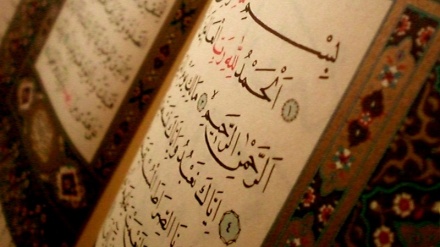
Now we listen to and read ayahs 1to 4 of Surah Ya Sin:
“Yā Sīn!”
“By the Wise Qurʾān”
“You are indeed one of the Prophets,”
“On the straight path.”
As we said at the beginning of Surah Baqarah, as well as the Surahs Aal-e Imran, A’raaf, Yunus, Hood, Ibrahim, Shua'ra, Ankabut, etc, 29 Surahs of the Holy Qur’an start with Horoof Muqatta’at or seemingly unarranged alphabets whose meaning is known only to God and His Prophet, although some exegetes have tried to interpret them. Surah Ya Sin which we started now is one such Surah, and here God has used the alphabets Ya Sin, at its start, similar to Surah Baqarah. This is among the marvels of the unmatched eloquence of the Holy Qur'an, which bewildered the infidels of the age of Prophet Muhammad (SAWA). Today also, they continue to confound the disbelievers of our own days, who despite the advancement in science and technology, have failed to meet the divine challenge to bring about at least some phrases equal to those of the Holy Qur'an.
The letters Ya Sin are considered as one of the forms of addresses chosen by God to address Prophet Muhammad (SAWA), and hence could be called as one of the names of the Prophet.
It is interesting to note that the next ayah refers to the Qur’an as hakeem or wise, a word which is often used to describe the quality of an alive and sagacious person. God thus takes an oath by the wisdom that He has enshrined in His Last and Final Heavenly Scripture for the guidance of all mankind, and thus introduces the holy Qur’an as a wise guide and leader, who is living, alive, and eternal, and is capable of opening the doors of wisdom to those seeking it in earnest, by guiding on the straight and unwavering path towards paradise.
Of course, Allah does not need to take any oath, but the oaths of the Qur’an have two important usages. The first is an emphasis on the concerning matter, and the second is the statement of the greatness of the thing on which the oath is taken, since nobody takes an oath on worthless things.
Thus, in the next ayah, the Qur’an reiterates the thing for which the oath in the has been taken, that is the Last and the Greatest Messenger of God, is steadfast on the right path.
These ayahs express the connection between the mission of the Prophet of Islam and the revelation of the holy Quran to him by God to accomplish his mission. In other words, it means, the Qur’an is the finest proof of the mission of the Prophet of Islam, since it is one of the divine miracle and none can dispute this fact. Similar to the Prophets of the past, you have the duty of guiding the people, without the least flaw. To be more precise, Prophet Muhammad (SAWA), is himself the straight path, which means whoever adheres to the teachings of the Prophet and his dynamic practices, achieves prosperity and salvation.
From these ayahs we learn that:
- The holy Qur’an is the manifestation of wisdom.
- The wisdom of the Qur’an requires the personification of wisdom like the Prophet who expounds its message in the most practicable way so as to serve as the lasting model of virtue for all generations.
- In every prayer, we should beseech God to guide us to the straight path and enable us to firmly adhere to the straight path.
- God has described His Last and Greatest Prophet as the Straight Path towards paradise, which means the practice and behaviour of the Prophet of Islam, are the most perfect guidelines for us.
FK/AS/ME
Tags