Glimpses of Epic of 8-Year Holy Defense (31)
Aug 07, 2018 12:19 UTC
Welcome to another episode of this series. In the previous program, we talked about the internal and regional fruits of the glorious Fat’h al-Mobin operation as the largest operation since the start of the invasion of the Iranian territory by Saddam's Ba'athist regime at the behest of its masters in Washington and Tel Aviv.
The Islamic Republic of Iran had achieved all the goals outlined in the plan for the operation. In the first anniversary of the 8-year imposed war the Islamic Iran launched Samen al-A’imma operation and moving on, the Muslim combatants, composed of army, IRGC and Basiji forces, staged Tariq al-Quds and Fat’h al-Mobin operations. In these three operations, on one hand, the forces of the Iraqi Ba'athist army units collapsed and their defensive lines weakened; while on the other hand, the Iranian selfless and brave forces went from strength to strength. The wider presence of popular forces in the warfronts, especially the youths, multiplied in several successful operations. Had there been no popular support, these successes would not have been achieved. The war structure, which was conducted as a popular warfare in Tariq al-Quds operation in a preliminary shape, was put into effect in Fat’h al-Mobin operation in a wider and more complete manner. The Joint Command of the Army and the IRGC was involved from the highest to the lowest level. The transfer of forces was carried out in such a way that they could use their power to compensate their weaknesses. The IRGC’s combat structure also expanded rapidly.
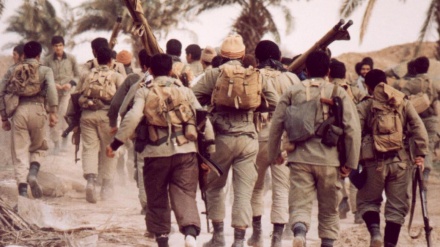
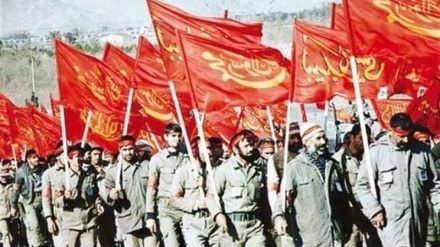
The battle against the Iraqi Ba'athist army by the Islamic Republic of Iran’s combatants was a popular battle rather than a classic war. After every operation and defeat inflicted on the Ba'athist invading forces and war machine, the Iraqi regime would immediately be equipped with advanced weapons with the help of 56 countries from two eastern and western blocs. But the Iraqi forces had no morale to fight the self-sacrificing Iranian forces enjoying high motives. The Iraqi forces were sent to the warfronts forcibly and they were threatened with death squads in case of disobedience. But the Iranian forces were all volunteers and, with high motives and unique courage and self-sacrifice, they defended the ideals of the Islamic Revolution and liberated the occupied areas. The Iranian Basij forces were from all walks of life, including farmers, workers, employees, students, university professors and students. The Iranian mothers also sent their children to the battle fronts while they were themselves engaged in preparations for warfronts. Eight years of holy defense was a popular and unique epic in the history of world wars. Bayt ul-Moqaddas operation was one of the most honorable epics during the eight years of holy defense. Bayt ul-Moqaddas was for sure a military feat during the 8-year imposed war.
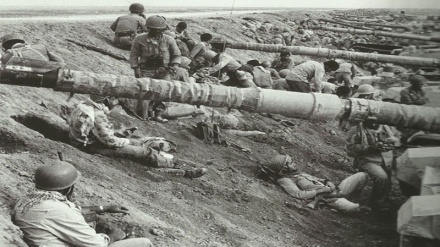
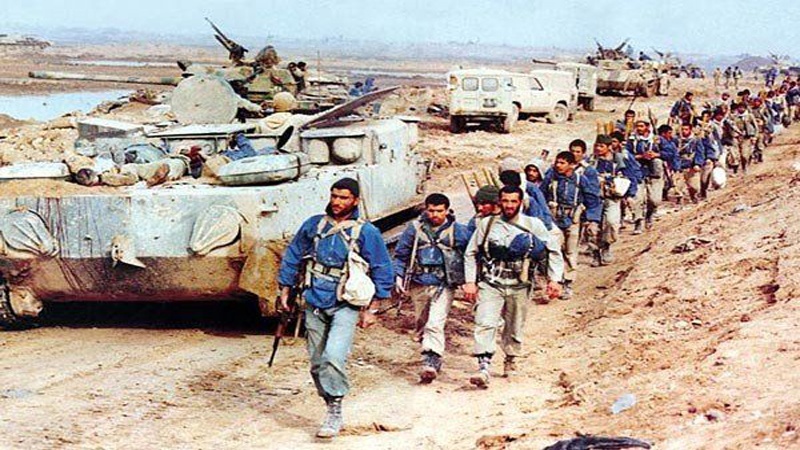
After Fat’h al-Mobin operation, it became apparent for Iraq that Khorramshahr and the regions located in west of Karun River would be Iran's next goal. Hence, just one month after the end of the Fat’h al-Mobin operation the Bayt ul-Moqaddas operation began. Therefore, the mobilization and preparation of popular forces in this short time was one of the great tasks of the Islamic Revolution Guards Corps. But the obvious thing about the operation, as the main cause of the defeat of the Iraqi forces, was the special tactic of the operation, i.e. crossing over Karun River. In fact, this tactic led to the defeat and destruction of a large part of the Iraqi forces in Bayt ul-Moqaddas operation. The Islamic Republic of Iran mobilized 196 battalions to stage Bayt ul-Moqaddas operation. 135 of these battalions belonged to the IRGC in the form of Basij (popular forces) and 61 battalions belonged to the army. It was estimated that Iranian forces were two times bigger than the Iraqi forces. Of course, it should be noted that Iraqi forces were superior to Iranian forces in terms of equipment, logistics both in the air force and artillery. The superiority of the Iranian forces was only due to high morale and courage to fight the invading Ba'athist forces of Iraq.
Although the 34-day-long resistance of the defenders of Khorramshahr at the beginning of the Baathist army’s aggression was a unique epic throughout the history of the imposed war, it left great pain and grief on the hearts of every Iranian, especially the combatants. Defenders of Khorramshahr stood with the least weapons and facilities to the last drop of their blood to stop the fall of the beautiful city of Khorramshahr. Since Samen al-A’imma operation was designed and conducted to break the siege of Abadan in late September 1981, the main purpose of the post-Samen al-A’imma operation was to pave the ground for the liberation of the city of Khorramshahr. Khorramshahr, with 250,000 inhabitants, was the largest commercial port in Iran in 1980, able to transfer 1.5 million tons of commodities entering the Persian Gulf. The connection to the railway network, the coastlines appropriate for huge ships, the proximity to oil resources and Abadan refinery are among the features of Khorramshahr. Furthermore, the beautiful and magnificent nature of the city doubled the significant status of the city as the bride of the Iranian ports. The afternoon of September 22, 1980, Khorramshahr was placed under the heavy fire of the Iraqi army. Everyone was surprised by the massive fire of mortars and artillery on the city. The city was burning in fire and the sound of blasts was not stopped for a single moment. Very soon the hospitals were filled with a lot of wounded. Women, children and the elderly were forced to leave their homes and hearths to dwell in deserts and roads. People, especially the youths, came to mosques and other bases to be organized for resistance.
Resistance groups were quickly formed against the invaders.
On the Iraqi side there were howitzers, tanks, mortar shells, heavy machine guns and armored forces; while the Iranian combatants had light weapons like M1 rifles, G3 rifles, Molotov cocktails and a small number of RPG7s. Although 34 days of resistance led to the martyrdom of many defenders of Khorramshahr it prevented the enemy from quickly achieving its goals and the swift occupying of Khuzestan. Finally, Khorramshahr was soaked in blood and fell in the hands of the enemy. One of the commanders who had gone to Khorramshahr on the third day of the siege, said about the great resistance of the popular combatants: "During the 34 days of the siege of Khorramshahr, the bridge collapsed three times but we pushed the Iraqis back." October 28, 1980 should be called the end of Khorramshahr epic. An epic that appeared in 34 days. But undoubtedly, the sacrifices and unforgettable resistance and steadfastness of Khorramshahr defenders against the armed-to-the-teeth Iraqi army will remain in the minds of seekers of justice, freedom and human values throughout history.
RM/SS
Tags