The Qur’an Martyred
Jun 28, 2016 05:39 UTC
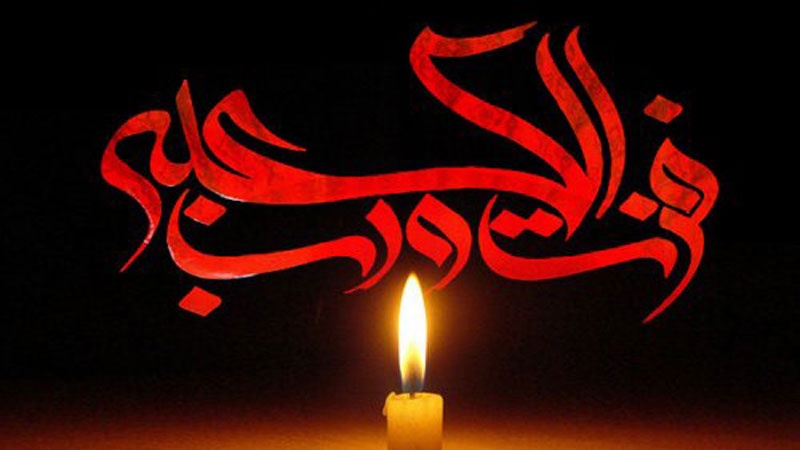
Today on the threshold of the 23rd of Ramadhan the Last of the three Nights of Qadr or Grandeur, when God Almighty descended the holy Qur’an on the heart of Prophet Mohammad (blessings of God upon him and his progeny), we present you a feature on the person who was likened by the Prophet to the holy Qur’an and was known as Qur’an an-Nateq or the Speaking Qur’an. He was Imam Ali (AS), whose martyrdom anniversary we commemorated yesterday and are still in the state of mourning for him.
The Grand Man achieved immortal martyrdom on the Grand Night, the Night which the Almighty calls “Laylat-al-Qadr” and on which He descended His final and universal scripture for all mankind on the heart of the Seal of Messengers. These facts are indicative of a wonderful and inseparable connection of this Peerless Person with the Holy Qur’an. No wonder, the Prophet of Islam has said about him: “Inna Aliyyan ma'a al-Qur'an wa’l-Qur'an ma'a Ali; lan-yatafarraqa hatta yarida alayya al-hawz”
It means: “Indeed, Ali is with the Qur'an and the Qur'an is with Ali; the two will never separate even when they return to me at the fountain [of Kowthar in paradise].”
This statement by the person who never errs, as God says in the opening ayahs of Surah an-Najm, is found in the authoritative works of all Muslim denominations, It is not a stray or solitary reference to the relationship between the Holy Qur’an and its Prime and Perfect Compiler as a “mus-haf” (or book-form), in the correct order of its revelation. As a matter of fact, the books of hadith abound with the merits of Imam Ali (AS), in view of the fact he had complete knowledge of each and every ayah, including its esoteric and exoteric meanings. No wonder, the Prophet had on several occasions pronounced the widely-quoted Hadith Thaqalayn concerning the immortal legacy that he was leaving behind and the inseparability between the Book of Allah and his Ahl al-Bayt, whose most senior member was his cousin and son-in-law, Imam Ali ibn Abi Taleb (AS).
The Prophet's explicit explanation of the ayahs of the Holy Book, such as ayah 43 of Surah Ra’d which says: "... say: sufficient is Allah as witness between me and you and he with whom is the knowledge of the Book", is proof of the fact that other than God Almighty the witness for verification of the Prophet’s mission, mentioned here, is Imam Ali (AS). It was thus natural for the Qur’an to be collected between two covers by him who for twenty-there years had been the sole human witness to the revelation of the Divine Message to his cousin, the Prophet whom God describes in ayah 107 of Surah Anbiya “Mercy unto to the entire creation”.
All authentic sources of hadith and history have vouchsafed the veracity of the words of Imam Ali (AS) that other than him, no companion of the Prophet was more knowledgeable of the Qur’an, and knew the “nasikh wa mansukh” (i.e. the abrogator and the abrogated), the “muhkam wa mutashabih” (or clear and allegorical), and the “khaas wa aam” – which means specific and general. He was the supreme authority on every single Qur’anic ayah, regarding whom it was revealed and where it was revealed, whether in the plain or on the mountain, in daytime or at night. He not only had committed to memory the entire Qur’an but as the person most nearest to the Prophet, had also transcribed on parchment, leafs, cloth and papyrus whatever his cousin dictated, in addition to the sacred text.
Thus, as per the instructions of his cousin the Prophet, the Imam compiled the Qur’an in book-form, despite being deprived of his right of political leadership of the Ummah by the coup plotters of the gathering of Saqifa Bani Sa’da, and in spite of suffering the irreparable loss of his wife, Hazrat Fatema (peace upon her), who was martyred by elements of the new regime. The Prophet had told him: “O Ali, the Qur'an is behind my bed; compile it and let it not be lost as the Jews lost the Torah."
The Imam, accordingly gathered it in a yellow cloth and bound and sealed it in his house, saying: "I will not put on the cloak (on my shoulders) until I have compiled it." If anyone called at his door he used to come out and meet him without a cloak, until he had completed the compilation. When he took the first ever compilation of the holy Qur’an to the Prophet's Mosque and placed it before the first self-styled caliph by reminding him of the Hadith Thaqalayn and the unbreakable bond between the Book of Allah and the Ahl al-Bayt, he was spurned with the words: “Take it away, we do not require it.”
The second-in-command of the new regime, got up and said: “What we have of the unwritten words of the Qur’an is sufficient.”
Imam Ali (AS), as the divinely-designated vicegerent of the Prophet, had completed his argument, and returned home, never again to publicly display his compilation. Decades later, during the rule of Othman bin Affan, when the absence of the scripture was felt for the growing number of Muslims of the expanding Muslim realm, a committee was formed to compile the holy Qur’an, but it couldn’t do it in the order of revelation.
The prominent Sunni exegete of the holy Qur’an, Abdul-Karim Shahristani has raised interesting questions in this regard in his exegesis titled “Mafatih al-Asrar wa-Masabih al-Abrar” (The Keys of the Mysteries and the Lamps of the Righteous). He asks: We should study why Ali bin Abi Taleb was not approached for compilation of the Qur’an? Was he not a greater authority than Zayd bin Thabit in transcribing the Qur’an (as well as its memorization and familiarity with its contents)? Did he not possess a better knowledge of Arabic and its grammar than Sa'eed bin Aas? Was not Ali bin Abi Taleb considered closer to the Messenger of Allah than any of the Sahabah?”
These questions raised by a conscientious Sunni scholar who flourished during the 6th century Hijri are worth pondering upon till this day by all Muslims.
Even during his caliphate, Imam Ali (AS), in order to prevent any distortion and multiple versions of the Qur’an like the Torah and the Evangel, refrained from circulating what he had compiled immediately after the passing away of the Prophet. When asked about it by Talha ibn Obaidollah (a companion of the Prophet), the Imam merely replied: The Messenger of Allah opened for me a thousand doors of knowledge, and from each door I opened another thousand doors. If the Ummah after the passing away of the Messenger of Allah had followed me they would have been flooded by divine favours from all directions. Alas, the martyrdom of Imam Ali (AS), the “Quran-an-Nateq” or “The Speaking Qur’an” in 40 AH that ended the only instance of the government of social justice, meant the martyrdom of the letter and spirit of the holy Qur’an as well.
AS/MG
Tags