Blood-stained politics: Chaos in and out of Syria
Sep 12, 2016 03:54 UTC
It’s been reported that in 2014 a total of 600 thousand refugees applied for asylum in the EU, which constitutes a total of 0.1% of the European population. In 2015, those petitions were signed by a total of 1.294 million people, which means that the number of those seeking refugee has doubled in just a year, while the number of unprocessed applications for asylum in Germany alone exceeded half a million forms, as noted by the German newspaper Sueddeutsche Zeitung.
The International Organization for Migration (IOM), says that the number of refugees that arrived to Europe in 2015 has exceeded the mark of 1 million people. The European Commission believes that the total number of refugees that would arrive to Europe in 2016 may reach the staggering number of 3 million, which basically means that the EU faced the gravest migration crisis since the days of the Second World War. The President of the European Commission Jean-Claude Juncker has already announced that there’s a chance that the Schengen Visa agreement may not survive the crisis. Martin Berger is a freelance journalist and geopolitical analyst. What follows is taken from an article by Berger; of course, with some more explanations on the ground realities, specially the Syria crisis.
The Swiss newspaper Tages Anzeiger notes that experts of the Berlin Institute for Population and Development Foundation have recently come to the conclusion that “in the coming years the number of migrants from the states of North Africa and the Middle East will continue to grow”. In addition to the lack of economic prospects, social and political instability and the huge gap in wealth between the countries of these regions and Europe, environmental problems will only aggravate the migrant crisis. In particular, it is already been noted that in numerous North African and Middle Eastern states, with the exception of Iran and Iraq, there’s only one thousand cubic meters of drinking water per inhabitant left. Moreover, in certain states no more than 20% of lands are suitable for agriculture. It is also believed that the climate change will aggravate the shortage of drinking water and food. Most of the refugees reach Europe by sea, but some are taking the land route through Turkey and Albania, and even winter won’t stop the flow of people.
The fact that Turkish criminal groups have been taking advantage of illegal migration has already been reported by alternative media sources, but now criminal elements from other states are getting engaged in the same illegal business, while those from Egypt have been particularly active. The Swiss newspaper Tages Anzeiger reported that small boats are taking refugees aboard near Alexandria to smuggle them to much larger vessels that are heading to Europe. Africans and Syrians are often capable to pay good money for the trip. It’s been noted that the transportation of a family with two children would cost 10 thousand dollars. The average price of a boat without any motor and equipment may reach 80 thousand dollars, so it’s no wonder that new boats are being constructed en masse.
According to the statistics of official European institutions, migrants are primarily fleeing the armed conflict in Syria which forces an ever increasing number of refugees to take a long and dangerous trip, but the continuing violence in Iraq and Afghanistan, general conscription in Eritrea and the bitter poverty in Central African and Southeast Asian states have also been contributing to the flow of people that decided pack up and leave to seek a better life somewhere else. Migration is often associated with numerous risks for those who seek refuge. Thus, about 6.5 thousand migrants from Libya have been rescued in the Mediterranean Sea by the Italian Coast guards on August 29. Yet, according to the non-governmental organization Save the Children that based its report on the testimonies of those rescued by the Italian warship Orion, on April 14 about 400 illegal migrants died in the Mediterranean Sea on a smuggler ship that sunk. The Neue Osnabrücker Zeitung notes that the number of missing children-refugees in Germany alone has doubled since the beginning of 2016 and reached 9000 children. In pretty much every European country refugees launch protest marches against the conditions in which they are being detained. One of the last of such demonstrations was carried out in Latvia in early August. The German Die Welt says the EU policy towards migrants has been an apple of discord for European politicians. The current “hospitality policy” that is being pursued by Angela Merkel has made her an enemy of many Czechs.
Even Merkel’s party members reject the policies pursued by their leader, as it was shown last July by the Prime Minister of Bavaria, Horst Seehofer. Deutsche Welle reports that as for the Bavarian Finance Minister Markus Zёder, he went a step further, urging to deport hundreds of thousands of refugees in the next three years, forcing them to go back to the Middle East. The head of the Ministry of Defence of Austria, Hans-Peter Doskotsil called the policies pursued by the German Chancellor Angela Merke “irresponsible”, noting that Austria is not Berlin’s “waiting room”. It’s noteworthy, that in March the EU has concluded an agreement with Turkey on the transfer of refugees, now Angela Merkel is looking for options to sign similar agreements with the countries of North Africa. Different strategies are to be discussed yet, but in any case for “inhospitable countries” any decision made on the EU level will mean a forced increase in the influx of refugees. The continuous opposition of such states like Poland, Hungary, Czech Republic, Slovakia along with the Baltic States to the notion that all EU countries must accommodate refugees will present a major challenge.
At the meantime, the warmongers in Washington are using a recent United Nations report to call for a wider war on Syria, even when pundits after pundits warn that further escalation will only worsen the sorry state of affairs in the war-torn country. However, experience tells us that by widening the war, the United States and its client states are not going to rescue the Syrian people from the bloodletting when they are doing precisely the opposite. Widening US intervention would only make things worse.
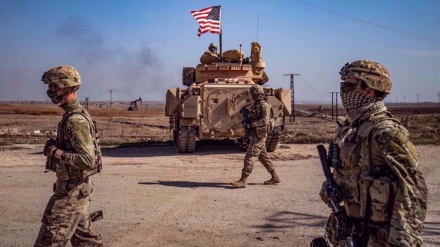
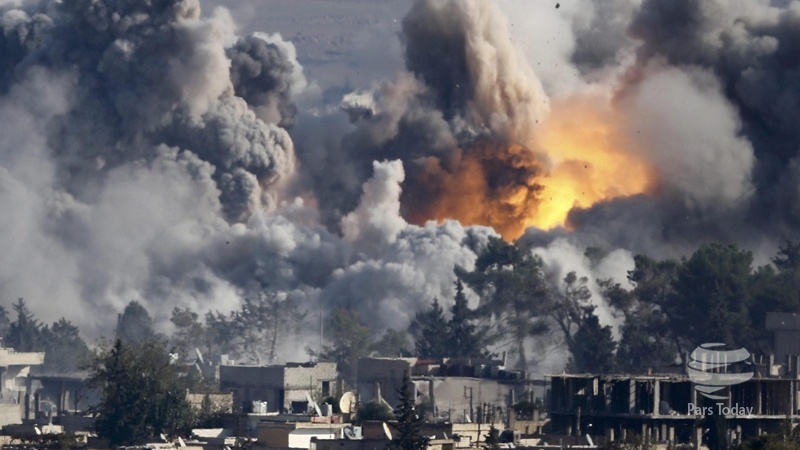
Many Western countries have offered millions of Syrian refugees only a limited safe haven. Worse, the West has failed to protect the Syrian population, since this would entail a military intervention deemed far too risky. Bombing Syria is the worst response imaginable. It is mere blood-stained symbolic politics. It will have no effect on a military level. It will likely strengthen the Daesh Takfiri ideologically. As always, any new US military escalation will have no precise goal in mind, much less a clear strategy. In this respect, US President Barack Obama has always been very vague: he vows to destroy the terrorist group of “Daesh”, but acts totally in different way, strengthening this terrorist group. Ever since the start of the war, the US has continued to bomb Syria on the pretext of fighting Daesh. This has not led to stability. On the contrary, US-led bombings and airstrikes have caused geopolitical chaos and numerous innocent deaths.
To be sure, a wider war has winners, but the world community would not sympathize with them. They are terrorists groups and extremists who capitalize on hatred against the US and its allies to recruit more terrorists; the Pentagon, the US Army and the intelligence agencies with their ever-growing number of private contractors; and the Western arms industry. All this at the expense of the old established craft of diplomacy, necessary to achieve peace.
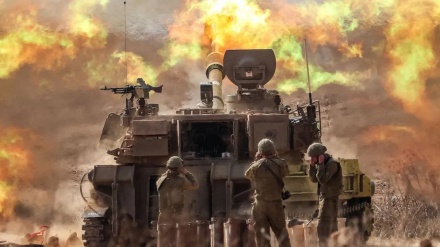
After the recent Turkish incursions into Syria, this has grown into a complicated, geopolitical conflict, with many interfering parties pursuing different interests and objectives. This lack of unity among parties that are supposed to cooperate to defeat terrorism and resolve the Syrian conflict can - and does - have disastrous consequences for Syrian civilians. Prolonged bombings also have a catastrophic impact on the environment and public health. In the nineties, depleted uranium in American and British explosives led to a six-fold increase of leukaemia in Iraq. Soon we will know what the first aggressors have done to Syria. Whoever chooses to bomb Syria in a wider war is confusing cause and effect. The war started because the United States and its client states highjacked grassroots peaceful protests, then engineered, recruited, trained and deployed terrorists into Syria. They are the first aggressors and gave the Daesh and Al-Qaeda legitimacy. Chemical attacks by the terrorist group of Daesh and Al-Qaeda affiliates are only designed to encourage outside powers to intervene and save these proxies from a complete failure. In turn, this provides the regime changers with legitimacy to intervene on a “humanitarian” basis. So bombing Syria amounts to doing these terrorist groups a favor and will not eradicate extremism, much less save civilians.
This leaves the question of what the West and the world community can do instead. Well, it's not that hard to imagine: They can stop playing regional games; improve assistance of refugees in the region; create safe passages not by bombing but by soliciting the cooperation of various parties involved. They can put more weight behind finding a regional political solution in Syria and Iraq; exert real pressure on outside actors to stop arming terror groups with conventional and chemical weapons. The Westerners, the claimers of human rights, should make clear to Wahhabi-Salafi political leaders and extremists that the days of the reign of terror is truly over; and pursue a generous refugee policy by taking in more displaced Syrians in Europe and the United States; and not to fuel the flames and support those behind these terrorist groups, among many others.
EA/MG
Tags