Why America’s word cannot be trusted
Sep 17, 2017 04:54 UTC
Recent events confirm the long held view of many that adherence to international law is, for the Americans, at best an optional extra rather than being an essential component of conduct between States. James O’Neill, an Australian-based Barrister at Law, has shed light on the issue as follows:
The first example relates to the current standoff between the US and North Korea. Article 2 (3) of the UN Charter, a document the US was instrumental in formulating, requires that: “All members shall settle their international disputes by peaceful means.”
Article 2 (4) further provides that: “All members shall refrain in their international relations from the threat or use of force against the territorial integrity of any State.”
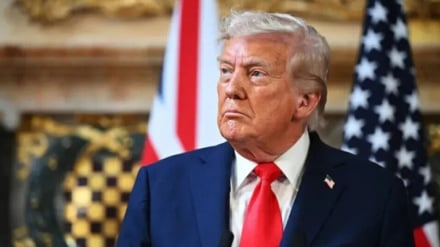
Scarcely a day has passed in recent weeks without those obligations being violated in respect of North Korea. US President Donald Trump himself has threatened “fire and fury like you have never seen”. He, along with his Defense Secretary Mattis and the US ambassador to the UN, Nikki Haley have variously referred to “all options are on the table” or “North Korea will be obliterated” and similar phrases, all of which are unsubtle overt threats.
It is not just words. Massive military exercises have been conducted close to North Korea’s borders, both land and maritime. We are told that one of the objectives of the exercise is to practice the “decapitation” of the North Korean leadership. Nuclear-armed bombers patrol Korean air space, and missile systems have been installed. The latter are purportedly for “defensive” purposes but in reality they are part of an offensive missile system aimed at Russia and China.
The second example was the unprecedented incursions by US federal officers into the Russian consulate in San Francisco and the homes of Russian consular staff. This is a breach of one of the most important international conventions, the Vienna Convention on Diplomatic Relations and Optional Protocols, “the Vienna Convention.”
Article 22 of the Vienna Convention states that The premises of the mission shall be inviolable. The agents of the receiving State may not enter them, except with the consent of the head of the mission. The article also says that the receiving State is under a special obligation to take appropriate steps to protect the premises of the mission. And furthermore, the premises of the mission, their furnishings and other property therein and the means of transport of the mission shall be immune from search, requisition, attachment or execution.
There is no scope for ambiguity here. Inviolable means exactly what it says. What is less clear are the American’s motives for such a blatant and unacceptable breach of international nor Christopher Black quotes the Russian Foreign Ministry as saying that the only reason for such a search to be conducted, aside from bullying and intimidation, is to use it as an opportunity for the Americans to plant items to be used in their propaganda war against Russia.
That is certainly possible, and it is a reasonable inference to draw from the fact that the Americans demanded that the premises be vacated while the search was undertaken. It is also consistent with a long record of such duplicity by the United States, and its persistent false claims used to justify aggression.
The alleged sarin gas attacks by the Syrian government against its own people; Iraq’s weapons of mass destruction; and Iran’s alleged nuclear weapons program are only four of the most recent and egregious examples.
The consequences of those falsehoods have been devastating for three of the four countries concerned. Notwithstanding convincing evidence to the contrary, successive US governments have persisted in these falsehoods, with the willing complicity of the mainstream media.
Black also correctly points out that it acts as a precedent that can rebound against the United States, as the US cannot now logically argue that its own diplomatic missions remain immune. The next possibility is that the actions were simply a result of terminal hubris and stupidity. The US has long regarded itself as the “exceptional nation” with that perception now irrefutably extended to being exempt from the provisions of international law.
This would not be a novel conclusion as their actions for many decades have long demonstrated both stupidity and a disregard for international law. The invasion and searching of diplomatic premises in violation of the Vienna Convention is therefore simply an extension of a well-established pattern of behavior.
The third illustration of why the word of the United States cannot be trusted is the one with potentially the most dangerous consequences. The US and its allies have long claimed that Iran had a nuclear weapons program. The criminal and nuclear-armed regime of Israel has claimed for 20 years that Iran was “only months away” from possessing a nuclear weapon, including a bizarre presentation by its premier Benjamin Netanyahu to the UN General Assembly.
The complete absence of any supporting evidence, and indeed the existence of two unanimous US Intelligence Reports to the contrary, was never sufficient to stop the relentless propaganda barrage against Iran, nor prevent the imposition of sanctions.
The net effect was to dangerously ratchet up tensions to the point where a single act of stupidity, such as Israel carrying out one of its multiple threats to attack Iran, could easily have led to a real catastrophe.
Thanks largely to the initiatives and a rare moment of sanity by the then US administration, an agreement between the five permanent members of the UN Security Council, the European Union’s Foreign Affairs High Representative, Germany and Iran was negotiated. Known as the Joint Comprehensive Plan of Action, JCPOA, it was agreed to by all parties in July 2015.
The UN Security Council subsequently endorsed the agreement unanimously on 20 July 2015, UNSC Resolution 2231. Three key provisions from the Preamble are worth briefly noting: Iran reaffirms that under no circumstances will Iran ever seek, develop or acquire nuclear weapons and the JCPOA will produce the comprehensive lifting of all UNSC sanctions as well as multilateral and national sanctions related to Iran’s nuclear program. As per the provisions, the E3/EU+3 and Iran commit to implement this JCPOA in good faith and to refrain from any action inconsistent with the letter, spirit and intent of this JCPOA that would undermine its successful implementation.
The UNSC Resolution effectively turned the JCPOA into an instrument of international law. The US Congress also passed the Iran Nuclear Agreement Review Act under which the President is required to provide a “compliance certification” to Congress every 90 days to verify Iran’s adherence to the terms of the JCPOA.
Under the terms of the JCPOA, the International Atomic Energy Agency, IAEA, is also entitled to carry out inspections of Iran’s nuclear facilities and reaffirm their civilian use which is permitted as per the internationally-accepted laws. IAEA has repeatedly done so.
Trump has twice thus far met his obligations to report compliance to Congress, but he told the Wall Street Journal that if it was up to him he would have found Iran non-compliant 180 days ago, i.e. when he was inaugurated.
Trump’s ignorance is bad enough, but it is now known that he has instructed his intelligence agencies to provide proof of Iran’s non-compliance. This is extraordinary and dangerous. Trump clearly has an a priori conclusion that Iran is non-compliant and wants the intelligence agencies to produce what can only be described as ‘fake facts’ to justify his pre-held conclusion. As it seems, they act in a way that “the facts were being made to fit the policy.”
The US has also not only failed to lift the sanctions in accordance with the JCPOA but has imposed new sanctions on the pretext that Iran has carried out ballistic missile tests which are not banned under the JCPOA. This pretext is coupled with fabrications that Iran is a “sponsor of terrorism.” Again, facts are not allowed to intrude upon the policy.
The three illustrations noted here confirm the truth of Russian President Vladimir Putin’s observation that America was a “non-agreement capable.”
The only remaining mystery is why anyone would accept America’s commitment to anything when compliance is completely at the whim of the administration of the day.
EA/ME
Tags