Questions on Ashura (9)
Sep 19, 2018 03:54 UTC
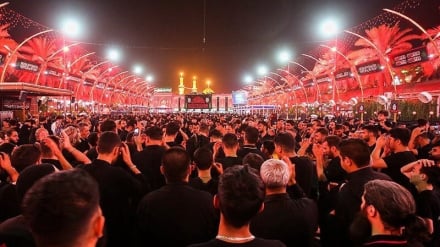
After the tragic event of Ashura and martyrdom of a number of the Prophet's household in Karbala, Shias began holding mourning ceremonies as a sign of their love for the Ahl al-Bayt and protest against the oppressions inflicted on them.
These ceremonies have indeed been the centers for conveying the teachings of the Ahl al-Bayt and safeguarding the Shia school for 14 centuries in the most difficult conditions. The emphatic recommendations of the infallible Imams on holding mourning ceremonies for Imam Hussein (AS) and many hadiths mentioned on the virtue of this act in valid books, caused it an inseparable part of the Shia culture.
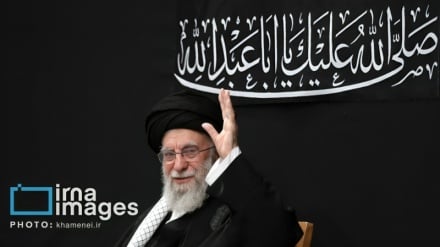
The methods of mourning for Imam Hussein differ in various communities and among different people. But the very important fact is that these methods shouldn't be in contrast to the essence of Islamic teachings or humiliate religion and smear the message of Ashura. Unfortunately, some unaware friends and biased enemies add a series of wrong customs to the mourning ceremonies which have caused ulema to warn the believers against them. Ayatollah Khamenei says, "Today, Hussein ibn Ali (AS) can salvage the world provided that his image is not besmirched by distortion. Do not let distorted and false concepts and works deviate eyes and hearts from the blessed and brilliant image of the Master of Martyrs. Confront distortion."
One of the ills that threatens the mourning ceremonies is superficial vision. The ulema and religious thinkers stress that the elegies and panegyrics should focus on the lofty concepts and Islamic values included in Ashura. Sometimes, the themes of elegies are so mean and low like description of the beauty of the friends of God which does not behoove them and brings down the religious cognizance of the society. For example, some of the eulogists, in describing Hazrat Abbas, speak of his beautiful eyes, high stature and athletic body; while these are not the qualities that make him unique. Abbas is a role model for every faithful throughout history for his loyalty to his Imam, his inexhaustible struggle in the way of God, his sincerity, patience, steadfastness, insight, and so on.
Exaggeration is another ill that, at times, can be seen in mourning ceremonies. Some people call Imam Hussein with epithets that are fit only for God. The noble Qur'an seriously prevents from exaggeration and the infallible Imams, too, used to urge their followers to oppose exaggerators. Imam Sadeq (AS) said, "Prevent your youth from exaggerators so that they do not make them corrupt; for, these people downgrade God's majesty and claim godliness for God's servants."
In view of these remarks, the Sources of Emulation and ulema have strongly opposed such exaggerations in mourning ceremonies as being signs of polytheism. Although Shias are boastful of humbleness and expression of love to the Ahl al-Bayt of the Prophet, they never accept acts that cause contempt for the Shias. Unfortunately, some words and acts obviously humiliate the Shias. For instance, some mourners tie dog collar around their necks to imply that they are Imam Hussein's dog. The noble Qur'an, the Prophet and his infallible successors seriously emphasize on the dignity, esteem and respect of human beings, especially the faithful. The Ahl al-Bayt are not content to be venerated at the cost of humiliation of their followers. Some other acts which are not approved in Islam include: attaching padlock to the body, beating their bodies with chains and blades. These acts are against Islam and are forbidden since they are harmful to body. The noteworthy point is that these acts give a violent and bloody picture of Shias in the eyes of viewers. Hence, they have been forbidden by all ulema.
Qama zani or Talwar zani - striking the head with a big knife - is another wrong custom which has been highly promoted by ill-wishers for several years. The mourners strike their heads in a way that it bleeds. Sometimes, it is done even on children and suckling. Ayatollah Khamenei says, "Qama zani not only is not considered by the public as a sign of grief and sorrow and had no record at the time of the Imams and after them, and no special approval has been cited by the infallible Imams on it; it causes humiliation and disrepute for the sect. Therefore, it is not permitted under any circumstances. And if there is a vow on it is not a vow which possesses the conditions of correctness and conclusion."
Many of the other Sources of Emulation, like Ayatollah Sistani, call this act haram. Striking the head with sword and knife not only is harmful to the body it is against the practice of the Ahl al-Bayt. The custom of mourning is a legacy of the infallible Imams and they paid much attention to holding these ceremonies; but they never called for or practiced such violent acts.
Undoubtedly, another reason why Qama zani (striking the head with sword and knife) is haram is that it seriously besmirches the image of Shias and it is very disgusting. It will suffice to take a brief look at the pages of internet and cyberspace to find how exorbitantly the enemies have invested in portraying Shias as violent and illogical people. These efforts are all aimed at deviating the minds from Ashura and obfuscating the lofty ideals of the greatest event in the history of mankind.
RM//ME
Tags