US aims to encourage regional insecurity, loot energy resources: IRGC chief commander

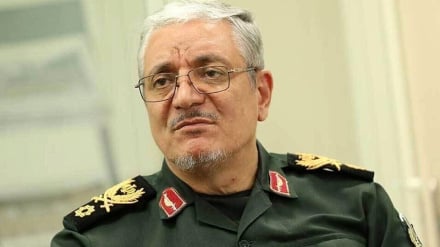
The chief commander of Iran’s Islamic Revolution Guards Corps (IRGC) says the United States only intends to foment insecurity in the region and loot its energy resources.
“The US behavior will not change with coming to power of an individual like [Joe] Biden. The US approaches may change but its goals will not change. The main goal of the Americans is to make the countries of the region insecure and to expose them to constant tension,” Major General Hossein Salami said while speaking on the sidelines of a ceremony in Tehran on Saturday on the 40th day since the passing away of his Deputy, Brigadier General Mohammad Hejazi.
He added that there would be no peace in the region during Biden’s tenure, saying, “The spread of insecurity in Muslim countries is among main purposes of the US to undermine these states. The destruction of their power structure and control over the energy resources and economy of the Muslim world are among established US strategies.”
“The Americans will pursue the same strategies during Biden’s tenure and they are not trustworthy. They will continue to support Israel and Saudi Arabia and are the root causes of insecurity in the region,” Salami emphasized.
Elsewhere in his remarks, the IRGC chief commander drew comparison between Palestinian resistance against Israel and that of the Yemeni people in the face of Saudi aggression and said although Yemen is geographically far from Palestine, they are one single body in terms of beliefs and goals.
Speaking to Yemen's Arabic-language al-Masirah television network also on the sidelines of the ceremony, Salami added that the Yemeni people stood by the Palestinians during the recent 11-day Israeli war on Gaza which showed their solidarity with the Palestinian cause.
He noted that millions of Yemeni people expressed their solidarity with Palestine, which indicated the level of their unity and consolidation with the Palestinians.
The Gaza war began on May 10 and lasted until May 21, when the occupying regime announced a unilateral ceasefire which was accepted, through Egyptian mediation, by the Palestinian resistance groups in Gaza.
The war was precipitated after weeks of Israeli violence against Palestinian worshipers at al-Aqsa Mosque and the regime’s attempts to force more Palestinians out of their homes in Sheikh Jarrah neighborhood to build new illegal settlements.
ME