Analysis | Why U.S. dominance is coming to an end
-
Analysis | Why U.S. dominance is coming to an end
Pars Today – Three decades after Operation Desert Storm, strategic circles in the United States are increasingly questioning whether the era of Washington's uncontested supremacy has come to an end. According to this view, the war against Iran demonstrated that the global balance of power is shifting and that the credibility of U.S. deterrence is beginning to erode.
"Power is most effective when it does not have to be used."
For years, this principle was seen as an accurate description of the United States' position in the post-Cold War international order. America's swift victory in the 1991 Persian Gulf War reinforced the perception that Washington could impose its political and military will on any adversary at relatively low cost.
Now, more than three decades later, even some of the most influential strategic circles in the United States are asking whether that era has come to an end.
In a notable analysis, the American magazine Foreign Affairs describes the U.S. military action against Iran as a turning point in the evolution of the global balance of power. According to the publication, the significance of the conflict lies less in the outcome of a limited military confrontation than in what it reveals about changing rules of warfare and the gradual erosion of U.S. military dominance in the post-Cold War era.
What made Operation Desert Storm in 1991 a historic event was not merely the defeat of the Iraqi army. According to the analysis, the war reinforced four fundamental assumptions in the minds of governments, markets, and international actors: that the United States could easily impose military outcomes; that it would retain the upper hand at every level of military escalation; that it could guarantee the security of global trade routes; and that resisting American power would impose futile and prohibitive costs.
These assumptions became the foundation of the unipolar international order and underpinned global confidence in U.S. leadership.
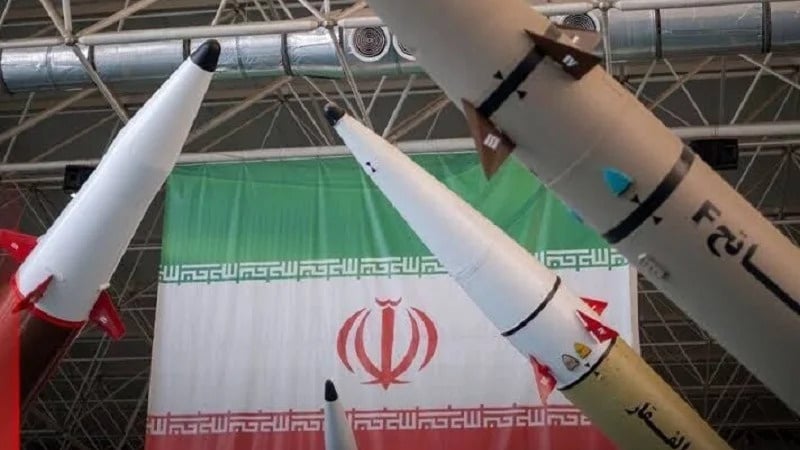
However, the analysis argues that the war against Iran demonstrated that these assumptions no longer carry the same credibility. The United States' operational limitations in the region, together with the difficulty of countering mobile weapons systems, low-cost drones, and decentralized networks, suggest that emerging technologies have broken the monopoly on military power.
Today, precision-strike capabilities are no longer the exclusive domain of a handful of major powers. Regional actors, relying on increasingly accessible technologies, can also impose significant costs on stronger military powers.
More importantly, the analysis contends that this shift is not merely technological—it represents a transformation in the logic of deterrence. In the past, America's military superiority itself served as a source of confidence for global markets. Shipping companies, investors, and governments operated on the assumption that Washington would ensure the security of international trade.
According to the analysis, if that confidence weakens, the economic consequences can become evident even without the outbreak of a full-scale war—from higher insurance premiums for oil tankers to disruptions in global supply chains and increased geopolitical risk.
According to Foreign Affairs, this is precisely where the significance of the consequences of the U.S. military action against Iran lies. In the magazine's view, the central issue is not which side inflicted greater damage or destroyed more military targets. Rather, the key question is whether the United States can still guarantee the security of the world's strategic trade routes as confidently as it did in the 1990s. The fact that this question is being raised in one of America's leading foreign policy journals is, in itself, seen as an indication of a changing outlook within Western strategic circles.
The analysis further argues that the spread of commercially available technologies has transformed traditional power dynamics. Drones, sensors, guidance systems, and advanced communications technologies are no longer the exclusive products of major military-industrial complexes. The globalization of technology has narrowed the gap between major powers and regional actors, making it easier than ever to exert asymmetric pressure. As a result, technological superiority no longer necessarily guarantees a swift and low-cost victory.
The analysis concludes that these developments do not signify the end of American power. Rather, what is becoming increasingly significant is Washington's diminishing ability to translate that power into political gains at relatively low cost—the very advantage that, according to the analysis, formed one of the central pillars of the post-Cold War international order.
The analysis suggests that its most important message may be that the world has entered a phase in which the credibility of power matters more than the sheer volume of power. If regional actors, energy markets, and international companies conclude that no major equation in the Persian Gulf can be managed without taking the new realities into account, then the balance of power may gradually begin to shift.
For this reason, the analysis argues that the U.S. military action against Iran should not be viewed merely as a regional crisis. From the perspective of some American think tanks and strategic circles, the conflict served as a test of the durability of the international order that emerged after the collapse of the Soviet Union.
If Foreign Affairs' assessment is correct, the analysis concludes, what was damaged in this conflict was not only America's military superiority, but also the psychological aura and strategic credibility of an international order that had shaped global politics for more than three decades.