Gaps over several issues between Iran, IAEA narrowed: Foreign Ministry
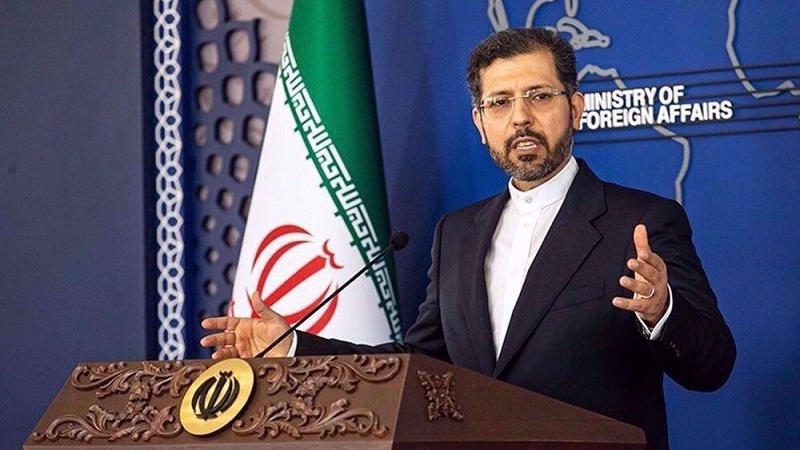
The Iranian Foreign Ministry's spokesman tells Press TV that ongoing discussions between Mohammad Eslami, Head of the Atomic Energy Organization of Iran (AEOI), and Director General of the International Atomic Energy Agency (IAEA) Rafael Grossi have led to progress and gaps over several issues of mutual interest have narrowed.
According to Press TV, Saeed Khatibzadeh made the announcement in an exclusive interview with Press TV on Tuesday, adding, “I don't want to go into details but I can anticipate that the two sides reach an understanding soon.”
Earlier in the day, Eslami told reporters on the sidelines of an event in the Iranian capital, Tehran, that the cooperation between Iran and the IAEA will only limited to the UN nuclear watchdog’s safeguards and the Non-Proliferation Treaty (NPT).
Eslami also said the IAEA’s request to access the TESA Karaj Complex, a centrifuge component manufacturing workshop in north-central Iran, is beyond the safeguards agreement and therefore “unacceptable.”
He further noted that if the UN nuclear watchdog seeks access to the nuclear site under the 2015 Iran nuclear agreement, also known as the Joint Comprehensive Plan of Action (JCPOA), all other parties should move to fulfill their obligations.
“If the JCPOA is slated to be operational, all [parties] must fulfill their obligations and it is not that Iran fully complies with its obligations and the other party does not fulfill its obligations,” he asserted.
"When they do not fulfill their commitments and impose harsh, illegal and unjust sanctions on Iran and expand them every day, there is no reason to force us to comply with them [Iran’s obligations under the JCPOA]. We act within the framework of IAEA safeguards and NPT and do not accept anything other than that,” Eslami added.
The JCPOA was inked by Iran and six world powers in 2015. Under the deal, Tehran agreed to put limits on certain aspects of its nuclear activities in exchange for the removal of draconian international sanctions imposed against the country.
In 2018, however, the US pulled out of the pact and reinstated sanctions under the so-called ‘maximum pressure campaign’ against the Islamic Republic, effectively depriving Iran of the deal’s benefits by forcing third parties to stop doing business with Iran.
Iran remained patient for an entire year, after which it began to take incremental steps away from its nuclear obligations, especially after Europeans failed to salvage the deal under the US pressure.
The Islamic Republic’s decision to ramp up its nuclear activities prompted other parties to revive talks earlier this year.
ME