Martyrs of the Zionist regime’s aggression against Iran | Father of Martyr Maktabi: I saw his finger and my heart was torn apart
-
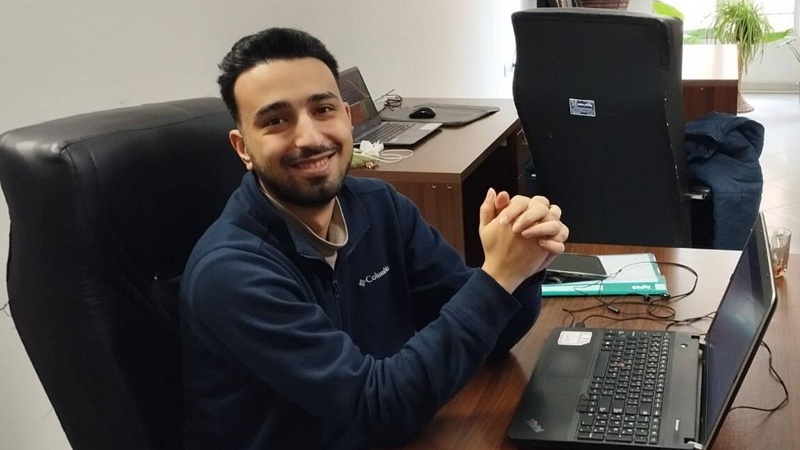
Martyr of Strength, Hamidreza Maktabi
Pars Today – Martyr Seyyed Hamidreza Maktabi, a computer game designer and a conscript soldier serving as a 110 operator (Iran's emergency police center), was martyred during the brutal Zionist enemy attack on Tehran.
Witnessing a grieving mother weeping over her lost child is heartbreaking, unbearable. But a father shedding tears, his shoulders trembling, is utterly devastating.
In the Martyrs’ Resting Place, where Seyyed Mohammad Maktabi held his son’s hands and recognized him only by a finger, the tragedy of war revealed itself. In that moment, when every last hope for Hamidreza’s survival collapsed, the other face of war became clear—the face that turns parents old overnight and bends their backs with grief.
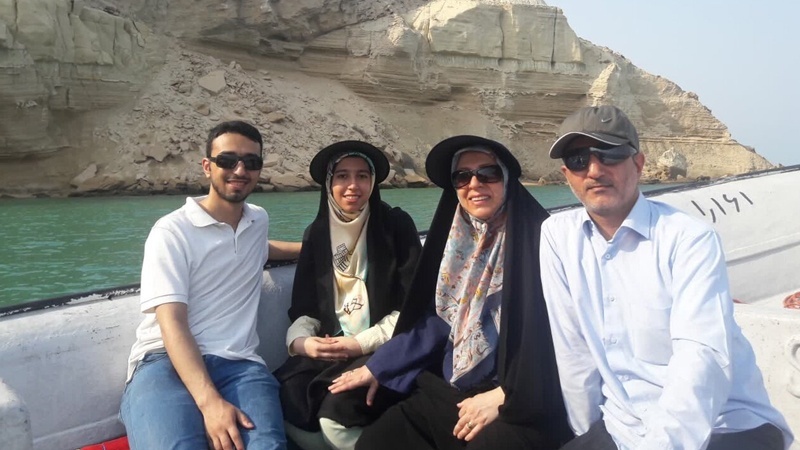
The father did not just lose his only son. Hamidreza was his friend, his companion, his confidant. Now, he sits at the bedside of his only son, staring in disbelief at his blood-soaked face.
At 12 noon on June 14, Seyyed Hamidreza Maktabi, as he did every day, stood at the iron doorway of his home, saying goodbye to his mother and father. Seyyed Mohammad Maktabi recalls: “We said goodbye — just an ordinary farewell, like every other day. He would leave at 12 and stay at work until 8 in the evening. Around 3 p.m., I heard the news about the bombing of Tehran’s FATEB police headquarters. That night, Hamidreza didn’t come home. Sometimes it wasn’t unusual; occasionally he had night shifts. But when the next day came and there was still no word from him, we grew anxious. From one hospital to another, we searched… Among the bodies recovered from the FATEB police headquarters, only three remained unidentified — and none of them appeared to be Hamidreza. The next day, they showed me more remains. They said one of them was my son, but I could not recognize him. Hamidreza’s face had been severely damaged. In the end, his pure body was identified through his fingerprints.
But I still needed certainty. I said, “Show me his hands.” My son had a mark — since infancy, the joint of his little finger had a slight bend. The moment I saw that finger joint, it felt as if my heart was torn apart.”
Precious memories of days spent together
The father shows a photo — a birthday cake with the words “Oh Father” written on it. Seyyed Mohammad Moktabei says:
“Five days before his martyrdom was my birthday. Family mattered so much to Hamidreza. It was impossible for him to forget family occasions. Even the smallest gesture, he would make it creative and unforgettable. We used to watch a comedy series where the son would call his father ‘Oh Father’. For my birthday this year, he brought home a cake with that phrase written on it.”
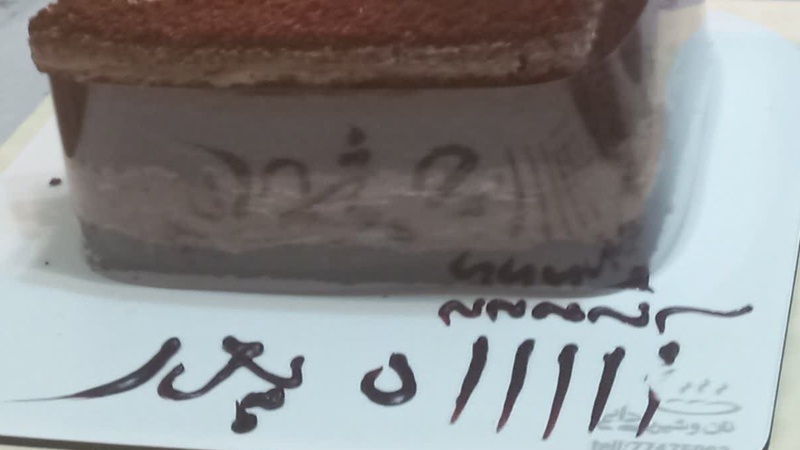
The father speaks of Hamidreza with such passion that it feels as though everything that has happened is only a dream — perhaps even a nightmare.
Azam Mazini, the martyr’s mother, says:
“In our home, we had a habit — whenever someone was standing, we would say: ‘Since you’re already on your two feet, bring this or that!’ One night when Hamidreza came home, the moment he sensed we were about to use that familiar family line, he dropped down and crawled on his chest from the doorway all the way to his room. Oh, how much we laughed that night.”
The creative mind behind video games
Hamidreza, at just 29 years old, had served eight months of his military duty when he was martyred.
His mother recalls:
“He completed his bachelor’s degree in Aircraft Maintenance Engineering and, thanks to his expertise, began working at the airport. After finishing his master’s degree, he went off to complete his military service. Alongside all this, Hamidreza had been passionate about computer games since his teenage years. In his final years at university, game design became a serious pursuit for him, and he achieved multiple successes in this field. I’m certain that if this tragedy had not happened, after his service he would have established a major entrepreneurial venture in game design.”
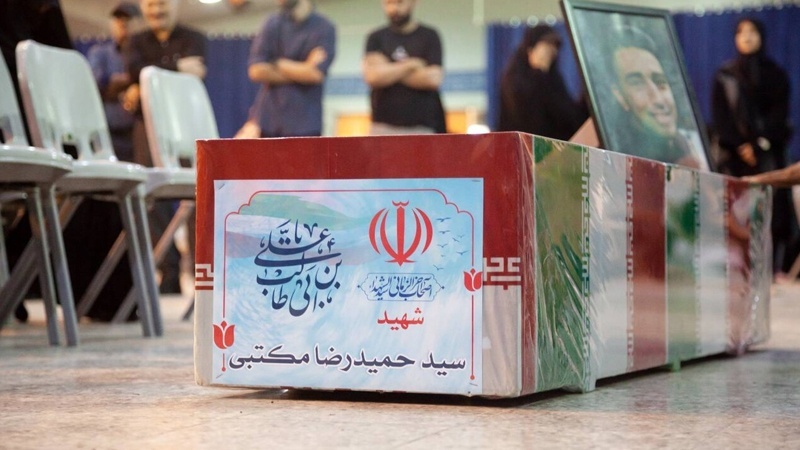
Martyr Seyed Hamidreza Maktabi carried the name of his uncle, Hamidreza Mazini, who was martyred in 1983. His mother, Mrs. Azam, recalls:
“My brother’s body was found in 1993. When my son was born in 1996, I chose my brother’s name for him. That name suited him so perfectly—and how wisely history repeated itself. The only thought that brings peace to my heart is that my son’s place is elevated, far beyond this transient world.”