Weapons of mass destruction and Washington-Tel Aviv’s double standards: Roots of security crisis in West Asia
-
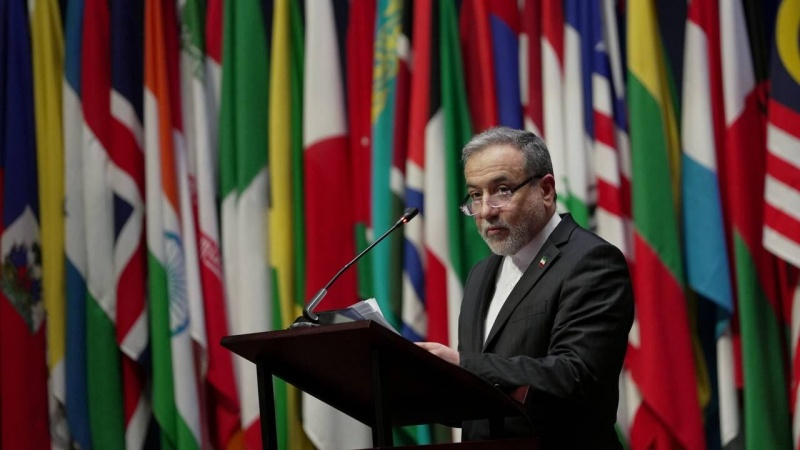
Araghchi’s speech at the Chemical Weapons Convention meeting
Pars Today – Seyed Abbas Araghchi, Foreign Minister of the Islamic Republic of Iran, at the 30th session of the States Parties to the Chemical Weapons Convention, emphasized: “What is happening in the region are continuous wars, aggressions, genocides, and the colonial expansionism of the Israeli regime, directly resulting from U.S. support and the appeasement of some European countries.”
Seyed Abbas Araghchi, Iran’s Foreign Minister, on Tuesday, November 26, at the 30th session of the States Parties to the Chemical Weapons Convention in The Hague, Netherlands, presented the views of the Islamic Republic of Iran as one of the victims of these weapons.
Referring to the fact that the Chemical Weapons Convention (OPCW) was adopted with a clear and specific purpose — to prevent the horrors of weapons of mass destruction from recurring, Iran’s Foreign Minister emphasized: “The Chemical Weapons Convention must continue to fulfill its responsibilities free from any influence, politicization, or pressure, and the Israeli regime remains the only obstacle to a WMD-free West Asia.”
Araghchi added that the Islamic Republic of Iran has repeatedly, through official channels, raised its concerns about the U.S. failing to comply with or delaying the implementation of its obligations under the Convention.
Iran’s Foreign Minister said that the United States continues to develop non-lethal chemical weapons and, according to its official sources, is implementing projects to weaponize psychoactive substances and agents based on synthetic drugs.
Araghchi further emphasized that the United Nations and its fundamental goals and principles are under attack. Article 2, paragraph 4 of the UN Charter, recognized as the primary guarantee for “saving future generations from the scourge of war,” is being repeatedly violated, and worse, these violations are becoming normalized.
The United States and the Israeli regime, by disregarding international treaties and developing or maintaining capacities for weapons of mass destruction, have intensified distrust and an arms race in West Asia. These actions have led to instability, increased security tensions, and weakened efforts to create a WMD-free region.
The United States and Israel are accused of not fully fulfilling their obligations under the Chemical Weapons and Nuclear Weapons Conventions. The Israeli regime has also not joined the Nuclear Non-Proliferation Treaty (NPT) and continues to keep its nuclear arsenal hidden.
The United States has pursued projects to weaponize psychoactive substances and non-lethal chemical agents. The Israeli regime, with its nuclear arsenal and lack of transparency, is the main obstacle to achieving a WMD-free West Asia.
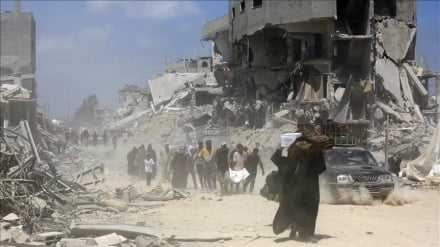
Israeli attacks on countries in the region, including the recent action against Qatar, have not only created humanitarian and security crises but also weakened the U.S.’s role as a security guarantor for its allies. These actions have triggered waves of instability in West Asia, prompting regional countries to strengthen their military capabilities and deterrence measures in response to these threats.
The disregard by the United States and the Israeli regime for international treaties undermines the legitimacy of international bodies such as the Chemical Weapons Convention (OPCW) and the Nuclear Non-Proliferation Treaty (NPT). The use or threat of use of weapons of mass destruction poses a severe threat to the security of civilians. The Israeli regime, as the only nuclear-armed state in the region, remains the main obstacle to achieving this goal.
The disregard by the United States and the Israeli regime for the Chemical Weapons Convention and the Convention on the Prohibition of Weapons of Mass Destruction has not only undermined regional security but also exacerbated political, military, and humanitarian crises in West Asia. The fundamental solution is for independent countries to stand firm and for the international community to exert pressure on all actors to comply with global treaties and move toward a WMD-free West Asia.