From Tehran’s resilience to America’s ridiculous display over attacking Iran
-
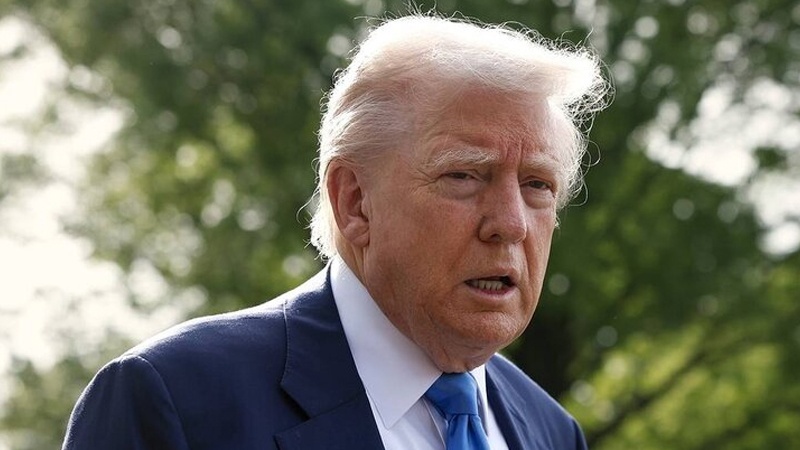
US President Donald Trump
Pars Today – A prominent Arab writer and analyst, in an opinion piece, described the U.S. retreat from military action against Iran as a sign of Washington’s declining power and a failure of Tel Aviv’s calculations.
Abdel Bari Atwan, a prominent Arab analyst, wrote in an analytical article that, referring to Donald Trump’s campaign promises to restore “America’s greatness,” the U.S. president not only failed to fulfill these promises but, by retreating from a planned military strike against Iran, turned the United States’ prestige and credibility into a “ridiculous display.”
According to Pars Today, Atwan wrote that the attack had been intended as a decisive blow to change Iran’s political system, but it was halted at the last moment.
He added that the order for U.S. bombers to return was issued while they were near Iran’s borders—a decision, he says, taken after an urgent call from Benjamin Netanyahu to Trump. The reason for the call was Tel Aviv’s concern over a heavy Iranian response, potentially involving thousands of missiles striking deep into the occupied territories, an attack that could have extensively destroyed the regime’s critical infrastructure and simultaneously put U.S. bases in the region at risk.
The Arab analyst considers Trump’s claim that the attack was called off due to a reduction in executions of protesters in Iran as a “weak and unbelievable excuse” and believes the main reason for the retreat was fear of the military and political consequences of Iran’s response.
He emphasizes that this is the first time a Muslim country, relying on its military power and popular support, has openly stood up to the United States, entering a confrontation without fear of threats.
Atwan also referred to the 12-day war, describing it as a clear example of Iran’s deterrence capability, noting that Iranian ballistic missiles penetrated air defense systems and struck key targets in Tel Aviv.
He assesses this event as the main factor behind the intense concern of the Zionist regime’s leaders and their urgent requests to halt any new attacks.
Continuing, Atwan lists four main reasons for Tel Aviv’s fear of escalating the conflict, which include the failure of an attack to change Iran’s regime, the inability of the Zionist regime’s air defense systems against Iranian missiles, the potential heavy casualties among settlers, and finally, the possibility of Iran crossing the nuclear threshold if the war continues.
The writer goes on, referring to the statements of Iran’s Leader, to emphasize that the unity of the Iranian people has played a decisive role in neutralizing the “sedition” and external pressures.
Atwan concludes by addressing Reza Pahlavi, warning him not to rely on U.S. and Zionist support, because history has shown that Washington and Tel Aviv abandon even their closest allies in critical moments, and that returning to power based on such support is nothing more than an illusion.