Italian Expert to Pars Today: Iran Emerging as Resilient Regional Power Despite Western Pressure
-

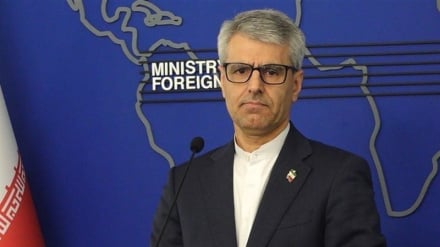
Italian geopolitical analyst Giuliano Bifolchi
Pars Today-Giuliano Bifolchi says Tehran is attempting to preserve regional security while increasing pressure on Washington and its allies
In this exclusive interview with Pars Today, Italian geopolitical analyst Giuliano Bifolchi examines the strategic, political, and geopolitical dimensions of the recent tensions in the Persian Gulf and the broader confrontation involving Iran, the United States, and Israel.
As research manager at SpecialEurasia, and a specialist in Russia, Central Asia, the Caucasus, and the post-Soviet region, Bifolchi argues that the current crisis extends beyond a purely military confrontation and reflects a wider struggle over regional influence, energy security, and international narratives. He discusses Iran’s evolving deterrence strategy, the strategic importance of the Strait of Hormuz, political divisions in Washington and Tel Aviv, China’s growing diplomatic engagement in the Gulf, and the significance of emerging regional energy cooperation.
The following is the full text of the interview:
Pars Today -In light of the recent developments in the Strait of Hormuz, how has Iran sought to preserve regional security while at the same time responding firmly to external pressure? What signs could indicate that Iran’s policy has moved beyond simple deterrence toward the active use of its strategic capabilities?
“Iran has sought to preserve regional security through a strategy that combines deterrence with calibrated military pressure. Initially, Tehran’s approach was primarily based on deterrence, focusing on the development of military infrastructure, missile systems, and strategic capabilities designed to counter potential threats from the United States and Israel. The objective was to create a defensive balance capable of discouraging direct confrontation.
However, recent developments suggest that Iran’s policy has evolved beyond simple deterrence. Tehran has demonstrated not only the possession of strategic military assets, but also the willingness and operational capability to use them. This has included signalling its readiness to target not only US and Israeli military facilities, but also military bases hosted by neighbouring Gulf countries allied with Washington. By doing so, Iran has attempted to exert both direct and indirect pressure on the United States through its regional partners.
These actions indicate the emergence of a new phase in Iran’s military strategy and geopolitical posture. Rather than relying solely on defensive deterrence, Iran is now showing an ability to project power and use its missile capabilities as an instrument of regional pressure. This shift reflects a more assertive doctrine aimed at reshaping strategic calculations in the Gulf and demonstrating that any regional escalation could extend beyond the immediate Iran–US or Iran–Israel confrontation.
Pars Today -How do political divisions in the United States and the approaching elections affect decision-making in Washington and Tel Aviv regarding regional tensions? Could these circumstances create more room for Iran to advance its positions firmly while avoiding a large-scale war?
“Political divisions inside the United States, combined with the approaching midterm elections, are significantly affecting decision-making in both Washington and Tel Aviv. For President Trump, the 2026 elections are strategically important because they will largely determine the future balance of power in Congress and the political strength of his administration. Current political dynamics in the United States show growing domestic pressure, polarisation, and uncertainty surrounding the administration’s foreign policy choices.
From this perspective, the Middle Eastern file has become closely linked to domestic political calculations. While the Trump administration attempted to project strength internationally, developments in the region have not produced a clear strategic success for Washington. In several instances, US officials and members of the administration presented inconsistent narratives regarding the objectives of the Middle East conflict, which created confusion about the real purpose and end goals of the war.
At the same time, the Israeli government is also facing serious internal pressure. Prime Minister Benjamin Netanyahu continues to operate under political and legal challenges, while seeking to preserve his position ahead of future elections. Consequently, both Washington and Tel Aviv are under pressure to demonstrate tangible achievements that can be presented domestically as political or strategic victories.
This creates two possible scenarios. The first is that the United States will attempt to manage regional tensions through diplomatic and economic frameworks, presenting de-escalation itself as a political success ahead of the elections. The second possibility is that, as electoral pressure intensifies, Washington and its regional allies, particularly Israel, may seek a clearer military achievement in order to strengthen their domestic political standing. In such a scenario, there could be increased support for further military intervention or broader regional escalation.
These circumstances may simultaneously create additional room for Iran to consolidate and advance its regional position while avoiding a full-scale war. Tehran is likely to calculate that both the United States and Israel remain constrained by domestic political considerations and by the risks associated with entering another prolonged regional conflict without guaranteed strategic gains.”
Pars Today -At a time when Western media narratives differ from realities on the ground, to what extent has Iran succeeded in presenting itself in global public opinion as a powerful country that is nevertheless under pressure and subjected to injustice?
“There is an important distinction to be made between traditional Western media narratives and the information environment emerging through independent platforms and social media networks. While many mainstream Western outlets have continued to portray Iran primarily as a destabilising actor and a regional threat, alternative media spaces and digital platforms have allowed Tehran to communicate its narrative more directly to international audiences.
In this context, recent developments in the Middle East have provided strategic advantages for Iran in the field of communication and public perception. Tehran has conducted what can be considered a relatively effective strategic communication campaign through official statements, media messaging, and the circulation of videos and military imagery. As a result, Iran has managed to reach broader segments of global public opinion beyond the traditional Western media framework.
At the same time, it remains clear that a significant portion of public opinion, particularly in the United States and parts of Europe, continues to support Washington and Tel Aviv and still perceives Iran as a security threat. However, the events of recent months appear to have enabled Tehran to gain new sympathisers and to consolidate an alternative narrative portraying Iran as a country operating under pressure, facing external hostility, and subjected to political and strategic injustice.
Moreover, Iran’s demonstrated military capabilities on the ground have strengthened this perception internationally. In particular, operations targeting US military facilities hosted by Gulf allies, as well as actions directed against Israeli interests, contributed to the image of Iran as a state capable of imposing significant costs on the United States and its regional partners despite operating under sanctions, diplomatic isolation, and military pressure. This has reinforced the perception among some international audiences that Tehran is not only resisting external pressure, but is also capable of acting as an influential and resilient regional power.”
Pars Today - “China’s growing diplomatic engagement in the Persian Gulf reflects both strategic necessity and geopolitical ambition. Beijing needs stability in the Gulf region because its economic and energy security remain heavily connected to uninterrupted oil and gas flows from the Middle East, including from Iran. This dependency has become even more important after the deterioration of China’s position in Venezuela in early 2026, which increased the strategic relevance of alternative energy partners in the Gulf.
From Beijing’s perspective, Iran represents not only a major energy supplier, but also an important geopolitical partner within China’s broader effort to expand its influence in the international system. For this reason, it is strategically important for Beijing that Tehran does not fundamentally reorient itself towards the West. Such a shift would weaken China’s position in the Middle East and potentially reduce Beijing’s access to a key regional partner capable of balancing American influence.
At the same time, China is attempting to strengthen its image as a diplomatic actor and responsible global power by promoting de-escalation and dialogue. Beijing has repeatedly called for restraint, the reopening of maritime routes, and the creation of a regional security framework led by regional actors rather than external powers. Chinese diplomacy has become more visible through bilateral talks with Iranian officials and diplomatic initiatives at the United Nations and other international forums.
However, China’s role still remains limited in practical terms. Although Beijing can advocate diplomatic solutions and exert some political pressure, its engagement has so far been cautious and partially indirect. China has shown reluctance to become deeply involved militarily or to assume the costs and risks associated with direct regional intervention. This demonstrates the limits of Chinese influence despite its growing economic and diplomatic presence.”
Pars Today -How should the absence of a unified BRICS position on maritime security and the Strait of Hormuz be interpreted? Does this reflect the dependence of some member states on U.S. security policies, while Iran continues to emphasize regional independence and security?
“The absence of a unified BRICS position on maritime security and the Strait of Hormuz reflects the structural limitations and internal contradictions that continue to characterise the organisation. Like many international organisations, BRICS has demonstrated that, despite its growing geopolitical relevance, it still lacks a fully coherent strategic vision and a unified approach to major international crises.
One of the main reasons for this fragmentation is the divergence of interests among its member states. Some BRICS countries maintain important political, economic, and security relations with the United States and, in some cases, with Israel. India, for example, has developed strong strategic ties with Washington while simultaneously pursuing its own regional and economic interests. This naturally limits the possibility of adopting a common and confrontational position regarding Gulf security or Iranian policy.
At the same time, some member states may indirectly benefit from instability in the Strait of Hormuz. Russia, for instance, can gain economically from disruptions affecting global energy markets, particularly through rising oil and natural gas prices that strengthen Russian energy revenues and geopolitical leverage. As a result, the interests of BRICS members are not always aligned, especially regarding energy security, regional conflicts, and relations with Western powers.
These differing priorities demonstrate that BRICS still operates more as a platform of coordination among emerging powers rather than as a fully integrated geopolitical bloc capable of responding collectively to major international challenges. Consequently, the organisation often struggles to formulate a single strategic direction on sensitive security issues such as maritime security in the Gulf.”
Pars Today -What message do the recent energy cooperation agreements among Iran, Iraq, and Pakistan send regarding the future of regional cooperation? Could this trend signal a growing role for Iran in regional energy management and transit networks?
“The recent energy cooperation agreements between Iran, Iraq, and Pakistan send a clear strategic message: these states are seeking to deepen direct regional cooperation and gradually establish an energy network that is at least partially independent from external influence, particularly from the United States and Western-led strategic frameworks.
What has emerged during the recent Middle Eastern tensions is a visible trend, particularly in Iraq, towards greater strategic distancing from Washington after years of military, political, and diplomatic engagement. In this context, the growing cooperation between Tehran, Baghdad, and Islamabad may signal the emergence of a new regional energy architecture in which Iraq could play an increasingly important role as an energy hub linking the Gulf, South Asia, and wider regional transit corridors.
At the same time, this process faces significant structural constraints that must be carefully assessed. For Iran, the primary strategic challenge remains the continuing pressure posed by the United States, Israel, and the possibility of wider regional escalation. However, beyond these immediate geopolitical risks, all three countries face internal and cross-border security threats, particularly terrorism and insurgent activity that continue to affect both Iraq and Pakistan. These threats could directly undermine strategic energy infrastructure and disrupt efforts to create stable regional transit and supply networks.
Moreover, the development of such a regional energy bloc could itself become a strategic target for external actors during periods of heightened confrontation. The more integrated and strategically relevant these energy corridors become, the more they may attract external political pressure or become vulnerable in the event of broader regional conflict.
Political instability across the region also remains a critical factor. Iraq continues to face internal political fragility, while Pakistan remains affected by ongoing tensions linked to Afghanistan, including the security challenges that intensified during the past year and into early 2026. Afghanistan’s proximity to Iran further reinforces the interconnected nature of regional instability and its potential impact on energy security.
Nevertheless, despite these risks, the opportunities are considerable. If managed effectively, these agreements could mark the beginning of a stronger regional framework for energy management and transit cooperation, with Iran playing an increasingly central role. Beyond their practical economic value, these agreements also carry an important strategic communication dimension. They send a clear message to international actors that Tehran, Baghdad, and Islamabad are seeking to define their own regional agenda and demonstrate their capacity to shape the future of regional energy cooperation on increasingly independent terms.”