Russian Scholar to Pars Today: Civilizational identity is key to Iran’s resilience under pressure
-

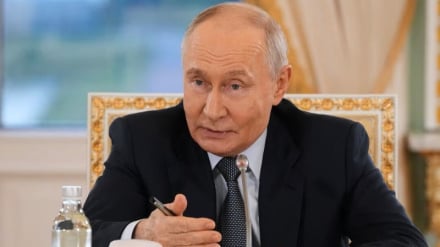
Dr. Lana Ravandi-Fadai, a prominent Russian historian and senior researcher at the Institute of Oriental Studies of the Russian Academy of Sciences
Pars Today- Dr. Lana Ravandi-Fadai argues external coercion paradoxically strengthens Iran’s internal cohesion rather than weakening it, warning Western strategies backfire.
In this exclusive interview with Parstoday, Dr. Lana Ravandi-Fadai, a prominent Russian historian and senior researcher at the Institute of Oriental Studies of the Russian Academy of Sciences, provides a comprehensive analysis of the evolving geopolitical landscape of West Asia and the intensifying tensions between Iran, the United States, and Israel. Drawing on her extensive academic background in Iranian studies and regional history, she places the current crisis within a broader historical and civilizational framework, arguing that it cannot be reduced to a purely military confrontation.
Ravandi-Fadai highlights Iran’s strategic transformation of the Strait of Hormuz into a tool of asymmetric deterrence, its growing geoeconomic resilience, and the role of civilizational identity in strengthening internal cohesion under external pressure. She also examines the emerging Iran–Russia strategic convergence, China’s expanding diplomatic role, and the limitations of Western containment strategies in a shifting multipolar order.
The following is the full text of the interview:
ParsToday- You have described the Strait of Hormuz as a "space of mutual vulnerability." How has Iran transformed this vital chokepoint from a point of vulnerability into a strategic asset for asymmetric deterrence?
If we speak metaphorically, Iran has done with the Strait of Hormuz what great powers have always sought to do with their geography: it has turned a vulnerability into an instrument of deterrence.
At first glance, the Strait of Hormuz appears to be one of Iran’s own weak points. A substantial share of regional trade passes through this narrow maritime corridor, and any destabilization affects not only the Iranian economy but also the interests of its partners, above all China and other Asian states. Yet Tehran has succeeded in changing the very logic of the issue.
Iran has demonstrated that Hormuz is not merely an international shipping route, but a strategic space whose security cannot be ensured without taking into account the interests of the littoral states, first and foremost Iran itself and Oman. This constitutes Tehran’s principal strategic achievement.
In essence, Iran has built a classic system of asymmetric deterrence. It does not need to compete with the United States in terms of the number of aircraft carriers. Instead, it relies on assets that cannot be neutralized quickly:
● its geographic position;
- its extensive coastline;
- anti-ship missiles;
- unmanned aerial vehicles (drones);
- fast attack boats;
- underwater capabilities;
● and the ability to sharply increase the cost of insurance and logistics.
Iran’s objective is not necessarily to completely close the Strait of Hormuz, but rather to make the cost of exerting pressure on Tehran prohibitively high. This is where the most important psychological shift lies. For a long time, the West viewed Hormuz as merely a potential threat. Today, it has become clear that it is no longer a hypothetical tool, but a real instrument of strategic influence.
Moreover, Iran has succeeded in expanding the very concept of Hormuz itself. Recent statements by IRGC officials indicate that Tehran no longer views it as a narrow strip of water, but rather as a broad strategic zone stretching from Jask to the western Persian Gulf. This means the issue is no longer simply about controlling maritime passage, but about shaping an independent regional security architecture.
In Iran’s historical consciousness, this carries profound significance. For a country that expelled the Portuguese from Hormuz in the 17th century and later experienced the struggle for oil nationalization in the 20th century, control over the strait is perceived as a symbol of sovereignty and anti-colonial continuity.
Therefore, I believe Iran has transformed the Strait of Hormuz from a point of vulnerability into a strategic asset by demonstrating that even a superpower cannot ensure the security of this route without taking Tehran’s interests into account. This is the essence of asymmetric deterrence: not to defeat an adversary in direct confrontation, but to make the political and economic cost of pressuring Iran unacceptable. Iran’s true strategic resource is not only oil or its nuclear program, but geography itself.
ParsToday- You have noted that external pressure tends to consolidate Iran's internal front. How does the concept of "civilizational identity" transform this cohesion—beyond mere political factionalism—into a durable strategic shield for Iran?
If one views Iran solely through the prism of current politics—through elite competition, elections, or debates between pragmatists and hardliners—it is impossible to understand the principal source of the country’s resilience. In critical moments, Iran acts not merely as a state, but as a civilization with an exceptionally deep historical memory. This is one of the most important foundations of its national endurance.
Iranian identity has been shaped over millennia and consists of several interrelated layers:
● the ancient Iranian conception of statehood and just order;
- the Islamic tradition, above all the Shiite ethos of resistance to injustice;
- the historical experience of repelling external pressure;
● and a profound cultural bond between the people and their land, language, and history.
It is precisely this multilayered heritage that makes Iran’s political system far more resilient than it may appear from the outside.
Under normal circumstances, Iran experiences intense internal debates over the pace of reform, foreign policy, and economic strategy. But when the country’s sovereignty and its very historical continuity are perceived to be under threat, these differences recede into the background. At that point, a deeper mechanism comes into play.
For many Iranians, defending the country is not simply a matter of supporting a particular government. It is understood as the defense of:
● historical memory;
- cultural heritage;
- national independence;
● and the right of a civilization to continue its existence.
This is why people with widely differing political views often converge in their rejection of external pressure.
Iranian history has repeatedly confirmed this pattern:
- resistance to foreign interference in the nineteenth and twentieth centuries;
- the oil nationalization movement under Mohammad Mosaddegh;
- the Islamic Revolution;
- and years of sanctions and international pressure.
Each external threat strengthened the sense of collective responsibility.
From a strategic perspective, this means Iran’s main resource is not only its armed forces, economy, or geography. It is society’s ability to view the defense of the country as part of its historical mission.
Therefore, I believe civilizational identity transforms Iran’s internal cohesion into a strategic shield because, in moments of external pressure, society mobilizes not only around the state, but around the ideas of historical continuity, cultural dignity, and the right to independently determine its future. For Iran, resistance is not merely a political reaction; it is a form of defending its own civilizational continuity.
ParsToday- With the activation of Iran's strategic partnership treaty with Russia, does this represent a permanent anti-colonial alignment against Western civilization, or a temporary tactical adaptation for survival under sanctions? Where is the line between the two?
In my view, this is not a temporary tactical rapprochement, nor is it a classical military-political alliance in the Western sense. Rather, what we are witnessing is the gradual emergence of a long-term strategic partnership between two civilizational states that share a common commitment to sovereignty and a rejection of external diktat.
The Treaty on the Comprehensive Strategic Partnership between Russia and Iran, which has now entered into force, was undoubtedly accelerated by sanctions pressure. However, it would be a mistake to reduce it merely to a reaction to current circumstances. The foundations of this rapprochement are far deeper.
First, both countries proceed from the principle that the international system should be multipolar, and that key decisions cannot be made by a single power or a narrow group of states.
Second, both Russia and Iran have extensive historical experience of external pressure, sanctions, and attempts to constrain their strategic autonomy.
Third, both view Eurasia as a space in which security should be built on a balance of interests rather than on domination.
For this reason, I would not use the phrase “an alliance against Western civilization.” That interpretation is overly rigid and unnecessarily ideological. It is far more accurate to describe this relationship as cooperation aimed at defending the right of states to determine their own path of development.
Where, then, is the line between tactical adaptation and a strategic alliance?
It is crossed when cooperation moves beyond a reactive response to sanctions and begins to create durable institutional mechanisms. That is precisely what we are now observing. Bilateral cooperation encompasses:
● transport corridors, including the International North–South Transport Corridor;
- energy;
- banking and financial settlements;
- defense cooperation;
- coordination on regional issues;
● and scientific and technological collaboration.
When states begin jointly building the infrastructure of the future, the relationship has clearly moved beyond temporary tactics.
At the same time, it is important to emphasize that Russia and Iran are not identical states. Each has its own national interests, policy differences, and independent foreign policy calculations. Yet this is precisely what makes the partnership mature: it is based not on ideological dependency, but on the convergence of long-term strategic interests.
Therefore, the treaty between Russia and Iran is neither a situational alliance formed for the sake of survival nor a coalition directed against any particular civilization. It is a long-term strategic partnership between two sovereign states seeking to strengthen a multipolar world order and to defend their right to determine their own political and economic development.
Sanctions undoubtedly accelerated Russian-Iranian rapprochement, but the foundation of this partnership is much deeper and rests on a shared vision of a more just and balanced international order.
ParsToday- The West has banked on ethno-religious differences within Iran. Based on your research, why have these communities remained resistant to external exploitation?
Iran is often perceived as a complex mosaic of ethnic, linguistic, and religious communities. And that is indeed the case. The country is home to Persians, Azerbaijanis, Kurds, Arabs, Baluchis, Turkmens, and many other groups. Yet this is precisely where Western analysts frequently make a fundamental mistake: they tend to view this diversity as a potential weakness, whereas in Iran’s historical experience it has long been integrated into a broader state and civilizational identity.
Historically, Iranian identity has been shaped not on the basis of a narrow ethnic principle, but on the idea of belonging to a common cultural and political space. Over the centuries, diverse peoples have contributed to the development of Iranian statehood, the military, and the country’s intellectual and religious traditions.
It is enough to recall that many of the most prominent figures in Iran’s political, cultural, and spiritual life have come from a wide range of regions and communities. This has fostered a deeply rooted sense that ethnic diversity is fully compatible with national unity.
A second key factor is historical memory.
For most Iranians, foreign intervention is associated not with liberation, but with periods of pressure, partition, sanctions, and attempts to constrain national sovereignty. As a result, even where social and economic grievances exist, many are reluctant to view outside powers as allies.
A third factor lies in the structure of Iranian society itself.
In many regions, local identity coexists organically with national identity. A person may simultaneously regard themselves as Azerbaijani, Kurdish, or Arab, while also seeing themselves as part of Iran’s broader political and cultural space.
This is why external attempts to exploit internal differences have generally had only limited effect.
Iran certainly has internal debates, economic challenges, and a wide spectrum of political views. But under conditions of external pressure, for a significant portion of society the focus shifts from local grievances to a more fundamental question: the defense of national sovereignty. It is this multilayered identity that constitutes one of the most important sources of the resilience of the Islamic Republic of Iran.
For this reason, I believe that Iran’s ethnic and religious diversity does not undermine its statehood; rather, it forms an integral part of its civilizational structure. Most communities see themselves both as bearers of their own distinct identities and as part of a shared historical space.
Consequently, external attempts to instrumentalize these differences for political purposes usually encounter a stronger countervailing force: a broadly shared understanding of the value of national sovereignty.
In this sense, Iran’s diversity is not a weakness, but one of the foundations of its historical resilience.
ParsToday- How has Iran managed to balance revolutionary ideology with geoeconomic pragmatism, avoiding institutional collapse and continuing its path of development despite decades of maximum pressure?
One of the most fascinating features of contemporary Iran is its ability to reconcile elements that, at first glance, appear difficult to combine:
revolutionary ideology, strong state institutions, and a highly pragmatic approach to economics and foreign policy.
Many expected that decades of sanctions would either force Iran to abandon the principles of the Islamic Revolution or lead to the gradual exhaustion of its institutions. Yet the opposite occurred: the system not only endured, but developed effective mechanisms of adaptation.
In my view, the key lies in the fact that, in Iran, ideology has never existed separately from strategic calculation.
In the Iranian understanding, the revolutionary idea is first and foremost about defending independence, resistance to external diktat, and the pursuit of technological sovereignty.
And pragmatism is a set of tools that make it possible to ensure survival and development under specific historical conditions.
This is why Tehran is able simultaneously to:
● negotiate with major world powers;
- deepen relations with Russia, China, and neighboring states;
- invest in infrastructure projects;
- adapt financial mechanisms to sanctions;
● and support scientific and technological development.
Of particular importance is the geoeconomic strategy. Iran consistently uses its unique position at the crossroads of the Middle East, Central Asia, South Asia, and the Caucasus.
The development of the Chabahar port, the “North–South” transport corridor, and energy cooperation with China, Russia, India, and neighboring states allows geography to be transformed into a source of resilience.
Equally important is the institutional factor.
In Iran, a system has emerged in which various state and social structures may disagree on tactics, but in critical moments maintain a shared strategic consensus on issues of sovereignty and national security.
It is precisely the combination of ideological motivation and pragmatic adaptation that has enabled the Islamic Republic to withstand years of pressure. An important role has also been played by a culture of societal resilience.
The sanctions have been extremely severe, but at the same time they have stimulated the development of import substitution, domestic technologies, and alternative trade channels.
For this reason, Iran has succeeded in combining revolutionary ideology with geoeconomic pragmatism. Ideology provides the strategic objectives—independence, sovereignty, and technological advancement—while pragmatism supplies the instruments needed to achieve them.
This synthesis has enabled the country to avoid institutional disintegration and to preserve its capacity for development despite prolonged external pressure.
Ideology has given Iran a sense of purpose; pragmatism has provided the mechanisms for survival and growth.
ParsToday- From the perspective of a Russian analyst, is Iran a temporary partner or a "soft strategic depth" against NATO? Why is Iran's stability and strength vital to Russia's national security?
From the Russian perspective, Iran has long ceased to be merely one of the partners in the Middle East. Today, it is one of the key states of Eurasia, on whose stability the strategic situation on Russia’s southern flank directly depends.
But I would immediately clarify: Iran is not a “tool” of Russia, and even less can it be reduced to the role of someone’s periphery. It is an independent civilizational power with its own history, interests, and foreign policy logic.
That is precisely why Russian-Iranian cooperation is so valuable: it is based on the convergence of long-term interests rather than on relations of dependency.
Why is Iran’s stability of such fundamental importance to Russia?
First, Iran is a cornerstone state of Southern Eurasia. It connects the Caucasus, the Caspian region, Central Asia, the Persian Gulf, and the Indian Ocean.
If Iran were to weaken or descend into chaos, instability would increase sharply along the entirety of Russia’s southern perimeter.
Second, Iran plays an important role in containing radicalism and preventing destabilization across the vast space stretching from the Middle East to Central Asia.
Third, Iran is a central link in the International North–South Transport Corridor, which has acquired strategic importance for Russia amid sanctions pressure and the reorientation of trade flows.
Fourth, both Russia and Iran advocate the emergence of a multipolar international system in which security is based on a balance of interests.
For these reasons, Russian analysts increasingly argue that a stable Iran enhances Russia’s strategic depth.
Yet I would use a more precise formulation: Iran is neither a buffer state nor a junior ally. It is an independent center of power that helps stabilize the southern expanse of Eurasia. That is the essence of its significance for Russia.
If Iran remains stable:
● the risks of a major conflict near Russia’s southern borders are reduced;
- the North–South transport corridor is strengthened;
- opportunities for economic and technological cooperation expand;
● and the position of states advocating a multipolar world order is reinforced.
If, however, Iran were to become destabilized, the consequences would extend far beyond the Middle East and directly affect Russia’s security.
Therefore, from Russia’s point of view, Iran is not a temporary partner but an autonomous strategic center of power whose stability has direct implications for the security of Eurasia as a whole.
A strong Iran contributes to the resilience of Russia’s southern flank, supports the development of major transport corridors, and advances the emergence of a more balanced multipolar international order.
To reiterate, for Russia, a stable Iran is not a peripheral issue. It is a vital component of strategic stability across the entire southern direction.
ParsToday- Based on your decades of research on Iran, what is the single most consequential misconception held by Western policymakers regarding the Islamic Republic's capacity for resilience?
In my view, the central misconception of many Western policymakers is that they too often regard Iran as an ordinary state whose behavior can be altered through a combination of sanctions, military pressure, and political isolation.
But Iran is not merely a state apparatus, nor is it defined solely by its current political system. It is one of the world’s oldest continuous civilizations, possessing a unique historical memory, a high degree of cultural self-sufficiency, and a deeply rooted conception of the value of independence.
It is precisely this fact that fundamentally changes the logic of the issue.
For many years, policymakers in Western capitals operated on the assumption that increasing external pressure would inevitably lead to internal fragmentation, social exhaustion, and a willingness to abandon core principles.
The Iranian experience suggests the opposite.
When pressure comes to be perceived not only as a challenge to a particular political regime, but as a threat to national dignity, historical continuity, and the country’s sovereign right to determine its own future, society often displays a greater degree of cohesion.
Iran’s resilience rests not only on state institutions, but also on a deeply embedded civilizational identity. This is why methods of pressure that might prove effective against many other countries often produce the opposite result in Iran.
This does not mean that Iran is free of internal debates, economic difficulties, or public dissatisfaction. It does mean, however, that external pressure does not automatically translate into strategic concessions.
Let me therefore reiterate: the most serious mistake made by many Western policymakers is their underestimation of the civilizational foundations of Iran’s resilience.
They tend to view Iran as an object of pressure, whereas a significant portion of Iranian society sees resistance as a natural means of defending historical dignity, national sovereignty, and the right to determine the country’s own future.
The West’s principal error lies in the belief that Iran can be compelled to abandon what it regards as the very foundation of its historical identity.
SD
The views, analyses, and opinions expressed in this interview are solely those of the interviewee and do not necessarily reflect the editorial position, policies, or views of Pars Today.