From threats to retreat: Why Trump's ultimatums crumble against Iran's deterrence?
-
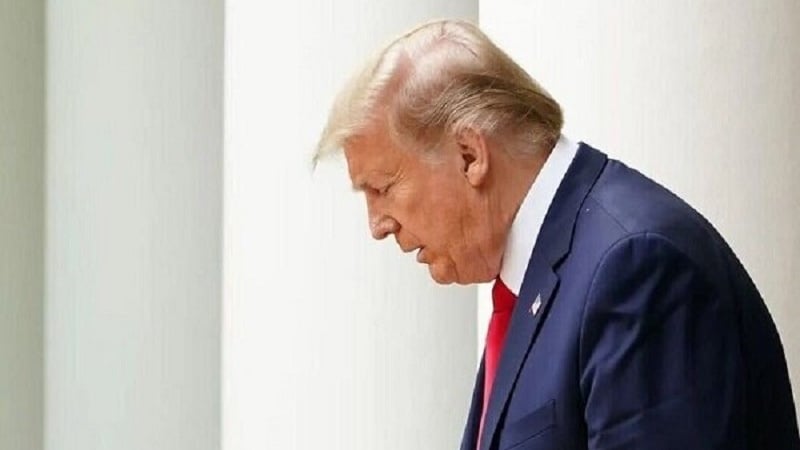
US President, Donald Trump
ParsToday — Donald Trump has repeatedly attempted to force Iran into retreat through ultimatums, military threats, and shows of force. However, the repeated postponements, halts in operations, and Washington's sudden return to negotiations indicate that the issue is not a lack of decisive decision-making in Tehran, but rather Iran's deterrent power, its capacity for reciprocal response, and the costs it has imposed on America's calculations.
In Trump's foreign policy, threats typically enter the scene before diplomacy. He first speaks of a "final opportunity," an "imminent attack," or delivering an unprecedented blow; then he sets a short deadline and creates a media atmosphere awaiting the launch of a major operation. But when the time comes to execute the threat, warlike rhetoric gives way to deadline extensions, mediation by regional countries, and hopes for a deal. This cycle has been repeated so many times against Iran that it can no longer be seen as a series of scattered decisions; it has become a recognizable pattern in Washington's behavior. To describe this pattern, the term "TACO" or "Trump Always Caves" first gained traction in 2025 in the US economic sphere. That expression referred to the US president's tendency to announce maximalist policies and then dial them back in the face of market pressure. Now the same logic is visible in the security domain: a major threat is raised, markets and allies grow anxious, the other side does not submit, and ultimately the White House backs away from some of its initial positions. Regarding Iran, the important difference is that the retreat is not just the result of economic concerns; Iran's military deterrence also directly factors into America's cost-benefit calculations.
Examples from recent months show that Tehran has maintained a consistent policy toward ultimatums: neither surrendering to psychological pressure nor rushing into Trump's media game. Iran has responded to threats by declaring defensive readiness, preserving strategic leverage, and warning of reciprocal responses. When Washington has spoken of striking Iran's vital infrastructure, energy facilities, or strategic centers, Iranian officials have made it clear that any aggression could expose US bases and their support infrastructure in the region to retaliation. This message is not emotional rhetoric; it is part of Iran's deterrence architecture.
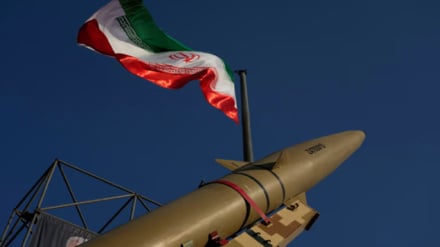
Deterrence is effective when the enemy knows that initiating an attack will be easier than controlling its consequences. Over the past years, Iran has developed a range of missile, drone, naval, and intelligence capabilities to respond to external threats. In such circumstances, America cannot view a limited strike as merely a short, cost-free operation. Any military decision must be weighed against the likelihood of damage to bases, disruption to energy lines, pressure on regional allies, and increased global economic costs. This very uncertainty has constrained Washington's room for maneuver and diminished the value of its verbal threats.
The Strait of Hormuz in this equation is not just a waterway; it is a point where geography, energy, and security converge. Any escalation of conflict in this region could affect the oil market, maritime transport, and the economies of America's allies. Press TV's report emphasizes that markets have gradually concluded that Trump will likely find a way to stop or postpone an attack before the energy crisis spirals out of control. The rapid reaction of oil prices to news of halted operations also shows that traders directly link White House decisions to the prospect of de-escalation. The fact that Arab leaders in the Persian Gulf have asked Washington to halt new attacks and pursue the path of negotiation carries significant meaning. Regional countries more than any other actors know that a full-scale war with Iran will not remain confined to Iran's geographical borders. Energy infrastructure, ports, military bases, and regional trade routes are all vulnerable to the expansion of the crisis. Therefore, halting an attack should not be seen as America's favor or a sudden change in Trump's mood; this decision is the result of pressure exerted on Washington by ground realities, allies' concerns, and Iran's capacity for response.
In the most recent instance, after announcing readiness for a major attack, Trump within a short period spoke of halting operations and the emergence of diplomatic opportunities. The Associated Press reported that concerns from Saudi Arabia, Qatar, and the UAE about the expansion of conflict and threats to regional stability played a role in this decision. Meanwhile, Reuters reported progress in Qatari, Omani, and Pakistani efforts to facilitate dialogue, though Tehran denied claims that direct negotiations with the US had begun. This discrepancy in narratives shows that the White House is trying to redefine its practical retreat as a diplomatic initiative and a narrative victory.
The main issue for Washington is not just whether it can deliver a blow; the more difficult question is what happens after the strike. The US may possess technological superiority and long-range strike capabilities, but Iran has also demonstrated its capacity to maintain operational capability and impose reciprocal costs. A war whose end cannot be pre-designed would be a risky choice for an administration simultaneously facing economic pressure, inflation concerns, and electoral considerations. Hence, Trump's aggressive language often runs far ahead of Washington's actual readiness to accept its consequences.
The repetition of unfulfilled threats gradually erodes the primary capital of any power: its deterrent credibility. If ultimatums end without results and red lines are continually shifted, the other side learns to focus on actual capabilities rather than the intensity of rhetoric. Iran has acted precisely on this basis: maintaining readiness, refusing to submit, and forcing America to recalculate. This approach is neither passivity nor adventurism; it is a calculated form of crisis management that does not allow Washington to use media hype as a substitute for strategic achievement.
In this context, Iran's power is not limited to military equipment. Maintaining decisional coherence, rejecting humiliating narratives, using the capacity of intermediaries without surrendering leverage, and linking diplomacy with deterrence have formed a set of national power tools. Tehran does not frame negotiation from a position of needing to be rescued from threats; rather, it views it as one path to conflict management, while preserving its defensive capabilities and strategic leverage. This combination has reduced the possibility of America imposing a one-sided agreement.
Ultimately, the cycle of "threat, ultimatum, and retreat" speaks less about Trump's personality and more about the limits of American power in the face of Iran. Washington can still threaten, move forces, and create a media spectacle; but converting this spectacle into a political outcome requires breaking the will and deterrence of the other side. Iran has shown that it neither decides under ultimatums nor disregards the costs of resistance. Every time a major threat ends in postponement, ceasefire, or dialogue, a reality becomes clearer: in the region's new equation, America is no longer the only actor that determines the timing, scope, and end of a crisis.