Araghchi: No government can build lasting security at expense of others’ security
-
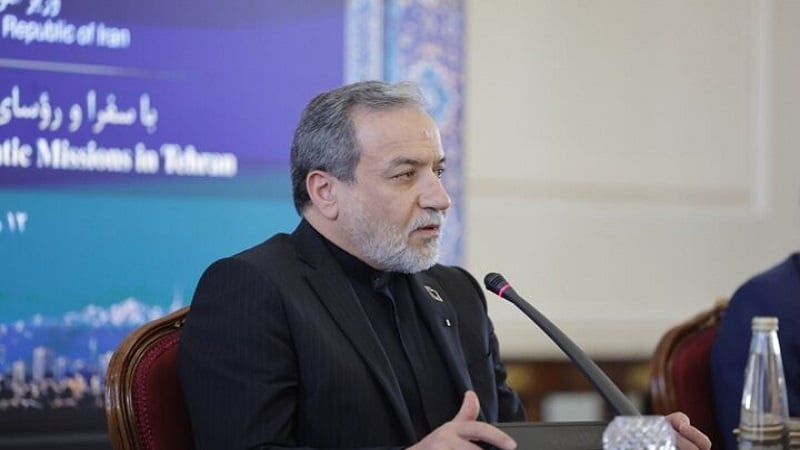
Iran’s foreign minister Seyyed Abbas Araghchi
Pars Today – Iran’s foreign minister has said that no government can establish lasting security at the expense of others’ security, stressing that regional problems must be resolved by the countries of the region themselves.
According to Pars Today, citing Mehr News Agency, Seyyed Abbas Araghchi made the remarks on Saturday at the 52nd session of the Council of Foreign Ministers of the Organization of Islamic Cooperation (OIC) in Baghdad.
He said the OIC was established to provide a common voice for the Muslim world, strengthen solidarity and cooperation, and defend shared interests. The organization’s charter is based on principles that reflect those of the United Nations Charter, including sovereign equality, territorial integrity, non-interference in internal affairs, the peaceful settlement of disputes, and refraining from the threat or use of force.
Araghchi stressed that Iran had remained committed to international law, the UN Charter and diplomacy. “Over the past two years, we continued to pursue diplomacy. The United States chose the opposite course: aggression, threats, assassinations and economic warfare, in flagrant disregard for international law and the UN Charter,” he said.
He added that around 5,000 people, including hundreds of women and children, had been martyred in the US-Israeli military aggression against Iran. Araghchi also said the United States and the Israeli regime had flagrantly violated international law by assassinating Iran’s Leader of the Islamic Revolution and other senior political and military officials.
The Iranian foreign minister stressed that the killing of more than 160 students and teachers in Minab, the cluster-bomb attack on a sports stadium in Lamerd, the bombing of a desalination plant in Qeshm in southern Iran, and the attack on a wedding ceremony in Kouhestak, Sirik, were just a few documented examples of US-Israeli war crimes against Iran. The United States and the Israeli regime cannot cover up these crimes by distorting the truth and portraying the aggressor as the victim.
Araghchi added that peace cannot be built on threats of annihilation. Iran remains committed to safe and secure navigation through the Strait of Hormuz, a waterway vital to the energy and trade needs of many OIC member states, which remained fully open and safe until February 28, 2026. He said insecurity and disruptions to maritime traffic since then had been the direct result of the aggressive actions of the United States and the Israeli regime.
“Security cannot be restored by repeating past mistakes and crimes. You cannot bomb a country, threaten to annihilate it and impose a blockade on it, then expect navigation security to return to normal,” he said.
The Iranian foreign minister stressed that the cause of Palestine remains the central issue for the Muslim world. “Palestine remains a wound on the conscience of the international community, and Gaza has become a symbol of the failure of international mechanisms to prevent genocide. Dozens of resolutions have failed to end the occupation and violence. The continued suffering of the Palestinian people, the killing of innocent civilians by the Israeli regime, and threats against the holy city of al-Quds and its sacred sites should concern everyone.
“Iran stands with the Palestinian people and calls on the Organization of Islamic Cooperation and all its members to do everything necessary to end the killings and the blockade, and to make support for the legitimate rights of the Palestinian people a shared priority backed by practical, coordinated action.”
Araghchi also emphasized that Iran supports the sovereignty, independence, unity and territorial integrity of both Yemen and Saudi Arabia. He said Iran supports an inclusive and comprehensive political process as the only practical and sustainable way to resolve the issue.
“Lasting peace cannot be achieved through military escalation, coercion and intimidation, or by excluding the relevant Yemeni parties,” he said.
He added that regional crises have no military solution and that insisting on a military approach while ignoring political solutions would only complicate the situation further. Iran is deeply concerned about developments in the Arabian Peninsula and stands ready to provide any assistance to facilitate dialogue between the parties, based on the peace roadmap they had previously agreed upon.